An Ugly Truth Key Takeaways
by Sheera Frenkel
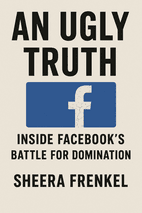
5 Main Takeaways from An Ugly Truth
Facebook's growth-at-any-cost model inevitably leads to societal harm.
The book argues that Facebook's problems, from election interference to genocide in Myanmar, are not accidents but direct results of a business model deliberately built for unstoppable growth. This model prioritizes engagement and ad revenue over safety, creating profound costs to democracy and human rights.
Zuckerberg and Sandberg's partnership prioritized business over ethical governance.
Their leadership combined Zuckerberg's ideological focus on connection with Sandberg's ad-driven monetization, often sidelining safety and privacy. Decisions like not removing Trump's 'Muslim ban' video show how political and business calculations consistently trumped consistent enforcement of their own policies.
Facebook's content policies are ad-hoc, reactive, and politically motivated.
The company frequently invented policies like 'newsworthiness' in real-time to justify business decisions, as seen with the Trump video. This lack of principled frameworks led to inconsistent enforcement, amplifying harmful content and failing to address crises like the doctored Pelosi video.
Facebook deflects criticism and avoids accountability through strategic ambiguity.
Zuckerberg and Sandberg often framed critics as biased or jealous, and used technicalities like 'we don't sell data' to obscure their data harvesting practices. The congressional hearings showed how evasion, lobbying, and exploiting regulatory ignorance helped them avoid meaningful consequences.
Regulatory and antitrust actions pose an existential threat to Facebook's dominance.
The book details how coalitions of regulators, activists, and insiders mounted serious challenges to break up Facebook. Zuckerberg's response has been to consolidate control, integrate apps, and prepare for a legal fight, rather than undertake meaningful reform.
Executive Analysis
The five key takeaways collectively argue that Facebook's societal impacts—from election interference to genocide—are not unintended consequences but direct outcomes of a business model engineered for relentless growth. This model, championed by the Zuckerberg-Sandberg partnership, consistently prioritized engagement and ad revenue over ethical governance, leading to ad-hoc policies, deflection of criticism, and repeated crises. The book shows how these choices inevitably sparked regulatory and antitrust battles that now threaten Facebook's very existence.
'An Ugly Truth' is a seminal work in tech journalism, providing a meticulously reported autopsy of Facebook's decade of crises. It matters because it demystifies the operational realities behind digital platform harms, offering essential lessons for policymakers, investors, and users about the dangers of concentrated tech power. The book sits at the intersection of investigative reporting and business analysis, serving as a cautionary tale for the age of big tech.
Chapter-by-Chapter Key Takeaways
At Any Cost (Prologue)
Facebook faced an existential threat in December 2020 from unprecedented government lawsuits seeking to break up the company for anticompetitive practices.
Regulators portrayed Mark Zuckerberg as a ruthless monopolist and Sheryl Sandberg as the architect of a surveillance-based advertising model, arguing their partnership was central to Facebook's harmful impact.
The authors contend that Facebook's problems are not accidental; they are the direct result of a business model deliberately built for unstoppable growth, with profound costs to society.
Try this: Recognize that systemic business model flaws, not accidents, cause societal harm in tech giants.
Don’t Poke the Bear (Chapter 1)
Engineer Privilege as a Systemic Risk: Facebook’s culture of radical transparency and unlimited engineer access to user data was a profound security and privacy failure, enabling widespread employee misconduct that the company only addressed reactively.
Growth Outpaced Governance: Foundational policies designed for a small startup were dangerously obsolete in a global corporation with billions of users, yet changing them was resisted by leaders who prioritized engineering speed over security.
Business Over Principle: The decision on Trump's "Muslim ban" video was a pivotal moment where political and business calculations—fear of conservative backlash and losing a major advertiser—trumped the consistent enforcement of the company's own hate speech policies.
The Ad-Hoc Policy Playbook: Faced with a novel crisis, Facebook's executives invented a major speech policy ("newsworthiness") in real-time to justify a business decision, revealing a lack of prepared, principled frameworks for content governance.
The Free Speech Shield: Zuckerberg consistently used a broad, simplistic interpretation of free speech to defend controversial decisions, deflecting deeper questions about Facebook's active role in amplifying and targeting harmful content.
Try this: Audit your organization's culture to ensure ethical governance keeps pace with rapid growth and engineer-driven innovation.
The Next Big Thing (Chapter 2)
News Feed revolutionized social media by introducing a personalized, algorithm-driven stream that prioritized engagement, despite initial user backlash over privacy concerns.
The viral protest against News Feed ironically demonstrated its power, cementing Facebook's shift from a static profile site to a dynamic platform centered on constant interaction.
Zuckerberg's response to crises combined apology with assertion, establishing a pattern of defending product changes as ultimately beneficial for users.
Early content and ad policies were developed reactively and informally, highlighting Facebook's unpreparedness for the ethical complexities of global platform governance.
As competition intensified, Facebook faced pressing needs to monetize and scale, with Zuckerberg grappling with his role as CEO amid ambitions to connect the world.
Try this: When launching transformative products, anticipate ethical backlash and have principled content frameworks ready, not just reactive apologies.
What Business Are We In? (Chapter 3)
Privileged Blind Spot: Zuckerberg’s personal experience of safety and success created a profound inability to understand the privacy risks and systemic harms his platform posed for more vulnerable populations.
Hypocrisy in Practice: While publicly advocating for radical transparency, Zuckerberg meticulously guarded his own personal information, revealing a double standard.
Failed Diplomacy: Facebook’s early approach to regulators, epitomized by Elliot Schrage’s confrontational style, was dismissive and defensive, poisoning well in Washington and signaling an unwillingness to be constrained.
Regulatory Ignition: The 2009 privacy changes directly triggered the first major federal investigation into Facebook by the FTC, establishing a framework of oversight that would become crucial years later.
Try this: Leaders must actively seek diverse perspectives to understand how their platforms affect vulnerable users, avoiding personal bias in policy design.
The Rat Catcher (Chapter 4)
Facebook's engagement with conservative critics marked a strategic pivot towards appeasement, setting a pattern for handling bias accusations.
The platform's algorithms unintentionally fueled the spread of false news during the 2016 election, despite internal concerns.
Internal debates, like those sparked by Boz's "Ugly" memo, revealed tensions between growth-centric values and ethical responsibility.
Facebook's tools were linked to real-world harms, including human rights abuses in countries like Myanmar and the Philippines.
The Zuckerberg-Sandberg partnership streamlined business success but introduced a more politically driven culture.
Executives like Elliot Schrage embodied an aggressive, defensive posture against regulators and critics.
Youth safety and content moderation became battlegrounds where Facebook prioritized control over collaboration, leading to internal and external disillusionment.
Try this: Proactively align algorithmic incentives with ethical outcomes to prevent real-world harm, rather than reacting after crises occur.
The Warrant Canary (Chapter 5)
Facebook's only action against a major Russian operation before the election was a reactive move based on a content policy violation, not a principled stand against election interference.
The platform was overwhelmed by viral misinformation designed to divide the American electorate, which it failed to systematically address.
Internal employee concerns about the health of the platform were met with corporate inaction and a prevailing assumption that the political crisis would resolve itself after a presumed Clinton victory.
Try this: Establish clear protocols for detecting and responding to coordinated disinformation campaigns before they escalate during critical events like elections.
A Pretty Crazy Idea (Chapter 6)
Facebook's leadership reacted to the 2016 election crisis along two separate tracks: a pragmatic, political scramble in Washington to align with the new administration, and a data-driven public relations effort in Silicon Valley to deny platform culpability.
Mark Zuckerberg's publicly dismissive "pretty crazy idea" comment severely damaged credibility, sparking external condemnation and intense internal employee dissent and confusion.
The episode exposed a major failure of internal communication, revealing that the company's top executives were seemingly unaware of the serious findings from their own security team regarding Russian election meddling on the platform.
Try this: Ensure seamless communication between security teams and top executives to avoid catastrophic credibility gaps during public crises.
Delete Facebook (Chapter 7)
Deflection as Strategy: Both Sandberg and Zuckerberg framed criticism as motivated by jealousy, political bias, or a misunderstanding of their good intentions, rather than engaging substantively with the critiques.
The Hearing Theater: Zuckerberg’s congressional testimony was a highly managed performance where scripted talking points and evasive answers successfully deflected detailed scrutiny.
The Business Model Defense: Facebook’s core defense rested on the technically true but misleading statement that it doesn’t "sell data," obscuring the extensive data harvesting and micro-targeting that powers its advertising empire.
Regulatory Capture in Action: While Zuckerberg paid lip service to regulation, Facebook was actively lobbying for weak federal privacy laws to preempt stronger state-level protections.
A Fortuitous Escape: The glaring technological illiteracy of the congressional committees provided Facebook with an unexpected escape hatch, redirecting public anger toward lawmakers and allowing the company to avoid meaningful consequences.
Try this: Scrutinize corporate defenses that rely on technical truths to obscure harmful practices, and advocate for technologically literate oversight.
Think Before You Share (Chapter 8)
Facebook has scientifically demonstrated its power to manipulate user emotions through algorithmic curation, a power it tested without informed consent.
Internally, engineers recognized the platform was promoting addictive, low-quality, and false information but faced inertia because this content drove engagement metrics.
Attempts to algorithmically demote harmful content were superficial and ineffective against systems inherently designed to maximize user time on platform.
In a critical test of its ethical responsibility, Facebook refused to provide data that could have aided a genocide investigation, prioritizing legal caution over human rights.
Try this: Prioritize human rights and ethical research over engagement metrics, even when it conflicts with business goals.
The Wartime Leader (Chapter 9)
Leadership's primary response to a catastrophic reputational crisis was one of deflection, denial, and internal blame-shifting, rather than transparent accountability.
Sheryl Sandberg's attempt to distance herself from the Definers scandal was quickly proven dishonest, damaging her credibility both internally and externally.
The company's use of opposition research targeting George Soros demonstrated a profound ethical blindness, inadvertently aligning Facebook with toxic, anti-Semitic conspiracy theories.
Elliot Schrage served as a sacrificial lamb to contain the scandal, allowing Sandberg and Zuckerberg to remain insulated from direct consequences.
Mark Zuckerberg's unwavering public support for Sandberg affirmed that the established power dynamics at the top of Facebook were immutable, even in the face of monumental failure.
Try this: In crisis management, transparent accountability is crucial; deflecting blame and using opposition research can backfire spectacularly.
Coalition of the Willing (Chapter 10)
A powerful, multi-faceted coalition was assembled, combining Tim Wu’s legal theories with Tom Steyer’s resources, Roger McNamee’s insider critique, and Bruce Reed’s policy expertise.
The group operated under the strategic moniker “Coalition of the Willing,” framing their campaign as a necessary battle against a powerful adversary.
They transformed theory into action by directly lobbying state attorneys general and federal antitrust agencies, presenting a formal case for Facebook’s breakup.
Try this: Build diverse coalitions combining legal, financial, and insider expertise to effectively challenge monopolistic corporate power.
Existential Threat (Chapter 11)
Facebook’s handling of the doctored Pelosi video exposed deep internal conflict between principles of free expression and the practical need to curb clear misinformation, resulting in a slow, paralyzed response that damaged key political relationships.
The incident demonstrated the inadequacy of Facebook's technological solutions and AI to stop the spread of manipulated media, especially within the private groups Zuckerberg had recently championed.
Sheryl Sandberg’s influence appeared diminished in pivotal policy debates, with her public loyalty to Zuckerberg’s decisions sometimes conflicting with her private misgivings and her external role as a fixer.
By mid-2019, Facebook faced a multi-front existential crisis, battling serious antitrust investigations, a failed charm offensive in Washington, and a political climate where its breakup was being openly debated.
Mark Zuckerberg’s response to these threats was one of defiant consolidation of control and preparation for a legal and political "fight for its life," rather than concession or compromise.
Try this: Develop robust, principled policies for novel harms like manipulated media before they escalate, rather than relying on ad-hoc judgments.
The Oval Interference (Chapter 12)
Facebook's leadership faced intense, sustained criticism from both lawmakers and civil rights organizations over its policy of not fact-checking political ads, with internal employee dissent adding to the pressure.
Sheryl Sandberg's public and internal authority diminished; she struggled to defend company policies in interviews while privately losing influence to other executives and choosing not to challenge Zuckerberg's key decisions.
Mark Zuckerberg, despite the criticism, solidified his controversial stance on free expression and began a deliberate, long-term effort to reshape his legacy from tech CEO to global philanthropist and "elder statesman," publicly accepting his role as a divisive leader.
Try this: Consistently apply content standards globally to avoid accusations of double standards and maintain internal morale.
Good for the World (Chapter 13)
Facebook’s action against Trump was driven as much by intense internal employee pressure as by external events.
The executive debate revealed a troubling admission: the company had one standard for political speech in the United States and another, more permissive one for the rest of the world.
Zuckerberg’s “indefinite” ban was a masterpiece of strategic ambiguity, designed to appear forceful without committing to a permanent policy, thus preserving Facebook’s flexibility and avoiding a definitive line in the sand.
Try this: Listen to internal employee dissent as an early warning system for ethical failures, and avoid policies that create arbitrary geographic distinctions.
The Long Game (Epilogue)
Facebook's core advertising business model, built under Sheryl Sandberg, was fundamentally dependent on the extensive collection and use of personal user data.
The platform's immense scale and tools became vectors for real-world harm, from political manipulation in the 2016 election to genocidal violence in Myanmar.
A series of escalating crises—from Cambridge Analytica to internal leaks—exposed a corporate culture often prioritizing growth and deflection over proactive responsibility.
Facing existential regulatory threats, Zuckerberg's strategy evolved towards integrating Facebook's "family" of apps to fortify the company's dominance against potential antitrust action.
Facebook's handling of the doctored Pelosi video crystallized political anger over its power and inconsistent content policies.
The company faced an unprecedented multi-front antitrust assault from the FTC, state attorneys general, and Congress in 2019.
Zuckerberg's decision not to fact-check political ads was a major inflection point, drawing fierce criticism from civil rights advocates and employees while aligning with Trump's campaign strategy.
The crises of 2020—COVID-19 misinformation, racial justice protests, and election falsehoods—relentlessly exposed the real-world consequences of Facebook's policy choices, culminating in Trump's suspension after the January 6th insurrection.
Facebook's ultimate response to existential threats was to dig in, legally resist breakup calls, and continue pivoting its business model, underscoring the unresolved conflict between its professed mission and its commercial incentives.
The Capitol riot on January 6, 2021, served as a final catalyst, forcing Facebook to take the extreme measure of banning President Donald Trump, a decision highlighting the platform's direct role in real-world violence.
Mark Zuckerberg's future-focused "pivot to privacy" and vision for the "metaverse" represent an attempt to move beyond the platform's troubled past, even as it creates new regulatory and ethical challenges.
The central, unresolved tension of Facebook's history is the conflict between its growth-at-all-costs engineering mentality and the societal harm caused by its products, a dilemma managed but never solved by the Zuckerberg-Sandberg partnership.
The company's legacy is one of profound dualities: connecting billions while undermining democratic institutions, demonstrating that the scale of its technological influence ultimately outpaced its systems for governance and ethical foresight.
Try this: Accept that technological scale without ethical governance creates irreversible societal risks, and support structural reforms over superficial pivots.
Continue Exploring
- Read the full chapter-by-chapter summary →
- Best quotes from An Ugly Truth → (coming soon)
- Explore more book summaries →