An Ugly Truth — Interactive Mindmaps

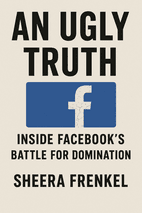
An Ugly Truth by Sheera Frenkel Book Cover

by Sheera Frenkel

Sheera Frenkel's An Ugly Truth meticulously chronicles Facebook's relentless growth under Mark Zuckerberg and Sheryl Sandberg, detailing how their prioritization of scale over safety enabled misinformation and global crises. It is essential reading for anyone concerned with corporate power and technology's impact on democracy.

On Insta.page you also get an Apply This Book tool that lets you combine insights from up to 3 books to solve your specific situation.

Chapter mindmaps

Free preview: chapters 1–4 are fully interactive. Click any node to expand or collapse. Subscribe to unlock the rest.

Chapter 1: Prologue: At Any Cost

Key concepts: Prologue: At Any Cost

1. Prologue: At Any Cost

The Existential Legal Threat

  • December 9, 2020: FTC and 48 states file landmark antitrust lawsuits seeking Facebook's breakup
  • The lawsuits represent the materialization of Mark Zuckerberg's deepest fear of regulatory action
  • Legal complaints serve as a sweeping indictment of Facebook's entire business model and leadership
  • Accusations center on crushing competition and harming users in relentless pursuit of growth

Facebook's 'Buy-or-Bury' Strategy

  • Lawsuits frame Facebook's history as eliminating potential rivals through acquisition or destruction
  • Mark Zuckerberg cited over 100 times as using bullying, deception, and espionage to maintain dominance
  • Allegations detail 'destroy mode' against competitors and broken commitments to founders of Instagram and WhatsApp
  • Core claim: Facebook became a monopoly that stifled innovation, reduced choice, and degraded privacy

The Zuckerberg-Sandberg Partnership

  • Sheryl Sandberg presented as essential architect of Facebook's success and problematic model
  • Built the profitable advertising engine that treats personal data as a commodity to be traded
  • Her 'behavioral advertising prototype' created dangerous feedback loop of engagement and data extraction
  • Public persona seen as strategic distraction from fundamental issues of the surveillance business model

The Book's Investigative Perspective

  • Based on 15-year investigation offering inside view challenging accidental failure narrative
  • Argues Zuckerberg and Sandberg deliberately built an 'unstoppable' global business from 2007 onward
  • Focuses on critical five-year period between U.S. elections where consequences were fully exposed
  • Conclusion: Story is not of rogue algorithm but of complex and intentional creation with profound societal costs

Chapter 2: Chapter 1: Don’t Poke the Bear

Key concepts: Chapter 1: Don’t Poke the Bear

2. Chapter 1: Don’t Poke the Bear

Opening Case: Engineer Data Abuse

  • Facebook engineer spies on a woman using unrestricted access to user data
  • Incident symptomatic of systemic privacy and security failures
  • Foundational ethos of radical transparency created surveillance apparatus
  • Thousands of employees had potential to misuse data access

Culture of Unchecked Engineer Access

  • 52 employees fired for similar data abuses between 2014-2015
  • Common pattern: men looking up women they were interested in
  • Vulnerability rooted in Zuckerberg's principle of eliminating 'red tape'
  • Open system never redesigned despite company growth
  • Unrestricted access sold as perk to engineering recruits

Security Chief's Warning and Internal Resistance

  • Alex Stamos presented systemic security risks in September 2015
  • Revealed fragmented security, weak app protection, lagging encryption
  • Recommended limiting sensitive data access to under 100 people
  • Engineering leaders warned restrictions would cripple innovation speed
  • Stamos made powerful enemies while pushing for reform

The Trump 'Muslim Ban' Video Crisis

  • Trump's viral video called for shutdown of Muslim entry to US
  • Forced leadership debate on removing hateful political speech
  • Joel Kaplan advocated caution with mantra 'Don't poke the bear'
  • Warned removal would be seen as censorship and liberal bias
  • Feared alienating Republicans already distrustful of platform

Ad-Hoc Policy Creation: The Newsworthiness Exception

  • Executives invented 'newsworthiness' exception in real-time
  • Decided political speech from major candidates deserved extra protection
  • Rationale: public should see candidate's 'unedited views'
  • Some participants viewed process as 'making it up on the fly'
  • Served business need of avoiding controversy with powerful candidate

Employee Backlash and Free Expression Defense

  • Employees reacted with anger and confusion to decision
  • Zuckerberg defended stance using libertarian free expression principles
  • Framed issue around First Amendment and platform for diverse voices
  • Overlooked critical distinction: hosting speech vs. algorithmically amplifying it
  • Failed to address that 'algorithmic amplification is the very problem that needs fixing'

The Culture of Radical Transparency and Engineer Privilege

  • Engineers had near-universal access to user data, treating it as an open resource for debugging and product development.
  • This access was a systemic security and privacy risk, enabling widespread internal misconduct like stalking and data snooping.
  • The company only addressed abuses reactively, failing to implement proactive controls as it scaled.

Obsolete Startup Policies in a Global Corporation

  • Foundational access and privacy policies were designed for a small, trusted team and became dangerously obsolete.
  • Attempts to update these policies were resisted by leadership who prioritized engineering velocity and agility.
  • This created a critical governance gap where growth vastly outpaced the necessary security and ethical frameworks.

The 'Muslim Ban' Video Decision as a Business Calculation

  • The decision to leave Trump's video up was driven by fear of backlash from conservative politicians and media.
  • There was significant concern about losing a major advertiser (the Trump campaign) during a critical revenue period.
  • This marked a moment where business and political interests overrode the consistent application of stated hate speech policies.

Inventing Policy in Real-Time: The Newsworthiness Exception

  • Faced with a novel crisis, executives created a major new speech policy ('newsworthiness') ad-hoc to justify a business decision.
  • This revealed a lack of prepared, principled frameworks for content governance at the highest levels of the company.
  • The move set a precedent for making consequential policy decisions reactively based on the identity of the speaker.

Strategic Use of Free Speech as a Deflection

  • Mark Zuckerberg employed a broad, simplistic interpretation of free speech to defend controversial content decisions.
  • This rhetoric served as a shield to deflect criticism and avoid deeper accountability.
  • It obscured Facebook's active role in algorithmically amplifying and targeting harmful content, framing the company as a passive platform.

Chapter 3: Chapter 2: The Next Big Thing

Key concepts: Chapter 2: The Next Big Thing

3. Chapter 2: The Next Big Thing

Competitive Nature and Early Philosophy

  • Technical one-upmanship at Exeter established Zuckerberg's competitive drive
  • FaceMash controversy revealed a pattern of disruption followed by claims of unintended consequences
  • Core philosophy: building a place to 'waste time' for open-ended data collection
  • Viewed trusting users with contempt, seeing data accumulation as key to power

Strategic Choices: Scale Over Revenue

  • Washington Post meeting revealed focus on user acquisition rather than immediate revenue
  • Chose Accel Partners' venture capital over traditional media partnership
  • Embraced Silicon Valley 'growth at all costs' ethos aligned with his instincts
  • Decision prioritized aggressive, founder-controlled expansion

Internal Culture and Control Consolidation

  • Post-Accel deal created culture of 'Domination!' focused on growth
  • Zuckerberg consolidated control by restructuring shares to dilute co-founder stakes
  • Displayed ruthless 'killer instinct' in pursuit of his vision
  • Made audacious bets like rejecting billion-dollar buyout offers

The News Feed: Vision and Backlash

  • Transformative idea: algorithmically-driven, personalized stream to maximize engagement
  • Small team built it over nearly a year despite internal skepticism
  • Launch triggered massive user backlash over privacy invasion
  • Ironically, protest spread virally through the News Feed itself, proving its engagement power

Crisis Response and Growing Problems

  • Zuckerberg's response mixed apology with admonishment, setting template for future crises
  • Insisted controversial features were ultimately for users' benefit
  • Content moderation and advertising policies were made ad hoc by growth-focused team
  • Company unaware of ethical quagmires ahead while racing to scale and monetize

Facebook's Defining Culture and Ambition

  • Scrappy, intense culture formed through all-night hackathons and lack of formal management
  • Zuckerberg rejected a $1 billion Yahoo buyout in 2006, causing his entire management team to quit
  • Rallied remaining employees with 'Domination!' chant, focusing on a central landing page for friend updates

The Vision and Development of News Feed

  • Zuckerberg aimed to transform Facebook from static directory to dynamic, personalized information stream
  • Algorithm prioritized content based on 'interesting-ness' with user's own posts first, then close friends
  • Complex year-long development led by Ruchi Sanghvi and Chris Cox, launched abruptly in September 2006

Immediate User Backlash and Viral Protests

  • Users felt exposed as relationship updates and photos were broadcast in public-feeding stream
  • 'Students Against Facebook News Feed' group gained 7% of user base within 48 hours
  • Ironically, the protest's virality was powered by News Feed itself, demonstrating its engagement power

Zuckerberg's Crisis Management Approach

  • Issued public apology titled 'Calm Down. Breathe. We Hear You.' 24 hours after launch
  • Tone was more admonishing than contrite, emphasizing unchanged privacy settings
  • Set precedent for defending product changes as ultimately beneficial despite initial user resistance

Ad Hoc Content Moderation and Policy Development

  • Facebook stumbled into content governance without playbook or editorial standards
  • Relied on informal, gut-feel decisions by handful of moderators
  • First advertising policy against hate/violence incitement drafted hastily without legal review

Strategic Challenges and Future Direction

  • Twitter's rise in 2006 pushed Facebook to scale rapidly toward real-time information
  • Monetization remained daunting challenge despite soaring expenses and investor pressure
  • Zuckerberg expressed reluctance for managerial grind, considering handing off CEO duties

Chapter 4: Chapter 3: What Business Are We In?

Key concepts: Chapter 3: What Business Are We In?

4. Chapter 3: What Business Are We In?

Sandberg's Formative Years and Early Career

  • Harvard education under mentor Lawrence Summers, revealing sharp intellect and preparedness
  • Initial career path in public service and research at World Bank and U.S. Treasury
  • Mentorship redirects her toward business school over law school
  • Early professional experiences at McKinsey and Treasury shape operational skills

Transition to Silicon Valley and Google

  • Exposure to tech executives like Eric Schmidt transforms her career outlook
  • Schmidt's 'rocket ship' advice propels move to Silicon Valley
  • Thrives at Google building advertising into multi-billion dollar business
  • Hits promotional ceiling and seeks new challenge with greater scale

Partnership with Mark Zuckerberg

  • Fateful 2007 meeting reveals complementary fit: Zuckerberg's vision needs Sandberg's operational expertise
  • Zuckerberg recognizes need for business infrastructure and Washington experience for coming regulatory storms
  • Don Graham encourages the union between visionary founder and experienced operator
  • Sandberg joins as COO in March 2008 to scale Facebook's organization

Defining Facebook's Business Strategy

  • Sandberg's foundational question: 'What business are we in?' leads to advertising focus
  • Strategic framing: Google captures existing demand, Facebook creates demand through social connections
  • Leverages Facebook's advantage of real identities and social connections for brand campaigns
  • Pitches Facebook as world's largest word-of-mouth platform to major brands

Internal Tensions and Cultural Challenges

  • Faces chaotic, male-dominated 'hacker' culture skeptical of business growth
  • Company splits between 'Sheryl people' (business/operations) and 'Mark people' (product/growth)
  • Zuckerberg resists resource requests despite needing business infrastructure
  • Sandberg navigates tension between scaling organization and preserving startup culture

Data Collection and Privacy Foundations

  • Beacon program reveals early willingness to monetize user activity with minimal consent
  • Like button revolutionizes data collection, creating detailed psychological profiles
  • Data-driven advertising model built on extensive user tracking across web
  • Privacy advocates flag warning signs about user consent and data practices

Privacy Controversies and User Backlash

  • 2009 shift making profiles publicly searchable by default sparks user outrage
  • Zuckerberg's privileged experience leaves him unable to grasp risks for vulnerable groups
  • Hypocrisy between Zuckerberg's personal privacy and platform's default public settings
  • User confusion and anger over privacy changes framed as 'simplification'

Regulatory Scrutiny and Early Investigations

  • Dismissive approach to early regulatory scrutiny from officials like Senator Chuck Schumer
  • Poisoned relationship with Washington despite Sandberg's political experience
  • Formal FTC complaint triggers first major federal investigation
  • Establishes oversight framework but doesn't curb company's growth trajectory

Embedded Tensions and Future Implications

  • Relentless growth drive conflicts with user privacy and accountability
  • Culture of privileged blindness to platform risks from earliest days
  • Fundamental tensions between monetization and user protection established early
  • Sets stage for far greater crises despite early regulatory attention

Navigating Facebook's 'Hacker' Culture

  • Sandberg entered a chaotic, male-dominated engineering culture hostile to women and resistant to corporate maturity.
  • She won over skeptics like Andrew 'Boz' Bosworth by promising to scale the company without destroying its core culture.
  • Zuckerberg's awkward introduction highlighted the cultural chasm she needed to bridge.

Defining the Core Business Strategy

  • Sandberg posed the foundational question 'What business are we in?' to establish a revenue model around free access and advertising.
  • The session framed the crucial distinction between Facebook and Google based on the type of data each company collected.
  • This marked the start of building a business machine to fund Zuckerberg's social vision.

Shifting the Advertising Model: Creating vs. Filling Demand

  • Sandberg positioned Facebook earlier in the marketing funnel than Google, using social data to create demand rather than capture existing intent.
  • Facebook's advantage was real-time activity and social connections, enabling interactive brand campaigns users would share.
  • The strategy moved beyond banner ads to turn users into unwitting brand advocates through engagement.

Internal Tensions and Resource Struggles

  • Zuckerberg prioritized product and growth over monetization, creating resistance to Sandberg's requests for resources.
  • The company split into 'Sheryl people' (business-focused) and 'Mark people' (product/engineering), breeding mutual distrust.
  • Sandberg appealed to board member Don Graham for support amid ongoing resource constraints.

The Beacon Controversy: Early Privacy Conflicts

  • Beacon automatically shared users' off-site purchases, turning them into involuntary brand endorsers and sparking a privacy outcry.
  • The program revealed Facebook's commitment to monetizing user data with or without meaningful consent.
  • Despite an apology and opt-in change, critics saw it as a warning about surveillance-based advertising.

The Like Button: Data Collection Revolution

  • Introduced in 2009, the Like button created a powerful stream of psychological and preference data.
  • It became a ubiquitous tracking device across the web, monitoring behavior beyond Facebook's walls.
  • Unlike Beacon, it faced no public resistance as users traded clicks for social validation.

Courting Advertisers and Overcoming Skepticism

  • Sandberg pitched Facebook as the world's largest word-of-mouth platform with authentic identity data.
  • She secured a Nielsen partnership to measure ad attention, addressing advertiser concerns about effectiveness.
  • Her efforts were hampered without Zuckerberg's active participation in key brand pitches.

The 2009 Privacy Shift: A Strategic Move Against Twitter

  • Zuckerberg forced a major change to user privacy settings, making previously private information publicly searchable by default.
  • The change was a strategic effort to make Facebook more of a public 'town square' to compete with Twitter's real-time, open model.
  • Confusing user interface prompts led many to accidentally accept the broader settings, causing internal controversy and warnings of a 'privacy disaster.'
  • The move prioritized platform growth and data accessibility over user privacy, framing it as a simplification.

Regulatory and Advocacy Pushback

  • Government officials and privacy regulators, prompted by critical news, began pressing Facebook on the changes.
  • Facebook's lobbyist defended the new settings as a privacy enhancement, a stance challenged by advocates who called them deceptive and illegal.
  • Critics argued Facebook used a 'self-serving and narrow' definition of privacy to obscure sophisticated data harvesting for marketing.

Zuckerberg's Personal Disconnect and Hypocrisy

  • Zuckerberg projected a carefree attitude about online sharing as a new 'social norm' and was perplexed by user outrage.
  • His privileged life trajectory left him unable to empathize with systemic risks faced by marginalized groups on his platform.
  • Despite preaching openness, he meticulously guarded his own privacy, curating his friends list and buying houses for a private compound.
  • This revealed a core hypocrisy: valuing 'authenticity' as a platform commodity while being shielded from the vulnerabilities it created for others.

Confrontational Approach to Washington

  • After complaints from Senator Chuck Schumer's office, Facebook executives made a high-stakes visit to Washington.
  • Elliot Schrage's dismissive, defensive, and impatient posture proved counterproductive, irritating congressional staff.
  • The meeting established a confrontational tone, signaling Facebook was not truly listening to regulatory concerns.

The FTC Investigation and Lasting Consequences

  • Following partial walkbacks and ongoing uproar, privacy groups filed a formal FTC complaint in December 2009.
  • The FTC, under Chairman Jonathan Leibowitz, signaled 'particular interest,' launching Facebook's first major federal investigation.
  • This led to a historic settlement imposing twenty years of privacy audits, though it didn't immediately slow Facebook's dominant trajectory.
  • The ramifications of this initial scrutiny would resurface dramatically during the platform's crisis period beginning in 2016.

Continue exploring An Ugly Truth