A Court of Frost and Starlight Quotes
by Sarah J. Maas
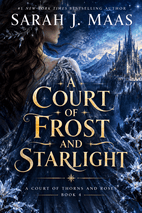
This page gathers lines from A Court of Frost and Starlight, a quieter visit to a world still healing after big battles. You will find dialogue between old friends and new family, intimate narration, and inner thoughts that turn small moments into something bigger.
The novel is quotable because it slows down. Instead of constant action, it offers warmth, recovery, chosen family, grief, and love in ordinary spaces. Some lines are romantic, some are funny, and some are simply honest. They work as reminders that peace can be just as powerful as war.
Top Quotes from A Court of Frost and Starlight
“Once, I had dreaded that first snow, had lived in terror of long, brutal winters. But it had been a long, brutal winter that had brought me so deep into the woods that day nearly two years ago. A long, brutal winter that had made me desperate enough to kill a wolf, that had eventually led me here —to this life, this ... happiness.”
— Feyre
Watching the first snow in Velaris, Feyre reflects on how the brutal winters she once feared led her to her current life.
It captures the novel's central arc of pain transforming into hard-won happiness, tying her past to the present winter.
“It's a time of rest, too. And a time to reflect on the darkness—how it lets the light shine.”
— Nuala
When Feyre asks about Solstice traditions, Nuala explains the holiday's meaning while making a meat pie.
It distills the Solstice theme of light born from darkness, offering hope amid past suffering.
“You made it. We made it. You both endured enough that no one would blame you if you danced off into the sunset like Miryam and Drakon and never bothered with anything else again.”
— Cassian
After Rhys confesses his fear of happiness, Cassian embraces him and insists that he and Feyre have earned their peace.
It is a tender, hard-won affirmation from someone who understands suffering. Cassian gives Rhys permission to stop bracing for punishment.
“Peace, Rhys. We have peace, and the true kind. Enjoy it—enjoy each other. You paid the debt before it was ever a debt.”
— Cassian
Continuing that embrace, Cassian tells Rhys that their peace is real and that he should enjoy it.
It reframes happiness as something already paid for, not a debt still owed. The line feels like both blessing and brotherly command.
“I think my heart knew you were mine long before I ever realized it.”
— Feyre
Feyre explains to Rhys how long she has felt connected to him, even when she could not speak of it.
It captures the quiet certainty of their connection, suggesting love that preceded conscious choice.
“You were meant to be at my side from the very beginning.”
— Rhys
Rhys tells Feyre that her Solstice birthday means she was always meant to be with him.
It turns a birthday detail into a romantic claim of fate and belonging.
“You'll forgive me if I don’t feel like sharing the glory that is you with anyone else.”
— Feyre
When Rhys offers to join her at the studio and jokes about being a nude model, Feyre answers through their bond.
The line is playful and intimate, showing how their bond can offer lightness in a tense moment.
Themes Behind the Quotes
The quotes center on healing after trauma and the strange work of learning to live without constant danger. Winter and Solstice imagery suggests rest, reflection, and the hope that follows darkness. Characters wrestle with loss, memory, and the guilt of survival, while also reaching for joy without waiting for permission.
Another thread is chosen family and love in many forms. Romantic bonds, friendship, and loyalty are tested by old wounds and political tensions, but the focus stays on showing up for one another. There is also agency: deciding what traditions to keep, what to change, and what kind of future to build. Home becomes less a place than the people who see you clearly and stay.
Quotes by Chapter
Chapter One
“We had both fought for that love, bled for it. Rhys had died for it. I still saw that moment, in my sleeping and waking dreams. How his face had looked, how his chest had not risen, how the bond between us had shredded into ribbons.”
— Feyre
While the snow falls, Feyre remembers Rhys's death and the bond being severed.
It conveys the lasting trauma of Rhys's sacrifice and how love survives even after death.
“Even now, with that bond again flowing between us like a river of star- flecked night, the echo of its vanishing lingered. Drew me from sleep; drew me from a conversation, a painting, a meal.”
— Feyre
Feyre notes that even with their bond restored, the memory of its loss still haunts her daily.
The poetic image of a star-flecked bond and its vanishing echo is hauntingly intimate.
Chapter Two
“The world had been reborn during the war months before, the wall blasted to nothingness, and yet some things did not alter. Especially here, where change was slower than the melting glaciers scattered amongst these mountains.”
Rhys surveys the Windhaven camp and reflects on how little has changed for the Illyrian females despite the war.
It captures the tension between world-altering war and stubborn, ancient injustice. The imagery makes the stagnation feel vast and glacial.
“If Cassian says it's an order, then it is.”
— Rhysand
During a tense visit to Windhaven, Rhys backs Cassian's demand that Illyrian females be allowed to train despite Devlon's objections.
It is a sharp, quiet assertion of loyalty and authority. Rhys chooses solidarity with Cassian over easing conflict with Devlon.
Chapter Three
“It was the true test of will, of courage. To climb when you had nothing left; to climb when your body begged you to stop ... It was when the breaking usually occurred.”
Cassian remembers the final climb to the onyx monolith at the end of the Blood Rite.
It frames endurance as the ultimate test and captures the breaking point that defines the Rite.
“But when he'd touched the onyx monolith, when he'd felt that ancient force sing into his blood in the heartbeat before it had whisked him back to the safety of Devlon’s camp ... It had been worth it. To feel that.”
Cassian recalls the moment he and his brothers touched the onyx monolith and won the Blood Rite.
It conveys the sacred, transformative payoff that made the brutal trial worth it.
“So training these women, giving them the resources and confidence to fight back, to look beyond their campfires ... it was for her. For the mother buried here, perhaps buried nowhere. So it might never happen again. So his people, whom he still loved despite their faults, might one day become something more. Something better.”
Standing at the ruined camp where he was born, Cassian reflects on why he trains Illyrian women.
It ties his personal grief to his hope for a better Illyria, making his advocacy deeply intimate.
“His mother had suffered every moment of her too-short life. It only grew worse after she'd given birth to him. Especially in the years after he’d been taken away. And when he'd been strong and old enough to come back to look for her, she was gone.”
Cassian thinks of his mother's suffering and disappearance after he was taken from her.
It distills the cruelty his mother endured and the loss that still haunts him.
Chapter Four
“We keep away to let you have your privacy, but don’t think for one moment that there isn’t a single one of us who doesn't know and remember, who isn't grateful that you came here and fought for us.”
— Ressina
Ressina tells Feyre that the artists of the Rainbow remember how she fought for them during the attack.
It validates Feyre's guilt-ridden memory of the attack while affirming that her courage meant something to those she saved.
“The words settled in, strange and yet like a piece I had not known was missing. An offered hand I had not realized how badly I wanted to grasp.”
— Feyre
After Ressina says every door in the Rainbow is open to Feyre as one of the artists, Feyre feels a missing piece settle into place.
It captures the quiet ache of belonging and recognition Feyre has not allowed herself to expect.
“It hadn't been enough, even so. The ruined building behind me was proof of that. People had still died.”
— Feyre
After Ressina thanks her, Feyre looks at the ruined building and thinks of the people who still died.
It shows the survivor's guilt beneath Feyre's heroism, refusing to let gratitude erase the cost of the attack.
“A creature of flame and brimstone, built in another world to mete out a cruel god’s judgment, to be his executioner upon the masses of helpless mortals. Fifteen thousand years, she had been stuck in this world. And had not loved, not in the way that could alter history, alter fate, until that silver-haired Prince of Adriata.”
While shopping with Mor, Feyre reflects on Amren and Varian's relationship and Amren's ancient past.
It frames Amren's terrifying, ancient purpose and the surprising tenderness of her love for Varian.
Chapter Five
“If you want to paint, then paint, Feyre.”
— Rhys
When Feyre admits she has not painted and feels selfish about it, Rhys urges her to paint anyway.
It is a gentle but firm reminder that creativity and self-care are not selfish, especially after trauma.
“I cannot forgive anyone who made you suffer.”
— Rhys
While discussing Nesta and past hurts, Rhys tells Feyre he cannot forgive anyone who caused her pain.
It reveals Rhys’s fierce protectiveness and the moral line he draws around Feyre’s suffering.
Chapter Seven
“There was no light in this place. There never had been. Even the evergreen garlands, holly wreaths, and crackling birchwood fires in honor of the Solstice couldn't pierce the eternal darkness that dwelled in the Hewn City.”
The chapter opens in the Hewn City, where Mor and Rhys meet Keir and Eris despite the Solstice decorations.
It contrasts the festive warmth of Solstice with the Hewn City's oppressive, life-sapping darkness. The imagery immediately establishes the chapter's bleak setting.
“She would rather die here, bleed out here. She would rather die and return—return as something wicked and cruel, and shred them all apart.”
— Mor
As Mor remembers being left wounded in the Autumn Court woods, she silently wishes for death and vengeance.
It reveals the depth of Mor's pain and the fury that keeps her from surrender. The line turns her trauma into a chilling vow.
“And I am not in the habit of fucking Illyrian leftovers.”
— Eris
In Mor's memory, Eris refuses to help her after she has been nailed and abandoned, dismissing her with this insult.
The line is brutally memorable and encapsulates Eris's cold cruelty. It explains why Mor still carries such visceral hatred for him.
“Truth is your gift. Truth is your curse. Say something.”
— Mor
At the Hewn City meeting, Mor berates herself for staying silent while Keir watches with satisfaction.
It captures Mor's internal conflict between her power and her trauma. The repeated word 'Truth' makes it feel like a haunting mantra.
Chapter Eight
“Nausea roiled in his gut, even as he offered a smile and strode toward the polished counter. Clipped. She’d been clipped.”
Cassian enters the clothier shop and notices the scars on the young female Emerie's wings.
The blunt repetition of 'Clipped' lands like a punch, capturing the horror of the Illyrian practice through Cassian's visceral reaction.
“No, even with the clipping scars that proved traditional ways ran brutally deep in her family, she held his stare. It reminded him of Nesta, that stare. Frank and unsettling.”
Emerie refuses to lower her eyes before Cassian despite the traditions of her camp.
It quietly introduces Emerie's defiance and ties her to Nesta, signaling a kindred steel between the two women.
“They don't like me, either. You're in good company.”
— Cassian
Emerie warns that many in the camp dislike her, and Cassian reassures her while asking her to distribute the winter goods.
A warm, wry line that reveals Cassian's own outsider status and offers unexpected solidarity.
“Half of him wished that Proteus were still alive. If only so he could kill the male himself.”
— Cassian
Cassian reflects on Emerie's father, who went to war and whose family had her wings clipped.
A chilling, contradictory thought that conveys the depth of Cassian's fury at the cruelty done to Emerie.
Chapter Nine
“It was impossible not to feel the thrum of that energy under my skin, even as nerves threatened to send me flying home, frigid wind or no.”
— Feyre
As Feyre approaches Ressina's studio through the crowded Rainbow, her nerves mingle with the festive energy around her.
It captures the push-pull between holiday joy and personal anxiety, making Feyre's unease feel immediate.