A Court of Frost and Starlight Themes
by Sarah J. Maas
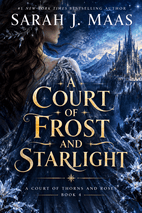
A Court of Frost and Starlight looks quiet on the surface, but underneath the Solstice rituals and gift-giving, it is really wrestling with trauma, memory, and survival. Characters carry the war in their bodies and memories, using work, ritual, secrecy, or numbness to keep going. It also asks how art, chosen family, and tenuous peace can help people rebuild when grief keeps pulling them apart.
On this page, you'll find theme breakdowns of trauma and survival, art as healing, home and belonging, Solstice as darkness and renewal, postwar political responsibility, and grief that refuses connection. Each theme includes concrete moments, like Feyre's painting of the beast from the Ouroboros, the Void and Hope tapestry, and clipped wings. You'll also see recurring symbols examined, including Winter Solstice.
Major Themes in A Court of Frost and Starlight
Trauma, memory, and survival
The book repeatedly shows characters carrying the war’s violence in their bodies and memories, and using work, ritual, secrecy, or numbness to keep the past at bay. Healing is not presented as complete; it is something they approach in small, fragile steps.
- Feyre still sees Rhys lying dead on the rocky ground, feels the hollowness where their bond was, and recalls the King of Hybern snapping her father’s neck.
- Cassian stands in the snow at the ruins of the village where he was born, remembering that no one wanted to remain after shattered bone and blood coated every surface—and that he doesn’t regret it.
- Morrigan flashes back to Eris finding her wounded after nails were driven into her and leaving her in the Autumn Court woods.
- Nesta can barely stand the crack and pop of a fire because it sounds like breaking bones and a snapping neck, so she hasn’t lit one fire in her apartment; sitting against the door, “still she felt nothing.”
Art as healing, self-revelation, and community
Painting, drawing, and weaving become ways to face inner darkness, mourn what was lost, and reconnect with others. Feyre moves from secret, private painting toward teaching free art classes for children affected by war.
- Feyre paints herself as the beast of scale, claw, darkness, rage, joy, and cold from the Ouroboros and calls it a first stitch to close a wound; she does not run from it.
- The weaver made her black Void tapestry after her husband died in the war, and says its silver thread is called Hope: “I have to create, or it was all for nothing.”
- Feyre acquires Polina’s abandoned studio and plans free art lessons for children affected by the war, with Ressina and a rotating schedule of teachers.
- Ressina tells Feyre that the artists paint “the things that need telling.”
Home, family, and belonging
The book contrasts estrangement and exile with chosen family gathered for Solstice, and it ends with Feyre and Rhys choosing to build a home and future. Belonging is shown as both a physical place and a promise made to others.
- Feyre loves the town house as the first real home she has had in the ways that counted, and wants to celebrate Solstice there with all of them, crowded as it might be.
- Rhys lifts his glass and toasts, “To family old and new. Let the Solstice festivities begin.”
- Feyre tells Lucien, “You have a home here. If you want it,” while Lucien calls his household with Jurian and Vassa “the Band of Exiles.”
- Rhys gives Feyre the ruined riverfront estate as her Solstice and birthday present and tells her to build their house, including a nursery; Feyre promises to build it.
- Feyre asks to change the eye tattoos on her palms to the Night Court insignia—a mountain with three stars—and Rhys marks her palms.
Winter Solstice as darkness, light, and renewal
Solstice frames the story as a time to reflect on darkness, honor tradition, and celebrate family even while conflict looms. Its rituals of gifts, food, music, rest, and reflection carry both grief and hope.
- Nuala says Winter Solstice is a time to reflect on the darkness and how it lets the light shine.
- Rhys toasts “To the blessed darkness from which we are born, and to which we return.”
- Feyre’s birthday falls on Solstice; her twenty-one-candle cake is decorated by Nuala with flowers, flames, and stars echoing Feyre’s old chest of drawers.
- Solstice Eve settles on Velaris while a wild storm is unleashed upon the Illyrian Mountains; Rhys thinks, “Later. After Solstice. We’d deal with it then.”
Postwar rebuilding, political responsibility, and tenuous peace
After the war, the characters struggle to rebuild alliances, manage borders, and address unrest without simply killing their way out of problems. The notes repeatedly show political maneuvering alongside personal exhaustion and unresolved wounds.
- Rhys has been visiting war allies to solidify relationships, build trade, and keep tabs on their post-wall intentions.
- Cassian reports dissension among the Illyrian clans gathering for Solstice, and Rhys says they must handle it peacefully because they cannot kill their way out of it.
- Eris warns that Tamlin’s territory borders the human lands, so anyone expanding must go through the Spring Court or obtain Tamlin’s permission.
- Rhys and Azriel agree to keep the full extent of growing Illyrian dissent from Cassian until after the holiday.
- Rhys asks Mor to travel to other kingdoms and territories to help win them over and deter them from pushing into human lands.
Grief, estrangement, and refusal of connection
Several characters isolate themselves in grief or pain, refusing comfort, family, or the mating bonds offered to them. Nesta’s numbness, Tamlin’s ruin, Lucien’s exile, and Mor’s estrangement from Keir all show connection as difficult and sometimes rejected.
- Elain reports that Nesta said she did not want to come to Solstice or anything ever, and Nesta is later found at the Wolf’s Den tavern.
- Nesta rejects Cassian’s Solstice present, tells him to stop following her and stop trying to haul her into his “happy little circle,” and walks away; after he hurls the present into the Sidra, the ice re-forms “as if it, and the present, had never been.”
- Tamlin sits motionless before a dead elk, asks whether Feyre will forgive him and whether Rhys forgives him for his mother and sister, and does not eat.
- Elain tells Feyre she does not want a mate or a male, and that Lucien does not know her.
- Mor refuses to call Keir her father and will not discuss her mother, even as she refuses to hide from him.
Symbols and Motifs
Winter Solstice
The longest night represents reflection on darkness and the hope that light returns; it also stands for family tradition, gift-giving, and renewal.
- Nuala explains that Solstice is a time to reflect on the darkness and how it lets the light shine.
- Rhys toasts “To the blessed darkness from which we are born, and to which we return.”
- Feyre’s birthday falls on Solstice, and her cake is decorated with flowers, flames, and stars.
- The household gathers on Solstice Eve, and Rhys toasts “To family old and new.”
The Void and Hope tapestry
The black tapestry with a silver thread called Hope represents grief woven together with the possibility of continuing to create and live after loss.
- The weaver made Void after her husband died in the battle for Adriata.
- The black Void fabric absorbs all light, but the silver thread woven through it is called Hope.
- Feyre buys the tapestry for herself after hearing the weaver’s story.
- Feyre keeps the tapestry of the Void and the iridescent Hope in the studio as reminders to work through loss and create.
Feyre’s painting of the beast from the Ouroboros
It represents Feyre facing her own inner darkness and self-revelation, and later becomes an intimate gift that lets Rhys see what she had not revealed to anyone else.
- Feyre paints herself as the beast of scale, claw, darkness, rage, joy, and cold from the Ouroboros.
- She calls the painting a first stitch to close a wound and does not run from what it represents.
- She leaves the painting unsigned and plans to hide it because she does not want anyone, even Rhys, to find it.
- She later gives Rhys a painting showing the creature the Ouroboros revealed inside her, and he opens it privately and tells her it is beautiful.
Clipped wings and the female training ring
Clipped wings symbolize the brutality and sexism of Illyrian tradition, while the girls training with daggers becomes a fragile sign of change and resistance.
- Cassian sees the careful, brutal scars down the center tendons of Emerie’s wings: “Clipped. She’d been clipped.”
- Devlon resists Cassian’s demand that Illyrian girls train during Solstice preparations, citing the wives’ need for help.
- Rhys sets a compromise: the girls train ninety minutes each morning, everyone helps prepare for Solstice, and males pitch in.
- Six girls train with daggers despite grumblings, and Cassian says it will be a good sign when twenty girls show up for a month straight.
- Cassian resolves that training Illyrian women is for his mother, so it might never happen again.