Wisdom Takes Work Key Takeaways
by Ryan Holiday
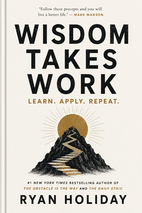
5 Main Takeaways from Wisdom Takes Work
Ego blocks wisdom; stay a perpetual student.
Holiday argues that conceit and the illusion of knowing enough are the greatest barriers to true wisdom. Lincoln's relentless self-education despite poverty and opposition shows that mastery is a process, not a destination. You must remain curious, questioning, and open—ready to learn from every experience, especially your mistakes.
Self-awareness is the hardest but most essential work.
Without honest self-examination, wisdom is impossible. The book stresses using journals, reflection, and uncomfortable questions to know yourself. Lincoln’s humility and willingness to admit he might be wrong prevented the arrogance that creates disaster. Progress isn’t reaching a horizon but looking back at the distance covered.
Empathy is a practical skill, not a weakness.
Lincoln’s encounter with enslaved people during his own depression seeded a moral conviction. Empathy lets you see the other side and is essential for wise action. It’s not sentiment—it’s a tool to understand human nature, both its decency and corruption, which Holiday shows is critical to navigating life and leadership.
Happiness emerges from virtue, not from chasing it.
Happiness is a choice rooted in virtue and contentment with your own company, not conditional on circumstances. You don’t find happiness directly; it comes from living well, giving to others, and focusing on what’s good. Holiday illustrates this through the idea that wisdom frees you from impulses and external tyranny.
Suffering is unavoidable; learning from it is optional.
Pain can either harden you or teach you. Holiday emphasizes that wisdom is a cycle: learn, apply, repeat—especially through suffering. Lincoln’s personal tragedies nearly destroyed him, but he chose to learn from them. Laughter and wonder are survival tools that protect against cynicism, while the fundamental choice is always ‘thou mayest.’
Executive Analysis
These five takeaways form a coherent thesis: wisdom is a demanding, lifelong practice rooted in humility, self-awareness, empathy, and the conscious choice to grow through adversity. Holiday weaves Lincoln’s story as a testament that true wisdom is not intellectual accumulation but a way of being—a cycle of learning, applying, and reflecting that liberates you from ego and circumstance. The book argues that the journey itself, not the destination, is where wisdom is forged, and that happiness emerges as a byproduct of virtuous living.
This book matters because it translates ancient Stoic and philosophical wisdom into a modern, practical framework for daily life. It sits in the genre of self-help and personal development but avoids platitudes by grounding insights in historical example and psychological realism. For the reader, it offers actionable tools—like journaling, embracing ambiguity, and choosing humility—that can transform how they face challenges, relationships, and their own inner world. Holiday’s work is a manual for anyone seeking meaning in a distracted age.
Chapter-by-Chapter Key Takeaways
This Is the Way (Introduction)
Education never ends; it eventually reverts into our own hands—we must teach ourselves to learn anything.
Ego is the enemy of wisdom; conceit blocks knowledge.
Stay curious, questioning, open, always ready to learn.
All accomplishments pale beside self-awareness.
Montaigne studied to show off, then to make himself wiser, and finally for amusement—never for profit. That evolution is the path.
Try this: Make your education your own responsibility: replace the habit of showing off knowledge with a daily practice of questioning, listening, and writing down what you learn for your own growth, not for profit or recognition.
Part III: The Apotheosis (Touching the Divine) (Chapter 3)
Lincoln's self-education was a fight against poverty and his father's opposition, creating a mind that learned slowly but remembered permanently.
His legal career gave him intimate knowledge of human nature—both its decency and its corruption—while his personal tragedies nearly destroyed him.
An encounter with enslaved people during his own depression seeded a moral conviction that eventually forced him from passivity to action.
Lincoln's opposition to slavery was grounded in careful historical research, not sentiment, revealing the founders' true intentions and the hypocrisy of pro-slavery arguments.
Empathy is a practical skill that lets you see the other side, not a weakness.
Arrogance creates disaster; humility—admitting you might be wrong—is essential wisdom.
Stay a student forever—mastery is a process, not a final state.
Teaching others is how we pay forward our debts and deepen our own understanding.
The more you know, the more you realize you don't know; embrace ambiguity and mystery.
Hold contradictory ideas with grace; avoid false certainty and accept the messiness of truth.
Self-awareness is rare but essential—use journals, reflection, and honest examination to know yourself.
Wisdom is freedom: it liberates you from impulses, illusions, and the tyranny of external events.
Happiness is not conditional on circumstances; it is a choice, rooted in virtue and the ability to be content with your own company.
Happiness is not found by chasing it directly; it emerges from living well, giving to others, and focusing on what's good.
Suffering is unavoidable, but wisdom is optional. Choose to learn from pain rather than let it harden you.
Laughter is a survival tool and a leadership skill—it disarms, reveals truth, and keeps you from breaking.
Wonder is essential for a meaningful life; protect it against the cynicism that knowledge often brings.
Wisdom is a cycle: learn, apply, repeat—in our own lives and across generations.
The fundamental choice is "thou mayest." We choose between virtue and vice, and no one grades us but ourselves.
Real education often happens outside classrooms, through experience, mentors, and the willingness to learn from mistakes.
Writing and contemplation are acts of self-discipline that make us better; the habit of a commonplace book keeps us sane and connected to truth.
Technology is a tool, not a substitute for the hard work of thinking, verifying, and wrestling with ideas.
Speaking truth is worth the personal risk; intelligence and power don't guarantee decency.
We must resist making excuses for our own cowardice—Marcus's question to himself applies to us.
Progress in wisdom is measured not by reaching the horizon, but by looking back at the distance covered.
The fruits of practice: calmer, quieter, less argumentative, more willing to admit fault.
Self-awareness is hard work but essential for healing and growth.
The journey continues beyond the book—the commitment is to keep showing up, day by day.
Try this: Start a commonplace book or journal today: write down one thing you learned from a failure or a moment of suffering, then reflect on how you can apply it to become calmer, more humble, and more self-aware tomorrow.