We the Women — Interactive Mindmaps

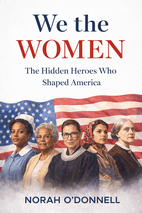
We the Women by Norah O'Donnell Book Cover

by Norah O'Donnell

Norah O'Donnell's We the Women spotlights the multi-generational fight for the Equal Rights Amendment, chronicling the overlooked mothers, lawyers, and activists behind this century-long struggle for constitutional equality. This narrative history connects pivotal figures from Alice Paul to modern organizers, offering crucial context for anyone engaged with women's rights and American political history.

On Insta.page you also get an Apply This Book tool that lets you combine insights from up to 3 books to solve your specific situation.
Chapter mindmaps

Free preview: chapters 1–4 are fully interactive. Click any node to expand or collapse. Subscribe to unlock the rest.

Chapter 1: Introduction

Key concepts: Introduction

1. Introduction

The 1876 Suffragist Protest

  • Suffragists stormed Independence Hall during centennial
  • Protested hypocrisy of liberty celebrations denying women's rights
  • Emblematic of women's stories erased from mainstream history

Author's Motivation & Personal Connection

  • Realized education centered on privileged white men's history
  • Inspired by immigrant grandmother's story of opportunity
  • Seeks to uncover 'hidden heroines' of 250-year struggle

Book's Purpose: Correcting Historical Record

  • Addresses less than 15% of taught history highlighting women
  • Curated profiles of changemakers, not comprehensive biographies
  • Focuses on 'firsts' and pivotal figures with underappreciated impact

Research & Collaborative Effort

  • Nearly two-year collaborative research project
  • Involved deep archival work and interviews
  • Aims to bring complex, imperfect lives to light

Women's Role in Bending History's Arc

  • Women central to bending moral arc toward justice
  • Stories essential to American struggle for equality
  • Inspires readers to continue forming a more perfect union

Chapter 2: Chapter 1: Mary Katherine Goddard: The Printer

Key concepts: Chapter 1: Mary Katherine Goddard: The Printer

2. Chapter 1: Mary Katherine Goddard: The Printer

The Goddard Broadside & Declaration of Independence

  • Printed first official copy with all signers' names
  • Included her own full name, a bold and risky act
  • Created a permanent record for states during war

Revolutionary Publishing & Advocacy

  • Published the Maryland Journal to challenge British rule
  • Serialized 'Common Sense' and wrote patriotic editorials
  • Used her press as a hub for dissent and rallying support

Postmaster Service & Unjust Dismissal

  • First female postmaster, crucial for wartime communication
  • Dismissed in 1789 due to political cronyism and sexism
  • Official excuse claimed women couldn't handle travel demands

Defiance of Gender Norms

  • Operated successfully in male-dominated fields
  • Publicly claimed her work in a treasonous document
  • Her capability was proven yet later sidelined by system

Legacy as an Overlooked Founder

  • Key but forgotten contributor to American Revolution
  • Story represents unsung women of the founding era
  • Bravery and contributions overshadowed by discrimination

Chapter 3: Chapter 2: Phillis Wheatley: The Poet

Key concepts: Chapter 2: Phillis Wheatley: The Poet

3. Chapter 2: Phillis Wheatley: The Poet

Early Life and Education

  • Forcibly brought to Boston as a child
  • Received an extensive education from the Wheatley family
  • Began writing poetry by age eleven

Poetry as Political Advocacy

  • Linked personal slavery to colonial struggle for freedom
  • Used verse to advocate for abolition and independence
  • Publication required attestations of her authorship

Revolutionary Engagement

  • Corresponded with and impressed George Washington
  • Publicly supported the patriot cause at personal risk
  • Highlighted national hypocrisy regarding slavery

Literary Achievement

  • First published African American poet
  • Gained international fame with 1773 London publication
  • Work challenged contemporary racial prejudices

Enduring Legacy

  • Faced dismissal and hardship despite fame
  • Inspired future generations of poets and activists
  • Used art to expand the definition of American freedom

Chapter 4: Chapter 3: Mercy Otis Warren: The Intellectual

Key concepts: Chapter 3: Mercy Otis Warren: The Intellectual

4. Chapter 3: Mercy Otis Warren: The Intellectual

Conflict with John Adams

  • Friendship fractured over her historical criticism
  • Adams dismissed her work with sexist rebuke
  • Rift began during Constitutional debates over principle

Education and Marriage

  • Received exceptional classical education for a woman
  • Marriage to James Warren created political partnership
  • Home became salon for revolutionary strategizing

Political Writing and Influence

  • Used satire and poetry to shape public opinion
  • Wrote anonymously due to gender constraints
  • Works translated political ideals into accessible rhetoric

Advocacy for Bill of Rights

  • Authored Anti-Federalist pamphlet on Constitution
  • Systematically warned of lacking individual liberties
  • Provided intellectual framework for Bill of Rights

Complex Legacy and Constraints

  • Did not advocate for women's political rights
  • Promoted Republican Motherhood concept
  • Operated within gendered constraints of her era

Continue exploring We the Women