Thornbird Quotes
by E. Kennedy
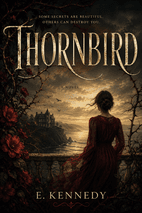
These lines come from the places people usually hide. You will hear sharp dialogue between characters who are still deciding whom to trust, first-person narration that makes every scrape of dread feel immediate, and the kind of inner monologue that admits what a person has spent years swallowing. The style is restrained, but the emotions underneath are loud.
Thornbird is quotable because it lets grief sound ordinary. It turns a quiet confession into something heavier, and a simple remark into a warning. The words feel made to be repeated, partly because they are painful and partly because they are true. They capture how people talk around loss, and what they admit only when they think nobody is listening.
Top Quotes from Thornbird
“Seven, I think. Seven families. People always forget the last victim. My mother. Maybe because she was supposed to stop him and didn’t. That doesn’t mean our family has suffered any less. In fact, I've suffered more. That night, I lost both my parents.”
— Ryan
At baggage claim, Ryan hears a businessman say six families won't get any peace after the news update on Gabriel Thorn.
It quietly corrects the public's count and exposes the buried personal grief at the center of her journey. The last line makes clear she lost both parents, not just one.
“Every good memory I have of this place is tainted by a bad one. Happy. I've never been that in my life. And I don’t know how it's possible to start in the place where a monster once lived.”
— Ryan
After Maggie welcomes Ryan to the family home and says she wants her to be happy, Ryan reflects on arriving in Starling.
It captures the impossibility of outrunning a traumatic past. The blunt statement “Happy. I've never been that in my life” is devastating.
“Maybe the reason I can’t escape is because they never did.”
— Ryan
Ryan wakes from a nightmare and wonders why Starling still grips her years after her father's crimes.
This quiet thought links the physical place to the unburied victims, suggesting she is trapped by grief and guilt as surely as if she were tethered to them.
“I tip my head to look at him, and that's when I see them. Dangling from the trees. Not birdhouses. Bodies. Six of them. All women, their long hair hanging over their eyes, their heads lolling at unnatural angles. They've been strung up there, pale and dead.”
In the narrator's nightmare, she looks up at her father and realizes the colorful birdhouses are hanged women.
The image pivots from childhood innocence to horror in a single line, and it makes the dream impossible to forget.
“It's like holding a glass bubble in my hand, watching the tiniest crack form while trying to convince myself it won't eventually shatter. Things always shatter.”
Getting ready for her date with Everett, the narrator feels the hopelessness of starting a relationship while hiding the truth.
The glass-bubble metaphor renders hope as fragile, and the blunt final sentence, 'Things always shatter,' makes her fear inescapable.
“And you killed the others. The women—do you get that, Gabriel? They were women. Human beings. Not your little birds or your little playthings.”
— HALLIWELL
Halliwell pushes back when Thorn claims he didn't hurt the women he murdered.
Halliwell's blunt repetition strips Thorn's victims of his 'sparrows' fantasy and returns their humanity to them. It is one of the few times the confession transcript speaks plainly for the dead.
“Then stop me next time, if you really want to.”
— Chase
At the lakeside bonfire, Chase reacts after Ryan claims their kiss meant nothing.
The line is both a challenge and an invitation, showing he doesn't believe her.
Themes Behind the Quotes
The novel keeps circling back to the weight of family. The narrator is not just grieving her mother; she is carrying a father’s choices and a town’s judgment. Loss is tangled with shame, and every relationship is tested by the fear that the past will repeat through blood or memory. Again and again, the text asks whether children can leave behind what their parents did.
Another thread is the difference between hiding and surviving. Many characters have mastered silence, but silence doesn't protect them. It shows up as secrets kept too long, apologies that come too late, and a desire for peace that keeps getting mistaken for revenge. These quotes show how happiness can be poisoned by the place it happened, and how the only way forward may require facing the ugliest truths rather than burying them.
Quotes by Chapter
Part 1 - Chapters 1 to 4
“I don’t realize I'm gnawing on my lower lip until I taste the metallic tang of blood. It’s a smell, a taste, I always associate with that night, cowering under the bed, wishing I could disappear.”
— Ryan
On the drive into Starling, Maggie mentions that Ryan's mother tried to leave, and Ryan unconsciously relives the night she hid under the bed.
The body-memory image is visceral and shows that no new name can erase the trauma she carries. It makes the reader feel the flashback along with her.
“Your momma was a very brave woman. She wanted the best for you. That's why she tried to leave when she did.”
— Maggie
Maggie is apologizing for being absent and telling Ryan the truth about her mother's attempt to escape Gabriel.
It gives Ryan an unexpected secondhand defense of her mother and hints at the tragedy without melodrama. The simple, loving phrasing makes it hit hard.
Part 2 - Chapters 5 to 8
“To whoever is out there...if you know something, anything... please. Please come forward. Help us end this. They deserve to be found. My mom, all of them—they deserve peace. We deserve peace.”
— Benjamin White
Benjamin White speaks at the press conference announcing the increased reward for finding his mother's remains.
His halting, desperate plea turns a public announcement into a personal cry for peace, and for Ryan every word lands like a private accusation.
“I hate this. I hate him for what he did. For making me carry this secret.”
— Ryan
After Jasmine treats the million-dollar reward like a treasure hunt, Ryan is overwhelmed by guilt in front of the victims' families.
It captures the impossible position of being the killer's child: unable to reveal what she knows, hating her father for putting that burden on her.
“Once, they were a bright array of colors, like a rainbow, making these woods feel like some mythical fairy haven. Now they're faded and missing sides, hanging at odd angles for dear life, long abandoned by feathered friends.”
Ryan approaches her abandoned childhood home and sees the birdhouses she once painted with her father, faded and broken.
The image of birdhouses going from colorful fairy-tale charm to rotting ruins is a quiet elegy for a childhood that was destroyed by her father's monstrous secret.
Part 3 - Chapters 9 to 11
“I know she’s dead, but she wasn’t really gone, not as long as I had that necklace. All those other families, they don't even know where their moms’ remains are, but I had mine around my neck.”
— Ryan
Ryan is crying in the woods after losing the locket made from her mother’s ashes, and she tries to explain what it meant to Maggie.
It makes grief tangible and shows how an object can hold a person’s presence after death. The comparison to other families sharpens both her pain and her gratitude.
“That won't happen. But if we don’t find it, you'll be okay, darlin’. Your mother's with the angels now, which means she’s always watching over you. She's still with you, even when it doesn't feel like it.”
— Maggie
Maggie holds Ryan after Ryan whispers that they may never find the locket.
A tender promise framed in faith, it acknowledges doubt while insisting love remains. The line 'even when it doesn't feel like it' is honest comfort rather than easy reassurance.
“The sheriff rounded 'em all up, and we had to have a police cruiser parked in our driveway for a whole month to keep them off the property.”
— Connor
Connor tells Ryan why he detests true-crime fans like Zed, describing what happened after the murders.
It shows how the families of killers are also haunted by public obsession. The police cruiser detail makes the abstract cost of true crime painfully concrete.
“I don't think this is the way to do it. You're talking about these victims like they owe you something, but they don't. This isn’t a game.”
— Ryan
Logan Zellman tries to recruit Ryan into his investigation of the victims, implying she could help and share in the reward.
It exposes the dehumanizing effect of treating a crime case as an adventure. Ryan's refusal insists victims deserve more than a reward.
Part 4 - Chapters 12 to 15
“I guess that's me. But I don’t want that. I want to abdicate.”
— Everett
Everett explains why he won't rekindle things with Sofia—she made him her king.
He refuses a role he never chose in Sofia's fairy tale. 'Abdicate' turns teenage heartbreak into a quiet declaration of independence.
“You, laughing like that—no filter, no trying to be ironic or cool.”
— Everett
After the narrator bursts out laughing when Everett says his favorite thing is pie, he tells her what draws him to her.
It is a precise, affectionate compliment to an unguarded moment—rare for someone who must carefully guard her real self.
Part 5 - Chapters 16 to 19
“For the first time in my life, I feel like a normal teenager. Even in Allentown, where hiding my identity wasn’t as imperative as it is here in Starling, I kept to myself.”
At the start of the chapter, the narrator reflects on her new life in Starling—friends, family, and a boyfriend—which is built on a hidden identity.
The apparent normalcy is touching and terrible at once, because the reader knows it can’t hold. It also sets up the secret that threads through the whole chapter.
“It means when you laugh at his jokes, it never reaches your eyes. And when you stare out the window during every class, it's not because you're seeing something peaceful.”
— Chase
In class, Chase tells the narrator what he really sees behind her act.
It is a startlingly precise read on her facade, and it makes Chase more unsettling than a simple antagonist. The line stays with her for the rest of the chapter.
“Gabriel Thorn hung himself in prison. My father hung himself. My father is dead.”
At a party, the narrator sees a TV report that her father has killed himself in prison on the eve of his execution.
The blunt repetition mirrors her shock and keeps the horror in the present tense. It also turns the anticipated execution into something emptier than justice.
“His mother didn’t just die. My father killed her.”
With Everett and Nikki’s grief as the clue, the narrator realizes their family is one of her father’s victim families.
The two short sentences collapse every boundary between her father's crimes and the people she now cares about. It reframes her romance with Everett as impossible and haunted.
Part 6 - Chapters 20 to 23
“The moment we met, I felt like you got me. Like you could see I'm more than I appear on the surface. Well, I know you're more than you appear to be too. So talk to me.”
— Everett
Everett corners Ryan in the hallway after the breakup and asks her to open up to him.
It shows Everett offering exactly the openness Ryan craves, while she is trapped by a secret she cannot share. The sincerity makes the wall she has to keep building even more tragic.
“I know all about baggage, I want to blurt out. I want to hug him. Tell him I’ve changed my mind. But my family is responsible for everything he’s suffered. I have to stand firm.”
— Ryan
After Everett says he doesn't blame her for not wanting to take on his family's baggage, Ryan has this internal reaction.
This is the painful hinge of the scene: she has the same powerless longing he does but can't act on it. Her compassion for him becomes another form of self-punishment.
“The light danced on her. It danced! It skipped down the planes of her face and rested there, like it couldn't help itself.”
— THORN
In the same transcript, Thorn answers Halliwell's question about why he targeted Leah Devereaux.
Thorn's ecstatic, almost tender language about a woman he murdered is chillingly beautiful. It shows how he turned killing into art in his own mind, which is why he remains so dangerous.
Part 7 - Chapters 24 to 29
“I’ve gotten so good at it that I probably wouldn't even know the truth if it stopped me on the street and said hello.”
— Ryan
Ryan is on the school bus, trying to disappear after seeing Trevor wear a jacket printed with her father’s mug shot.
It captures the self-alienation built from constant lying, making the truth feel like a stranger she might no longer recognize.
“Because I ride a motorcycle and hook up at parties? Obviously, that means my dad's a deadbeat and my mom's a drunk, right?”
— Chase
After revealing he works as a mechanic to help his mother, Chase calls out Ryan for assuming his life is dysfunctional.
In one sarcastic question, Chase flips her judgment back at her, exposing how easy it is to misread someone by surface clues.
“She doesn't know what's good for her. She doesn’t know that out here, alone, she’s only going to die.”
— Dad
In a childhood memory, Ryan’s father speaks about an escaped pet parrot that refused to come back to him.
The line is deceptively gentle and deeply menacing, revealing his possessive view that safety means captivity.
“His mom died when he was seven. My dad died of cancer when I was five.”
— Chase
Ryan asks Chase what he and Everett have in common, and Chase explains the loss that first bonded them.
The short, matter-of-fact delivery makes the shared grief even more powerful and shows why Chase is so fiercely loyal.
Part 8 - Chapters 30 to 34
“The silence between us is louder than any words.”
In homeroom, Ryan and Chase ignore each other after their kiss.
It captures the charged, unspoken tension between them in one image.