Think Big Quotes
by Donald J. Trump
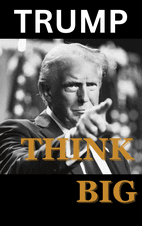
Here you'll find a selection of the most memorable lines from Think Big. They cover a range of themes from relentless drive to the power of instinct. What makes this book so quotable is its direct, unapologetic style. Trump delivers advice that is both shocking and practical, often in just a few words.
The quotes you are about to read will challenge you to think differently about risk, revenge, and resilience. They are the kind of lines you want to save and share because they say a lot with very little. This is a book that doesn't shy away from tough truths, and these quotes prove it.
Top Quotes from Think Big
“If you want to make it big, you've got to push yourself beyond your limits. You've got to pump yourself up and get yourself into a hyper mental state.”
Bill Zanker recalls Tony Robbins' advice that inspired him to make a bold offer to Trump.
This high-energy, empowering message directly challenges readers to break through their comfort zones and adopt a winning mindset.
“To be successful you have to separate yourself from 98 percent of the rest of the world.”
From the author's opening remarks on the qualities of successful people.
It sets a clear benchmark for ambition and highlights the rarity of true success.
“You have to be as tough as nails and willing to kick ass if you want to win.”
From the same opening section where the author discusses the necessary toughness.
It emphasizes the gritty, combative mindset required to overcome obstacles in business and life.
“I don't do it for the money. I've got enough, much more than I'll ever need. I do it to do it. Deals are my art form.”
This is the opening paragraph of Donald Trump's first book, The Art of the Deal, and he quotes it here to explain his lifelong passion.
This line perfectly captures the idea that true passion is driven by the love of the activity itself, not by financial gain. It's iconic because it defines Trump's self-image as an artist of deals.
“I have learned that it is important to focus on the solution, not the problem. If you put all your energy into the problem, how much passion do you have left for finding a solution?”
Trump shares his approach to handling pressure and stress in business and life.
This practical advice combines passion with problem-solving, reminding readers that fixation on obstacles drains the very energy needed to overcome them.
“He said, “The harder I work, the luckier I get.””
Gary Player, a famous golfer, responds when asked about his luck.
This line perfectly captures the chapter's core message that effort and persistence create opportunities, inspiring readers to take ownership of their success.
“My motto is: Always get even. When somebody screws you, screw them back in spades.”
Donald Trump states his personal motto about revenge.
This line encapsulates the chapter's central theme of retribution and is memorable for its blunt, aggressive tone.
Themes Behind the Quotes
One major theme is the importance of relentless drive and self belief. Trump emphasizes pushing beyond limits, ignoring rejection, and working harder than anyone else. Another theme is the value of instinct and gut feelings, even when they contradict conventional wisdom. He also champions a combative approach to business and life, advocating for retaliation against those who wrong you.
A third theme revolves around passion and purpose. Doing work you love transforms effort into energy. The quotes also stress the need to focus on solutions rather than problems, and to maintain momentum once you have it. Overall, these themes paint a picture of success built on aggression, resilience, and an unshakable trust in your own judgment.
Quotes by Chapter
Introduction
“I changed the whole concept of continuing education to what I call “edu-tainment.””
Bill Zanker describes how he transformed The Learning Annex's approach.
This phrase captures a modern, engaging blend of education and entertainment, resonating with readers who seek quick, compelling learning experiences.
“I realized I had been playing it safe.”
After Norma rejected his $25,000 offer to Donald Trump, Zanker understood his own caution.
It's a relatable moment of self-awareness that pushes readers to examine their own limits and motivates them to take smarter risks.
“I pushed out my chest, took a deep breath, and gathered all the energy I could muster.”
Before calling Norma to offer Donald Trump one million dollars, Zanker physically prepares himself.
The vivid, physical description makes the moment of courage tangible, inspiring readers to take bold action even when terrified.
1: Do You Have What It Takes?
“If you want to be a success, you have to get used to frequently hearing the word no and ignoring it.”
From the author's explanation of question 10 in the success quiz about handling rejection.
It reframes rejection as a hurdle to be overcome, encouraging resilience and persistence.
“It takes persistence to knock on door after door and deal with rejection after rejection, without knowing whether you will ever be successful.”
From Bill Zanker's personal story at the end of the chapter about persistence.
It captures the relentless effort needed to achieve goals despite repeated rejection and uncertainty.
2: Passion, Passion, Passion!
“Passion is the magic ingredient that zaps you with the fierce drive for completion of every endeavor.”
Trump is explaining why passion is more important than brains or talent.
The vivid metaphor of 'magic ingredient' and 'zaps' makes this a memorable, punchy definition of how passion fuels perseverance and success.
“When you do work that you love, it is no longer work because the activity itself is a source of energy.”
Trump advises readers to find work they love, describing how passion transforms effort into energizing joy.
This statement reframes the concept of work, resonating with anyone who has experienced the difference between drudgery and fulfilling labor.
3: Basic Instincts
“I like to go against the tide. I feel it is important to go against the tide, to go with your gut—if you think you have that talent.”
Donald Trump reflecting on his deal-making philosophy.
Emphasizes the value of independent thinking and trusting instincts against conventional wisdom.
“YOUR WORD IS GOLDEN That is another very important thing: when you shake somebody's hand, go with it.”
Trump discussing the importance of keeping one's word after shaking hands with Mark Burnett.
Highlights integrity and the power of a handshake deal in business.
“If you have a good feeling about something, go ahead with it. If the feeling is bad, proceed with caution.”
Trump advising on how to use gut instincts in decision-making.
Provides clear, actionable advice for balancing intuition with caution.
“Although many people ignore this tool, their instincts, I believe everybody has them. It is really just an intelligent response to situations we have experienced before.”
The author explains that gut instincts are a form of learned pattern recognition.
It demystifies intuition, framing it as a rational, experience-based tool rather than a mystical force, making it accessible to everyone.
4: Creating Luck
“Sometimes luck makes better deals than talent.”
The author reflects on how catching the flu saved him from a bad newspaper deal.
It humbly acknowledges that luck can override skill, making the concept of luck relatable and reminding readers to stay open to unexpected outcomes.
“I can’t emphasize enough how important it is to take chances on something new.”
The author discusses his willingness to try new ventures like The Apprentice and WWE wrestling.
This direct exhortation encourages readers to step out of their comfort zones, reinforcing that innovation and risk-taking are vital for growth.
“Always remain open to new ideas, information, and opportunities.”
Advice given near the end of the chapter about staying alert and adaptable.
It serves as a practical, actionable reminder that continuous learning and openness are key to creating luck and achieving success.
5: Fear Factor
“The world is a vicious, brutal place. It's a place where people are looking to kill you, if not physically, then mentally.”
Donald Trump opens the chapter by describing the harsh nature of the world.
This line sets the cynical, defensive tone of the chapter and resonates with anyone who has felt attacked or betrayed.
“When somebody takes a cheap shot at you do not be afraid to fire back.”
Trump advises readers after recounting how he retaliated against a disloyal acquaintance.
This direct, aggressive advice encapsulates the chapter's theme of fighting back against betrayals and attacks.
“Get the best people, and don't trust them.”
Trump revises his earlier advice after seeing too many people get robbed by trusted employees.
The paradoxical phrasing makes it unforgettable, summarizing the chapter's lessons on vigilance and skepticism.
“If you are worried about being liked, you are in trouble. It is more important to be respected and feared than to be liked by employees.”
Donald Trump, discussing his management philosophy in the chapter 'Fear Factor'.
This line encapsulates Trump's controversial leadership style, which prioritizes authority and discipline over popularity, and resonates with leaders who believe respect and fear drive performance.
6: Revenge
“If you don't get even, you are just a schmuck!”
Donald Trump explains why he believes in retaliation.
It's a provocative and polarizing statement that underscores Trump's zero-tolerance approach to being wronged.
“Go for the jugular. Attack them back in spades!”
Donald Trump advises on how to respond when attacked.
The vivid imagery of going for the jugular emphasizes the intensity of his recommended response and leaves a strong impression.
“Always make a list of people who hurt you. Then sit back and wait for the appropriate time to get revenge. When they least expect it, go after them with a vengeance. Go for their jugular.”
The author advises readers on how to handle people who have wronged them.
This line encapsulates the aggressive, strategic approach to revenge that the author promotes, giving readers a concrete tactic and a memorable phrase that sticks.
7: Big Mo!
“I said, “What exactly went wrong?” He said, “Donald, I lost my momentum.””
Donald Trump recounts his conversation with aging home builder William Levitt at a party.
It captures the simple yet profound reason for failure from a once-great builder. The line is haunting and memorable, showing that momentum is everything.
“Momentum is like poker chips that you have to keep in the game and keep putting into successively bigger and bigger pots.”
Trump explains the nature of momentum using a poker chip analogy.
The analogy makes an abstract concept concrete and relatable. It emphasizes the need to continually reinvest success to keep growing.