Therapeutic Fasting Quotes
by Thomas Lodi MD
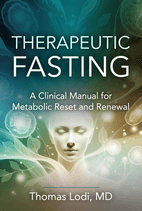
Here you will find a selection of quotes from Dr. Thomas Lodi's book Therapeutic Fasting. These lines cut through the noise, offering clear, sometimes startling truths about what happens when we stop eating. They challenge common myths and present fasting not as deprivation but as a natural, powerful healing process.
What makes this book so quotable is its directness. Dr. Lodi avoids vague platitudes and instead gives you sharp, memorable statements that stick with you. Each quote feels like a key, unlocking a deeper understanding of the body's innate intelligence and the profound shift that occurs when we let it work without interference.
Top Quotes from Therapeutic Fasting
“This is fasting physiology. When fat reserves fall below what is required to maintain metabolic function, the body begins to consume essential tissues and organs. This is starvation.”
The author defines the critical boundary between therapeutic fasting and starvation.
This line sharply distinguishes the safe, regenerative state of fasting from the dangerous state of starvation, giving readers a clear physiological marker of when a fast becomes harmful.
“It reads like a miracle—yet it is not a miracle, but simply nature operating at its highest expression.”
The author reflects on the remarkable healing effects of fasting described in modern research.
This line demystifies the extraordinary benefits of fasting, reframing them as natural rather than supernatural, which empowers readers to trust their body's innate capacity for renewal.
“The interventionalists will ask, “what should we give or do to change the body?" while the Natural Hygienists asks, “what should be stopped so the body can function as it already knows how?"”
The author contrasts the philosophical approaches of interventional medicine and Natural Hygiene.
This quote encapsulates the core paradigm shift of the book—from forcing change to removing obstacles—resonating with readers who feel over-medicalized and seek a return to self-healing.
“The irony of this is that on day four, one breaks through raging appetite into the calm realization that what they thought was "hunger" was the desire to smell, taste, chew, and swallow specific cravings.”
Describing the psychological breakthrough after the first three days of fasting.
This line reframes the experience of intense craving as a sensory desire rather than true hunger, offering a liberating insight that helps fasters push through the most difficult phase.
“By passing through this initial phase, or initiation a threshold is crossed, and a door opens. What lies ahead is a state of being inaccessible when still tethered to appetite and the rhythm of continual feeding.”
Describing the transition after the first few days of fasting.
The poetic language of crossing a threshold and opening a door vividly conveys the transformative reward that awaits those who endure the early struggle.
“Fasting is the name that was assigned to an aspect of a healthy lifestyle, which is the ONLY way to renew the body thereby restoring health.”
Opening of the chapter, defining fasting.
This line asserts fasting as the exclusive method for health restoration, making it a bold and memorable statement.
“Sleep determines the efficiency of repair during fasting and renewal when refeeding. This is NOT optional.”
Concludes the chapter's argument on sleep's non-negotiable role.
The blunt finality of 'NOT optional' elevates sleep from a recommendation to a critical requirement, leaving a strong, authoritative impression.
Themes Behind the Quotes
A central theme is the body's innate wisdom and ability to heal when given the chance. The quotes repeatedly distinguish between true fasting, which is a controlled metabolic shift, and starvation, which is harmful depletion. They describe the initial discomfort as a temporary phase where the body switches from burning glucose to ketones, not a sign of crisis. This understanding transforms the experience from deprivation to empowerment.
Another major theme is the critical role of preparation and lifestyle factors. Sleep, morning sunlight, and pre fasting diet adjustments are highlighted as essential tools to ease the transition and maximize benefits. The quotes also emphasize the need for proper guidance and the willingness to question conventional medical approaches. Ultimately, they present fasting as part of a broader philosophy of letting the body do its work, supported by simple, natural practices.
Quotes by Chapter
Chapter Two: The Phases of a Therapeutic Fast
“This transient weakness is commonly misinterpreted as a need to eat, when actually it is simply a temporary phase of metabolic transition, resulting in a short window where the old system (glucose) is gone, and the new system (ketones) is not yet fully online, experienced as weakness, heaviness, and listlessness.”
Explaining the 'day 3-4 weakness' phenomenon during the metabolic shift.
It normalizes a common fasting complaint by revealing its true biochemical cause, empowering readers to persist rather than misinterpret the sensation as a signal to stop.
“It is for these reasons that one needs to have some knowledgeable rather than emotional input in order to turn "deprivation" into the inspiration required to gratefully begin their healing journey.”
Advising on the importance of informed support during the challenging first days of a fast.
This reframes fasting from a painful deprivation into a grateful healing journey, emphasizing the power of knowledge to transform the experience.
Chapter Three: Exclusion Criteria
“Normal fasting ketosis is stable. Ketoacidosis is progressive. High glucose and high ketones are the signal to act.”
In the section distinguishing normal ketosis from ketoacidosis.
The simple contrast between stable and progressive conditions provides a clear, easy-to-remember clinical distinction.
“Since all medications are poison and impair healthy physiological functioning, a discussion needs to happen with a knowledgeable and experienced physician who has supervised people fast over the years.”
In the medication management section.
The blunt characterization of all medications as 'poison' is provocative and emphasizes the need for medical supervision.
“Resolve uncertainty with a qualified clinician before beginning.”
Under the relative exclusion about genuine uncertainty.
A succinct directive that cuts through complexity, urging caution and professional consultation.
Chapter Four: Pre-Fast Preparation (Minimum 7–14 Days)
“For the person with multiple medical conditions who is under the care of a physician, that physician must be notified and asked to evaluate the ability to be weaned off medications and, if appropriate, to supervise the process, as well as assess liver function, kidney function, cardiac function, metabolic stability, and overall nutritional status.”
This appears in the chapter's opening advice on pre-fast preparation for individuals with medical conditions.
It underscores the non-negotiable medical safeguards required before fasting, emphasizing the comprehensive evaluation needed to ensure safety.
“If the physician is unwilling due to lack of familiarity with fasting or concern about its safety, then it is necessary to consult with another physician who understands fasting and is willing to assist.”
The text advises what to do when a patient's current physician cannot support the fasting plan.
This line empowers readers to seek knowledgeable medical guidance rather than abandon their fasting goals, highlighting the importance of informed professional support.
“This period can be as short as one week and as long as one month or more, depending on the person's lifestyle, medications, and both physical and psychological health.”
The opening sentence of the chapter describing the flexible duration of pre-fast preparation.
It captures the individualized nature of fasting preparation, reassuring readers that the timeline adapts to their unique circumstances.
Chapter Five: Dietary Preparation for the Fast
“What is thought of as "hunger" in the early phase of fasting, however, is appetite being fueled by the continuation of oscillating glucose and insulin signaling, along with ghrelin surges and leptin instability.”
The author explains the physiological mechanism behind early fasting hunger.
This line reframes hunger as a hormonal oscillation rather than a genuine need for food, empowering readers to understand and manage their appetite during a fast.
“When those oscillations are dampened beforehand, appetite quiets more quickly, and the urgency to eat is far less dramatic, and easily managed.”
The author summarizes the benefit of dietary preparation before a fast.
It directly connects pre-fast diet to a smoother fasting experience, offering practical hope that hunger can be controlled through preparation.
“By eating in this simplified manner, the insulin-glucose rollercoaster is an easier ride.”
The author describes the effect of a low-glycemic, time-restricted diet.
The vivid metaphor of a 'rollercoaster' makes a complex hormonal process relatable and memorable, reinforcing the value of dietary simplicity.
“The final days and even the preceding one to two weeks have a direct and powerful impact on how the first three to five days unfold.”
The author emphasizes the long-term influence of pre-fast diet on the early fasting phase.
This statement underscores the importance of preparation, motivating readers to commit to the dietary regimen for a more successful fast.
Chapter Six: The Other End
“What is often misinterpreted as "hunger" in the early phase of fasting is appetite fueled by the glucose- insulin rollercoaster, along with surges in the hunger hormone ghrelin and leptin instability.”
The author explains the subjective experience of early fasting and why people often mistake appetite for true hunger.
This line empowers readers to reinterpret their sensations during fasting, transforming a potential source of discouragement into a manageable metabolic signal.
“By eating substances that produce a mucilaginous gel water is retained, and since the colon's primary role is water reabsorption, this reduces the need to extract water from stool, preventing dryness and hardness.”
The author describes how mucilaginous fiber supports colon function and prevents constipation.
It provides a clear, mechanistic explanation of how dietary fiber works, making the science of colon health accessible and practical.
“Therefore, contrary to the common myth, accepted myth that these foods should never be consumed; they actually are a key component of a healthy diet.”
The author challenges the widespread belief that phytate-rich foods like seeds and nuts are harmful.
This line overturns a nutritional myth, offering a balanced perspective that encourages the inclusion of nutrient-dense foods often wrongly avoided.
“The development and subsequent habit of beginning the day with this simple morning ritual will not only allow the fast to begin with more comfort and efficiency but will serve as an important aspect of self-care throughout life.”
The author emphasizes the long-term benefits of a preparatory morning routine involving mucilaginous fibers.
It frames fasting preparation as a lifelong self-care practice, inspiring sustained commitment beyond the immediate fast.
Chapter Seven: Sleep Considerations
“Restorative sleep (slow wave sleep) keeps leptin (the satiety hormone) high, so that any delays in sleep past 9 PM blunt the "fullness" signal leaving one psychologically and physically ravenously hungry.”
Explains the hormonal consequence of delaying sleep past 9 PM.
It vividly captures how a small timing shift creates intense hunger, making the metabolic stakes feel immediate and personal.
“In summary, the 9 PM advantage of early deep sleep allows the brain to suppress ghrelin before the late- night hunger wave can even begin and prevents the precipitous drop in leptin levels that occurs when awake at midnight, meaning one awakens on Day 2 or 3 with significantly less "biological desperation."”
Summarizes the core benefit of early sleep for fasting success.
The phrase 'biological desperation' encapsulates the primal struggle against hunger, framing sleep as a strategic tool rather than a passive rest.
“Furthermore, sleeping late results in significant increases in ghrelin because the body senses a "false" energy deficit and screams for calories to fuel the extra hours of wakefulness.”
Describes the body's reaction to late sleep during fasting.
The anthropomorphic image of the body 'screaming for calories' makes the hormonal feedback loop visceral and memorable.
Chapter Eight: Normalize Cortisol Rhythm
“The most powerful physiological intervention to restore a healthy circadian-cortisol rhythm is to increase morning natural sunlight exposure (at least 20-30 minutes) within 30 minutes of waking without wearing sunglasses, ideally by walking.”
The author introduces a core actionable step for normalizing cortisol rhythm.
This line cuts through complexity with a simple, evidence-based prescription that empowers readers to take immediate control of their circadian health. Its specificity makes it both memorable and easy to implement.
“Furthermore, humming increases nitric oxide production in the paranasal sinuses up to 15-20x compared with quiet breathing, causing airways to relax and blood vessels to dilate increasing blood flow and, finally increases oxygen uptake by the cells.”
The author explains the physiological mechanism behind the ancient practice of humming.
It connects a mundane action to a profound biological effect, making the science feel tangible and inspiring readers to adopt humming as a simple tool for parasympathetic activation.
“Thinking is not a voluntary act. It is a "happening," just as the heart beats or digestion occurs. No one decides to think. It is a spontaneous and continuous happening that is an intrusive kaleidoscope of random images and concepts.”
The author reframes the nature of thought while explaining meditation's purpose.
This provocative statement challenges the common belief that we control our thoughts, offering a liberating perspective that reduces shame about mental chatter and validates meditation as a necessary practice.
“Perhaps most striking is meditation's ability to physically reshape the brain through neuroplasticity. Regular meditation practice acts like resistance training for the mind, thickening the prefrontal cortex, the seat of focus and decision-making while simultaneously shrinking the amygdala, the brain's primitive alarm bell for fear.”
The author highlights the structural brain changes from meditation.
The vivid metaphor of resistance training for the mind makes neuroplasticity accessible and motivating, showing readers that meditation is not just relaxation but a powerful tool for building resilience and emotional control.