The Water Women Quotes
by Bonnie Blaylock
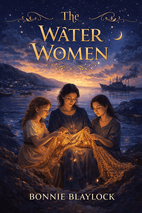
These quotes from The Water Women capture the essence of a story steeped in the rhythms of the sea and the bonds of family. You will find lines about the sacred duty of weaver women, the pull of the ocean, and the quiet wisdom of those who live in harmony with nature. The book is quotable because its words feel both timeless and personal, like a whispered truth shared between generations.
What makes these quotes memorable is their ability to hold grief and joy in the same breath. They speak to the weight of loss, the comfort of routine, and the fierce love that binds a community. Blaylock's language is simple yet vivid, painting images that linger long after you finish reading.
Top Quotes from The Water Women
“The sea’s spectacular turquoise churned to deeper hues, midnight blues and violet far offshore. It was a siren’s call, but she knew the current’s pull would be too strong, even for her.”
Allegra observes the storm-churned sea and feels its dangerous allure.
This line beautifully captures the sea's dual nature—beautiful yet treacherous—foreshadowing the risks the women face in their tradition.
“It was their sacred oath and duty, passed through generations and guarded through the ages. It bound them to one another, this skill and the honor of carrying its knowledge, and they gave it as a gift to a world that seemed bent on turmoil.”
The narrator describes the importance of the byssus weaving tradition to Allegra's family and sisterhood.
It encapsulates the central theme of legacy, sacrifice, and the women's quiet defiance against a chaotic world, making it deeply resonant.
“Her thoughts kept returning to her sister repeatedly, like a tongue drawn to the cavity from a lost tooth.”
Allegra thinks about her absent sister Ella at the end of the chapter.
The visceral simile perfectly expresses the ache of missing someone, turning a simple feeling into an unforgettable image.
“The maddening thing about losing someone close is that although time stills in the space of one moment for you, everyone else carries on.”
The narrator reflects on grief in the opening of the chapter.
This line captures the isolating, suspended feeling of loss while the world moves indifferently, making it universally resonant for anyone who has mourned.
“Fully a year after Ella’s death, Allegra sensed herself growing around the stone of loss that seemed mortared into her heart.”
Allegra gradually adapts to living with the absence of her sister.
The visceral image of growing around a stone beautifully illustrates how grief becomes integrated into one's life without ever disappearing.
“She had learned, again and again, that the hardest goodbye is the one before hello.”
Allegra reflects on her repeated miscarriages.
This line poignantly captures the grief of losing a child before it is born, a sentiment that resonates deeply with anyone who has experienced loss.
“We’re stewards. Somehow, we must steward our pain so it’s not wasted.”
Allegra recalls her mother's advice about handling suffering.
It offers a profound philosophy of transforming personal pain into purpose, encouraging readers to find meaning in hardship.
Themes Behind the Quotes
A central theme is stewardship, not only of the sea and its creatures but of family traditions and personal pain. The water women see themselves as caretakers, bound by an oath to protect the byssus and pass their knowledge through generations. This duty is both a gift and a chain, as some characters feel trapped while others find comfort in the routine.
Another major theme is grief and its transformation. The characters grapple with loss, learning to grow around the pain like a stone lodged in the heart. Yet there is also a thread of hope and renewal, seen in the imagery of pregnancy and the unbroken line of women. The sea itself teaches acceptance of the present moment, reminding them that tomorrow is not promised.
Quotes by Chapter
Chapter 1
“Something always stirred in Allegra’s heart when they did this. She loved being counted as part of this unbroken line, each link connected to the ones before it and the ones after.”
During the ritual recitation of ancestral names before the swim, Allegra feels a profound sense of belonging.
This passage evokes the powerful emotional pull of heritage and continuity, reminding readers of the comfort found in tradition and ancestry.
“The women, bobbed for a moment in pairs as they breathed in, and one by one, their dark heads disappeared beneath the water like seals.”
The group of women begins their dive into the sea for the harvest.
The simile is vivid and unifying, transforming the women into part of the ocean's natural rhythm and emphasizing their collective purpose.
Chapter 2
“It was much easier to hold her breath above water than below, where she had to overcome her mind’s distrust of lingering in a place where breath was impossible.”
Allegra reflects on her training to hold her breath underwater.
This line captures the universal psychological struggle of pushing past fear in an alien environment, making it a powerful metaphor for resilience.
“Once she'd harvested. the threads, Allegra dove again and nestled the mollusk’s base back into the muddy lagoon bottom so that it could live on.”
After cutting the byssus fibers, Allegra returns the mollusk to the mud to let it survive.
It illustrates a quiet ethics of care and sustainability, showing that harvesting need not be destructive—a resonant message about respecting nature.
“It took a patient sort of man to marry a weaver woman, one who knew where he stood. when the seasons changed and the days grew warmer, when most days between May and September, he’d wake to find his wife already gone to the shore, tending the byssus rather than his breakfast.”
Allegra contemplates the sacrifices required of a husband who marries a woman bound to the byssus harvest.
The line poignantly contrasts romantic ideals with the daily realities of a traditional calling, emphasizing devotion and understanding over convenience.
Chapter 3
“For me, it feels like a chain, and I want to do something else.”
Ella explains to Allegra why she doesn't want to continue the family's weaving tradition.
This line captures the tension between individual freedom and communal duty, a central conflict in the chapter.
“Allegra.” Ella softened and placed Allegra’s hand on her protruding belly. Something swam beneath her hand, rippling and turning. “This is bigger.”
Ella shows Allegra the movement of her unborn child after Allegra accuses her of being selfish.
It is a powerful, visceral moment that shifts Allegra's understanding of what matters, contrasting tradition with new life.
“The sea doesn’t worry about tomorrow. The tides are for this day only.”
Allegra's mother advises her not to fret about Ella's choices while teaching her to weave.
This poetic wisdom offers a calming perspective on anxiety and control, resonating as a universal life lesson.
Chapter 4
“We're stewards,” her mother said. “We steward the sea’s offerings, the gift of our family, and we also steward our pain.”
Allegra's mother offers wisdom about how to endure grief after Ella's death.
The metaphor of stewarding pain reframes suffering as something to be tended and transformed, offering a profound and comforting perspective on loss.
“Her favorite was a tapestry the size of a pillowcase that her mamma had woven over a span of two years: the night sky with constellations glittering in place over a moonlit ocean, with a gap in the heavens where the fingers of God’s hand seemed to pry back the night to peer below.”
Allegra admires a tapestry in a shop window, created by her mother.
This description evokes the magic and artistry of the byssus weaving tradition, blending celestial wonder with a sense of divine presence.
Chapter 5
“Pushing offshore in my boat in the mornings, not knowing what it will show me, what it might surrender to me from. beneath—a thrill I'll never shake.”
Johann describes his love of sailing to Allegra.
This line captures the adventurous spirit and deep connection to the sea, a central theme of the chapter.
“I love the morning dives with the weavers. The breathing, tending the mollusks, weaving the threads, caring for one another. We'll never be rich, you and I.”
Allegra shares her devotion to her work with Johann.
It reveals the essence of the water women's craft and community, highlighting contentment despite lack of material wealth.
“A pescatore and a weaver,” he said. “We may never be rich, but tonight I feel like a king.”
Johann speaks to Allegra on their wedding night.
This line ties together their identities and the theme of richness in love, providing a heartwarming conclusion.
Chapter 6
“She treasured the predictability and the small pleasures of simple routines. Allegra didn’t mind the repetition. It comforted her like a worn blanket, soft on the edges and frayed, just so.”
Narrative describing Allegra's contentment in her daily life with Johann.
This passage beautifully captures the comfort found in mundane repetition, using a warm, tactile simile that resonates with anyone who finds peace in routine.
“It made her feel transcendent, part of something bigger and more important than anything that might happen on their tiny island. A participant in creation, making something beautiful from what most people considered ordinary.”
Allegra reflects on her work weaving sea silk.
These lines elevate the act of craft to a spiritual experience, highlighting the joy of transforming the overlooked into art and connecting to a greater whole.
“This turtle would never see her eggs hatch, would never know if her babies survived their dash toward their instinctual sea home. Did turtles feel these things? Or did they do their duty and carry on?”
Allegra watches a loggerhead turtle nest and then return to the sea.
The poignant questions about maternal instinct and nature’s indifference mirror Allegra’s own pregnancy, inviting readers to ponder duty, love, and the unknown.
“She imagined the tiny bean of life swimming inside her like a fish, submerged in the salty water of her womb, completely at home without breath, tossed to and fro by the waves of her own movements.”
Allegra thinks about her unborn child while at her mother's home.
This vivid, aquatic metaphor connects her pregnancy to the sea, creating a tender and elemental image of life before birth that feels both intimate and universal.
Chapter 7
“You'll have your family and the water women,” he said. “You must pray for me. Put all your strength into it. That will be the thing that brings me home.”
Johann reassures Allegra as he leaves for war.
This line underscores the power of community and faith, showing how love and prayer become anchors in times of separation.
“Heaven protect him, she prayed. Have mercy on me and I'll protect the byssus forever.”
Allegra's internal prayer as Johann departs on the donkey cart.
It reveals her vow to preserve the ancestral tradition of sea silk weaving, intertwining personal devotion with cultural legacy.
Chapter 8
“Artillery training and weeks of waiting, he said. Weeks I could have spent bringing in catches to tide you over. The amaretti cookies are long gone.”
From Johann's letter to Allegra during the war, read and re-read by her.
This passage poignantly juxtaposes the mundane sweetness of shared life—amaretti cookies and fishing—with the hollow, waiting tedium of war, capturing the ache of separation.
“She remembered her prayer the last time she’d seen her husband: her end of the bargain was to be an excellent caretaker and weaver, and she tried to slow her breathing and be present in the world that usually brought her such peace and comfort.”
Allegra recalls her vow to Johann while struggling to stay focused on her weaving duties.
It reveals her internal conflict between the promise of calm presence and the overwhelming anxiety that keeps her from it, a relatable struggle for anyone under emotional strain.
“She couldn't have forgiven herself if Susana had drowned. She could have been the cause of another mother’s deepest grief, something she wouldn’t wish on her worst enemy.”
Allegra's guilt after nearly losing the novice diver Susana due to her own distraction.
This raw admission of self-blame underscores the heavy burden of responsibility and the empathy that makes her fear causing another's pain as much as her own.
“All she could think of was what she’d lost—or almost lost. It clouded her heart like a gathering storm.”
The closing reflection on Allegra's state of mind after the near-drowning incident.
The metaphor of a gathering storm perfectly encapsulates the accumulation of sorrow and worry, leaving readers with a visceral image of her emotional turmoil.