The Unknown Ending Explained
by Riley Sager
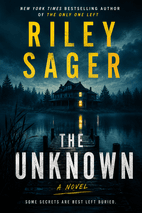
Riley Sager's The Unknown Ending leaves you with plenty of questions, and that's kind of the point. Here we break down what actually happens in those final pages, why the story closes the way it does, and where each character ends up. No answers are off limits, but we'll get there after a quick spoiler warning.
The Ending, Explained
ListenWhat Happens at the End of The Unknown
At the dock, Violet confesses to Marin that she killed Ronan with an ice pick during the fake séance. Violet explains that Ronan was responsible for the death of her secret daughter, Elise Haines: he recorded their sexual encounter, shared it with friends, and humiliated her until she died by suicide. Violet insists Ronan deserved punishment, and she says her possession by Daisy was a performance inspired by the missing diary pages. Violet also reveals that there was never going to be a movie: Loretta had no intention of making it, which is why the budget was so small. Marin produces Ruth Hume Semple's journal, which reveals that Daisy was actually an alternate personality of Azra Kovacic and that the island was a psychiatric facility, but Violet drops the journal into the lake and watches it dissolve. Marin then reveals she kept the SD card from Susie's camcorder, which captured Violet's confession, and when Violet asks what she wants, Marin says, 'I want to be known.' Four years later, Marin is an Oscar nominee, Violet is presenting Best Picture, and Ronan's death remains officially an accident. Marin has become a successful actress with Violet's help, and her research leads her to a 1931 photograph of Zara McCutcheon, a woman who looks exactly like Daisy; Marin concludes that Daisy escaped New Avalon and started a new life.
The Ending, Explained
The ending resolves the novel's tension between staged performance and real violence. Violet's confession confirms that the supernatural possession was an act: Daisy did not possess Violet; Violet used Daisy's story to kill Ronan and frame his death as part of the island's repeating history. The journal under the cottage reveals the true historical tragedy—Azra Kovacic was a real woman with a fractured identity, Daisy was her dominant alternate personality, and the other 'missing women' were hallucinations eliminated through Mrs. Semple's hypnosis. Marin, repeatedly cast as a gullible witness, finally turns the tables by saving the SD card and bargaining for her career. Her answer, 'I want to be known,' is both a critique of Hollywood ambition and an echo of Daisy's own survival through bloodshed, cunning, and ambition. The ending deliberately leaves a supernatural residue—Marin still insists something is haunting her cottage—but the larger truth is that human cruelty, grief, and revenge are the real forces driving the story. Marin's ascent to Oscar nominee, while Violet watches from the audience, suggests that both women got what they wanted, but at the cost of burying the truth forever.
The ending hits harder if you see how you got there.
The ending of The Unknown makes more sense with the full plot.
Read the full plot, chapter by chapterWhere Every Character Ends Up
Questions the Book Leaves Open
- Did Daisy actually escape New Avalon and become Zara McCutcheon, or is Marin merely seeing what she wants to believe?
- Was there any real supernatural presence on the island, or were all the haunted events staged and psychologically explained?
- Does Violet ever tell Heather, Susie, Julianne, or Brad the truth about Ronan's murder, or do they continue believing it was an accident?
- What happened to Azra Kovacic's body or final fate, since only Daisy's possible survival is suggested?
- Were Molly's ghostly visits to Marin real, or were they a childhood delusion the island then exploited?
These are answered in the chapter summary. See the full plot →