The Signs Quotes
by Dr. Tara Swart MD PhD
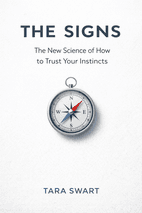
This collection brings together the most striking passages from Dr. Tara Swart's book about signs and intuition. You will find lines that challenge your assumptions about perception and reality, along with insights on how to reconnect with yourself and the world around you.
What makes this book so quotable is its blend of science and spirituality. Dr. Swart shares personal stories, research findings, and practical advice all in a way that feels both grounded and magical. The quotes here cover near death experiences, the power of noticing, and the importance of human connection. They invite you to look at life differently and to trust the guidance that comes from within and beyond.
Top Quotes from The Signs
“In the modern world, with its many distractions, I believe we have lost something crucial to our well-being and ability to flourish.”
The author states this early in the introduction, diagnosing a core problem of contemporary life.
It succinctly captures the central premise of the book—that modern distractions have severed a vital connection—and resonates with readers who feel a vague sense of loss.
“I truly believe that if you can open your mind to your signs, you too can live a life without limits.”
The author concludes a section with a strong personal affirmation about the transformative power of signs.
The phrase 'life without limits' is aspirational and memorable, offering a compelling, optimistic payoff that encourages readers to embrace the book's teachings.
“I felt no pain, no fear, no panic. I felt more alive than I’ve ever felt.”
Dr Mary Neal recounting the initial sensations of her near-death experience.
The contrast between the absence of fear and the heightened aliveness captures the paradox and allure of NDEs.
“You can’t undo what's in the brain, but you can overwrite it.”
The author explains how to replace negative neural pathways with positive ones.
This concise statement offers hope and agency, emphasizing that change is possible through intentional effort.
“I have come to think of intuition as my superpower.”
The author shares her personal relationship with intuition.
This empowering phrase encourages readers to reframe their own intuitive abilities as a valuable asset.
“It’s as though there’s some other language the universe is speaking that shows itself only when we start paying attention.”
Jemma Amos, a filmmaker, describing her experience with signs.
This line beautifully captures the mystery and wonder of signs, suggesting that the universe communicates with us when we become open and observant.
“Once you start being guided by signs, life is never the same again. It is so much more beautiful and feels like you are dancing in tune with the universe.”
The author summarizing the transformative effect of living with signs.
The metaphor of dancing with the universe evokes a sense of joy, flow, and alignment that resonates deeply with anyone seeking meaning.
Themes Behind the Quotes
A central theme is the idea that modern life has dulled our ability to perceive the subtle messages around us. The quotes emphasize the need to quiet distractions and tune into our senses to rediscover a deeper connection with ourselves and the universe. This involves embracing uncertainty and acknowledging that not everything can be explained by logic alone.
Another important theme is the power of human connection and spirituality. The book suggests that signs often arise from our bonds with others, and that isolation limits our access to this guidance. Additionally, the quotes highlight the role of art, nature, and beauty in shifting our brain state to one of openness and trust, allowing intuition to flourish. Overall, the message is one of hope and possibility, encouraging a more holistic approach to life.
Quotes by Chapter
Introduction
“If you remove the blinkers placed on your perception by the trials and tribulations of modern living, you too can find the signs that will direct you to that deeper connection with yourself and with life.”
The author offers a hopeful promise after describing the disorienting effects of modernity.
The metaphor of 'blinkers' is visually powerful, and the sentence turns the diagnosis into an actionable, inspiring invitation that readers can immediately apply.
“Opening your mind to signs is therefore a means of inviting a sense of spirituality into your life and addressing a gap that many of us have in society today.”
The author summarizes the ultimate purpose of the book after discussing how signs can fill a modern void.
It directly links the concept of signs to a contemporary spiritual hunger, making the book relevant to a wide audience who feel that something is missing.
Chapter 1: Signs from Beyond
“I did not want to go back down into my body. I had a very, very physical sensation of being held and comforted and reassured that everything was fine. But the beings told me it wasn’t my time. That I had more work to do on earth.”
Dr Mary Neal describing her near-death experience during a kayaking accident.
This line powerfully conveys the reluctance to return to life and the comforting, purposeful message from beings, reinforcing the idea of a conscious afterlife.
“In Dr Greyson's opinion, there is too much consistency across these experiences to doubt them, and he believes, on balance, that ‘there are a lot of phenomena that suggest the brain does not create our consciousness’.”
Dr Bruce Greyson, a leading NDE researcher, summarizing his view.
It offers scientific authority to the notion that consciousness may exist independently of the brain, a central argument of the chapter.
“The exercise wasn’t about trying to receive a sign or communicate with Robin, but that was what it turned into.”
The narrator reflecting on the coincidental sign from Robin during the Dear Me Project.
It encapsulates the theme that signs often emerge unexpectedly, transforming a simple exercise into a profound personal connection.
Chapter 2: Are You Accessing Your Full Wisdom?
“The night before we were due to begin our 20-hour car journey to see them, I had a dream that I was in their house, and both of his brothers, his sister and their mother were sitting around and crying, and Fritz’s father was walking around behind everyone saying, ‘Everything's fine. Everything’s going to be okay. Don’t cry. Don’t be sad.”
The author describes a dream she had the night before learning of her future father-in-law's sudden death.
This vivid personal anecdote illustrates precognition and hidden wisdom, making the concept of intuition tangible and relatable.
“The art of noticing is a very important skill to cultivate and, combined with an abundant mindset, will allow you to bring in signs and interpret them via your intuition.”
The author discusses the importance of cultivating attention and an abundant mindset.
It succinctly summarizes the chapter's practical advice for recognizing signs and using intuition.
Chapter 3: Life with Signs
“Letting go of rigid rationality and acknowledging that there are things that you do not know and that cannot be explained promotes flexible thinking and encourages you to approach your life in a more holistic way.”
The author discussing the benefits of embracing signs beyond logical proof.
It challenges the modern over-reliance on purely rational thinking, advocating for a more open-minded and integrated approach to life.
“Opening yourself up to the possibility of signs from what some cultures call ‘beyond the veil’ broadens your horizons and helps you to see the world as a place of infinite possibilities rather than one of limitations.”
The author explaining how accepting signs expands one’s worldview.
This quote inspires readers to embrace a larger, more hopeful perspective, transforming perceived limits into endless potential.
Chapter 5: Connect with Your Intuition
“It was then that it occurred to me that we could still be connected somehow, with my senses emulating my perception of his situation and manifesting in my own body through my sense of temperature.”
The author describes waking up freezing cold after her husband Robin died, later connecting it to his body being in a refrigerated morgue.
This line powerfully illustrates how grief can manifest physically, and opens the door to the idea that our senses might link us to others beyond the tangible.
“Our senses are the best tools at our disposal for tuning in to the here and now, quietening the noise and distraction of modern life and understanding what our bodies are telling us.”
The author explains why we need to understand the complexity of our senses.
It offers a clear, grounding reminder that sensory awareness is a practical antidote to overwhelm and a gateway to deeper self-knowledge.
“What we know and accept as fact today is not necessarily what we will know to be true tomorrow, and by tuning in to our senses more deliberately, it may be that it is possible to raise our awareness of ourselves and the wider world.”
After discussing synaesthesia and super smellers, the author reflects on the evolving nature of sensory knowledge.
This line inspires curiosity and hope, suggesting that we all have untapped potential to perceive more than we currently believe possible.
“The malleability of our perception means that we can raise awareness of our senses in the moment to change our view of the world and, through this, quieten and slow the distractions of modern life, opening the way for signs.”
The author introduces the idea of tuning in to senses to make space for signs.
It encapsulates the core message of the chapter: intentional sensory focus can transform our experience and make us receptive to guidance.
Chapter 6: Connect with Creativity
“It also gave me a glimmer of insight that life was still worth living and that there were things I could do to appreciate that and learn how to bring happiness back into my life again.”
The author describes crying at the ballet after pandemic isolation and her husband's death, realizing beauty can restore hope.
This line captures a raw, transformative moment where art reignites a sense of purpose, making it deeply relatable for anyone struggling with grief or despair.
“Many of us think that art, creativity and beauty are frivolous or unessential aspects of life, but nothing could be further from the truth.”
The author introduces the idea that art is essential, not optional, for human well-being.
It directly confronts a widespread cultural assumption, inviting readers to reconsider the value of creativity in their own lives.
“Nthropologist Agustin Fuentes puts forward this idea in his book The Creative Spark,4 arguing that art is embedded deep in prehistory and integral to who we are — in fact, it is what makes us human.”
The author cites an anthropologist to support the argument that creativity is fundamental to humanity.
This quote grounds the chapter's thesis in scientific and anthropological evidence, making the claim both powerful and credible.
“Appreciating beauty shifts the brain from a fear state (cortisol) to a love/trust state (oxytocin), also moving our autonomic nervous system from sympathetic to parasympathetic, which further helps us to access hitherto clouded intuition and a willingness to take healthy risks.”
The author explains the neurological and emotional benefits of beholding beauty.
It offers a clear, science-backed mechanism for how art transforms our mindset, empowering readers to see beauty as a tool for accessing intuition and courage.
Chapter 7: Connect with Nature
“According to Susan Magsamen and Ivy Ross, ‘the ultimate enriched environment is nature’.”
The author discusses why nature is so beneficial for well-being and accessing signs.
This concise statement encapsulates the chapter’s central message, positioning nature as the most powerful environment for personal growth and intuition.
“You are signalling to yourself all the time by creating the environment that you spend most of your time in, and this has an effect on your physiology through your senses.”
The author explains how our surroundings constantly influence us, whether we are aware of it or not.
It empowers readers to recognize that their daily choices in environment are a form of self-communication, directly impacting their physical and mental state.
“What we really wanted to do was give people a mirror to reflect back to themselves the fact that the body is always feeling, and sometimes it might even be different from what your mind is thinking.”
Ivy Ross, after the A Space for Being exhibit, describing the project’s goal.
This line beautifully highlights the disconnect between conscious thought and physiological response, encouraging deeper self-awareness.
“People find birdsong relaxing and reassuring because over thousands of years they have learnt when the birds sing they are safe. It's when birds stop singing that people need to worry.”
Julian Treasure, author of Sound Business, speaking about the evolutionary significance of birdsong.
It taps into an ancient, instinctual connection to nature, reminding us that natural sounds carry deep layers of meaning and reassurance.
Chapter 8: Connect with Each Other
“I believe that in the Western world we've underestimated the importance of our connection to each other.”
The author reflects on how sharing a sign experience with Alfie helped her trust its meaning.
This line captures the chapter's central thesis that modern society undervalues human connection, challenging readers to reconsider their priorities.
“Because our signs are in large part a consequence of our spiritual connections to each other, if we isolate ourselves, we are limiting our ability to access them.”
The author explains why a strong social network is essential for receiving and interpreting signs from lost loved ones.
It directly links the book’s core concept of signs to the need for community, making a compelling case that isolation weakens our spiritual receptivity.