The Shadow Friends Themes
by Tess Gerritsen
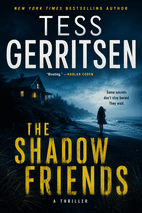
Underneath the spycraft and suspense, The Shadow Friends is wrestling with how much of our lives are shaped by secrets and violence we didn't choose. The past doesn't stay buried, and identities are never as solid as they seem. Characters keep things from loved ones, wear disguises, and confront whether revenge is justice, all while trying to figure out what mortality means for how they live.
On this page you'll find each major theme unpacked with concrete moments from the book: secrecy and deception, the reach of the past, identity and mistaken identity, justice versus revenge, and small-town peace versus outside threat. You'll also find recurring symbols: the stiletto, the circle-and-dot mark, and masks and disguises that reveal the cost of hidden lives.
Major Themes in The Shadow Friends
Secrecy and deception
The story repeatedly shows information being withheld, identities being hidden, and trust being tested. Characters keep secrets from loved ones and from law enforcement, blurring the line between loyalty and betrayal.
- Ingrid leaves only a terse note—'I need to leave. I'll explain later'—and her friends conceal what they know from Jo.
- Maggie receives Ingrid's 'Eyes Only' text and conceals it even from Lloyd.
- Hannah Murray is revealed to be a 'dead double': the real Hannah died in infancy and the killer assumed her entire identity.
The past's reach
The violent events in Provence twenty-eight years earlier continue to drive the present plot. The same weapon, the same assassin, and the same unanswered questions resurface, and a new generation is pulled into old debts.
- Rodrigo admits he did not believe Ingrid about the fifth man twenty-eight years ago, but now thinks she was right.
- Karen O'Brien is found with a stiletto in her left eye, echoing how Gordon died in Provence.
- Jon Marcus has spent 28 years hunting Hannah Murray and finally executes her to avenge Gordon and Simon.
Mortality and choosing how to live
Characters confront death and are forced to decide what their lives are for. Near-death experiences push Ingrid toward love, and later toward her husband instead of the spy world.
- After the Provence attack, Ingrid decides to go home to tell the man she loves how she feels.
- At the airport, Ingrid rejects Rodrigo's job offer and kiss, then drives home to Lloyd.
- Maggie reflects that there are not enough years left in her lifetime to learn the skills she will never master.
Identity and mistaken identity
People are not who they appear to be: operatives wear disguises, illegals assume dead people's identities, and a photograph of Ingrid gets her mistaken for a Russian defector. The plot turns on these false faces and wrong identifications.
- At the hotel suite, Ingrid removes her wig and latex mask, revealing she was undercover as Beatriz Guerrero.
- The FBI discovers that the real Hannah Murray died at sixteen months of meningitis and that the suspect is a 'dead double.'
- On the kill-list printout, a photo of Ingrid is mistaken for the Russian illegal Lilia Kuraskaya, making her a target.
Justice versus revenge
The characters repeatedly blur the line between lawful justice and personal vengeance. Retaliation for past murders is framed as justice, and the group takes the law into its own hands.
- At the safe house, Lloyd tells Rodrigo and Marcus, 'You call it justice, but it's really about revenge.'
- Jon Marcus executes the wounded Hannah Murray with a 9mm despite Rodrigo's plea to save her life.
- Ben admits the group would have interrogated the captured intruder in a different jurisdiction.
Small-town peace versus outside threat
Purity, Maine, is presented as a quiet, picture-perfect town, but the espionage plot intrudes on it from the outside. Jo feels the menace personally as federal agents, assassins, and surveillance invade her community.
- Jo drives her usual patrol route while repeating 'A Russian assassin is coming to my town.'
- Jo tells Minnihan 'This is my town,' but he dismisses Purity as a very small town and says the case involves national security and espionage.
- Jo looks at the Slocums' white colonial with its picket fence and wonders if it is a facade hiding a Russian spy.
Symbols and Motifs
The stiletto
The stiletto is the signature weapon of the assassin and a symbol of the past's violence resurfacing. It also acts as a calling card that connects old murders to new ones.
- Karen O'Brien is found dead with a knife handle protruding from her left eye; Ingrid identifies it as a stiletto.
- Gordon was killed in Provence with a stiletto driven through his eye, and Hannah's armory contains stilettos matching the weapon that killed Karen.
- Jo suggests the killer may have left the stiletto behind as a 'calling card' or 'message.'
The circle-and-dot symbol
The circle-and-dot is the Vory symbol for a lone wolf, representing self-reliance, the criminal underworld, and the code of trusting only yourself.
- Ingrid explains that the circle and dot on the stiletto grip may be the Vory symbol meaning 'Rely only on yourself.'
- The group uses the engraved symbol to tie the murder weapon to Russian organized crime.
The mask and disguise
Wigs, latex masks, and assumed identities represent the hidden lives of spies and the cost of living a lie. The removal of the mask reveals not just a face but a betrayal or a revelation.
- Ingrid removes her wig and latex mask in the hotel suite, revealing that she was disguised as Beatriz Guerrero.
- Hannah Murray lived her whole adult life as an American named Hannah Murray, but the real Hannah died in infancy and the killer was a Russian illegal wearing that identity.