The Road to Freedom — Interactive Mindmaps

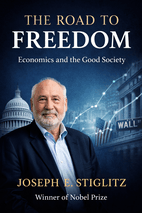
The Road to Freedom by Joseph E. Stiglitz Book Cover

by Joseph E. Stiglitz

Joseph E. Stiglitz's The Road to Freedom critiques neoliberal ideology and argues true liberty requires collective action and government to manage conflicts between freedoms, offering a blueprint for progressive capitalism. It is for readers seeking to understand the roots of inequality and democratic crisis and a coherent alternative to market fundamentalism.

On Insta.page you also get an Apply This Book tool that lets you combine insights from up to 3 books to solve your specific situation.

Chapter mindmaps

Free preview: chapters 1–4 are fully interactive. Click any node to expand or collapse. Subscribe to unlock the rest.

Chapter 1: 1. Introduction: Freedom in Danger

Key concepts: 1. Introduction: Freedom in Danger

1. Introduction: Freedom in Danger

Global Decline of Freedom

  • Freedom has declined globally for 16 consecutive years
  • 80% of people now live under authoritarian or partly free governments
  • Decline visible even in established democracies like the US and EU

Interdependence and Competing Freedoms

  • Individual actions always impact others in a connected world
  • One person's freedom can limit another's freedom
  • Government needed to balance these competing freedoms

The American Paradox

  • Narrative of liberty coexists with history of oppression
  • January 6 Capitol attack claimed to defend freedom while undermining democracy
  • Need for shared, deeper understanding of freedom to heal divisions

Economic View of Freedom

  • Freedom as the ability to act based on available choices
  • Poverty severely limits real freedom and opportunity
  • Society faces inevitable trade-offs between competing freedoms

Rules as Enablers of Freedom

  • Well-designed rules can increase overall freedom
  • Property rights and contracts are human inventions, not natural laws
  • Government action can create structure for freedoms to coexist

Threats to Democratic Freedom

  • Concentrated media and advertising can spread harmful beliefs
  • Education can be used for control or liberation
  • Growing attacks on tolerance and free thought

Progressive Capitalism Alternative

  • Seeks balance between markets, government, and community
  • Active government needed to ensure fair competition and prevent exploitation
  • Rejects neoliberal link between free markets and political freedom

Chapter 2: 2. How Economists Think About Freedom

Key concepts: 2. How Economists Think About Freedom

2. How Economists Think About Freedom

Distortion of Adam Smith's Ideas

  • Free-market advocates simplified Smith's 'invisible hand'
  • Smith warned about business collusion and market power
  • He saw market power as undermining efficiency and liberty

Industrial Revolution Contradictions

  • Growth built on exploitation, slavery, and colonialism
  • Revealed tension between laissez-faire and systemic critique
  • Confirmed Smith's warnings about unfettered markets

Mixed Economy Success

  • Great Depression discredited pure laissez-faire
  • Keynes advocated significant government economic role
  • Produced strong, broadly shared growth and stability

Neoliberal Turn & Washington Consensus

  • Political shift toward deregulation and privatization
  • Packaged as 'liberalization' by Reagan, Thatcher, Clinton
  • Imposed globally as Washington Consensus policies

Intellectual Foundation: Mont Pèlerin Society

  • Hayek and Friedman led radical anti-state vision
  • Linked political freedom exclusively to free markets
  • Questionable commitment shown by advising dictators

Fake Capitalism & Market Fundamentalism

  • Profits privatized, losses socialized (2008 bailouts)
  • Became ideological religion despite evidence
  • Blamed failures on insufficient liberalization

Documented Failures of Neoliberalism

  • Slowed growth, increased instability, soaring inequality
  • Global failures: Latin America's Lost Decade, Russian collapse
  • Created social crises: opioids, scams, environmental damage

Chapter 3: 3. One Person’s Freedom Is Another Person’s Unfreedom

Key concepts: 3. One Person’s Freedom Is Another Person’s Unfreedom

3. One Person’s Freedom Is Another Person’s Unfreedom

The Core Conflict of Freedoms

  • One person's freedom often creates another's unfreedom
  • This conflict arises from negative externalities
  • Absolutist views of liberty are therefore impractical

Ubiquity of Negative Externalities

  • Externalities are fundamental, not rare exceptions
  • Examples: climate change, public health, urban noise
  • Intensified by population growth and globalization

Flaw in Free-Market Thinking

  • Neoliberalism treats externalities as minor exceptions
  • This underestimates systemic interdependence
  • Leads to dangerous policy failures like deregulation

Limits of Market Solutions

  • Property rights fail for global problems like climate
  • Corrective taxes alone are insufficient and unfair
  • Free-rider problem prevents voluntary solutions

Civilization as Managing Externalities

  • Rules and morals exist to mitigate harmful actions
  • Requires cultivating 'other-regarding' behavior
  • Balancing freedoms is foundational to society

Pragmatic Policy Approach

  • Need mixed policy packages, not single tools
  • Combine taxes, regulation, and public investment
  • Goal: expand freedom for the greatest number

The Necessity of Balancing

  • Societies must make reasoned trade-off judgments
  • Science informs, but values determine weights
  • Public discourse about balancing is essential

Chapter 4: 4. Freedom Through Coercion: Public Goods and the Free-Rider Problem

Key concepts: 4. Freedom Through Coercion: Public Goods and the Free-Rider Problem

4. Freedom Through Coercion: Public Goods and the Free-Rider Problem

The Core Paradox

  • Coercive rules can expand real freedom
  • Taxation enables collective benefits
  • Enriches positive freedom (what we can do)

Public Goods Foundation

  • Modern life built on past public investments
  • Examples: internet, medical research
  • Covid-19 vaccines built on public science

Free-Rider Problem

  • Individuals benefit without paying
  • Leads to underproduction of public goods
  • Compulsory taxation as essential solution

Coordination Problems

  • Market forces lead to inferior outcomes
  • Examples: store hours, price-gouging
  • Enforced rules create better collective results

Limits of Markets

  • Invisible hand fails at large-scale coordination
  • Markets underproduce positive externalities
  • Government intervention expands economic stability

Global Scale Challenges

  • Climate change as ultimate public good
  • Lacks global enforcement authority
  • Montreal Protocol shows successful coercion

Institutional Design

  • Build trustworthy institutions
  • Channel mixed motives toward common good
  • Move beyond selfish vs altruistic assumptions

Continue exploring The Road to Freedom