The Protein Code Key Takeaways — Chapter-by-Chapter Lessons | Insta.Page

The Protein Code Key Takeaways

by Rebecca Goodwill
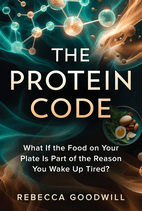
The Protein Code by Rebecca Goodwill Book Cover

5 Main Takeaways from The Protein Code

Protein is the master regulator of energy and appetite.

Unlike carbs and fats, protein has a unique structural role that the body prioritizes above all else. Adequate protein stabilizes blood sugar, prevents cravings, and provides the raw materials for overnight repair, while low protein triggers overeating and chronic fatigue.

Sugar cravings are biological, not a moral failure.

Sugar hijacks dopamine pathways like addictive drugs, creating a cycle of false energy spikes and crashes. The solution isn't avoidance but proactive biochemistry—eating protein 30 minutes before your typical craving time preemptively stabilizes glucose and silences reward-driven hunger.

Morning exhaustion is a protein supply chain problem.

Waking up tired often means your body lacked amino acids to complete overnight repair, not that you slept too little. Tryptophan must reach the brain for restorative sleep, but the right balance and timing of protein—not just any protein—prevents competing amino acids from blocking the process.

The food industry hacked your appetite—read past labels.

Processed foods use MSG, hidden sugar aliases (maltodextrin, fruit juice concentrate), and fake premium ingredients to prevent flavor habituation. Ignore calorie headlines and calories; check protein and fiber first as markers of real satiety, and apply the chicken-and-eggs test to distinguish hunger from dopamine cravings.

Preserve muscle to make weight loss metabolism-friendly.

Muscle acts as a metabolic sponge for glucose; losing muscle impairs blood sugar regulation and slows resting metabolism. Calorie restriction without adequate protein and resistance training leads to muscle loss, rapid regain, and chronic fatigue—prioritize protein and movement over fast scale drops.

Executive Analysis

These five takeaways converge on a single thesis: modern exhaustion, weight struggles, and cognitive fog are not personal failures but predictable consequences of a protein-deficient, sugar-driven food system. The book argues that the body treats protein as a non-negotiable structural resource; when it's scarce, every system—from sleep repair to blood sugar control to appetite signaling—breaks down. By reframing health as a biological resource allocation problem where protein is the foundation, the author empowers readers to reclaim energy not through willpower but through strategic nutrition, label literacy, and habit design.

This book matters because it bridges the gap between clinical nutrition science and everyday practical action. Unlike generic diet advice or fads, 'The Protein Code' exposes the systemic forces—subsidized grains, deceptive marketing, appetite-hacking additives—that shape our choices. It offers a clear, testable starting point (30g protein within the first waking hour) and a set of mental tools (the chicken-and-eggs test, the fork barrier) that require no special equipment or expensive foods. For anyone who has felt 'tired all the time' or stuck in sugar cycles, this book delivers both the why and the how, grounded in biochemistry and delivered without dogma.

Chapter-by-Chapter Key Takeaways

Introduction (Introduction)

  • The chapter sets up a contrast between external health (normal lab results) and internal experience (chronic exhaustion and irritability).

  • Rebecca’s admission of feeling “not like herself” marks a turning point from denial to honesty.

  • The doctor’s simple questions reveal a lifestyle of relentless pressure, where rest and proper nutrition have been sacrificed.

  • The unresolved sentence about eating properly underscores that the root cause is likely tied to daily habits, not a medical mystery.

Try this: Admit when you feel 'not like yourself' and audit your daily habits—especially protein intake—before blaming a medical mystery.

1. The Dead Battery Epidemic (Chapter 1)

  • Exhaustion has been normalized: 35 million Americans feel drained most days, but we treat it as a personal failing rather than a systemic issue.

  • Our “always-on” culture incurs heavy switching costs, depleting cognitive fuel long before the day ends.

  • Willpower alone can’t compensate for missing biological raw materials—energy must be built, not summoned.

  • Sleep and nutrition are the non-negotiable foundation of recovery; everything else is secondary.

  • Recognizing the forces shaping our exhaustion is the first step toward rewriting the rules of our own survival.

Try this: Track your energy dips as a signal of systemic depletion, not personal weakness, and commit to sleep and protein as the non-negotiable foundation.

2. The Science of Morning Tiredness (Chapter 2)

  • Morning tiredness is often a supply chain problem, not a sleep duration problem. Without adequate protein and amino acids, your body can't complete overnight repair.

  • Sleep quality depends on the deeper stages of rest, not just hours spent in bed. Chronic stress and alcohol prevent you from reaching those stages.

  • Tryptophan's journey to the brain is easily blocked by competing amino acids from protein. Eating protein alone isn't enough—you need the right balance and timing.

  • Alcohol, sugary drinks, and energy drinks actively disrupt the restorative processes your body relies on at night.

  • Recovery begins before you go to bed: what you eat during the day determines whether the night crew has the materials to rebuild.

Try this: Eat a protein-rich dinner (like eggs or fish) to supply amino acids for overnight repair; skip alcohol and sugary drinks that block deep sleep stages.

3. The Dark Side of Sugar (Chapter 3)

  • Breakfast cereal advertising is not about nutrition—it’s about emotional manipulation, targeting children and parental guilt with the same tactics as cigarette ads.

  • The USDA Food Pyramid institutionalized a carb-heavy diet, training generations to believe grains and sugars are the foundation of health.

  • A sugary breakfast creates a false energy spike followed by a crash, leading to brain fog, irritability, and increased craving for more sugar.

  • Sugar triggers dopamine and serotonin release, offering temporary emotional relief that vanishes once blood glucose drops—creating a cycle of dependency.

  • The real cost is a pancreas forced into overdrive and a brain that loses access to steady, high-quality fuel.

Try this: Swap your sugary breakfast for at least 30g of protein within the first hour of waking to prevent the blood sugar crash and brain fog cycle.

4. Sugar Cravings and The Way Out (Chapter 4)

  • Cravings are biological, not moral failures — they stem from predictable metabolic drops that protein can prevent.

  • Sugar hijacks the same dopamine pathways as addictive substances, creating a cycle of tolerance and withdrawal.

  • Eating protein thirty minutes before your typical craving time preemptively stabilizes blood sugar and blocks the crash.

  • Protein works by slowing glucose absorption, smoothing out insulin response, and silencing the brain’s reward-driven hunger signals.

  • The path out of sugar cravings is not avoidance — it’s proactive biochemistry.

Try this: Identify your typical craving time and eat 20–30g of protein 30 minutes beforehand to preemptively stabilize glucose and block the dopamine-driven crash.

5. Genetic Echoes and the System’s Genesis (Chapter 5)

  • Protein is the only macronutrient with a unique, non‑substitutable structural role; fats and carbs are interchangeable fuel.

  • The body prioritizes protein above all else when resources are scarce, shelving less essential maintenance.

  • Dietary flexibility in ancestral humans confirms adaptability, not indifference to protein quality.

  • The Expensive Tissue Hypothesis explains how concentrated animal foods allowed brain expansion by reducing intestinal size.

  • Understanding protein’s primary status helps clarify why modern diets that skimp on it can disrupt the entire metabolic system.

Try this: Prioritize complete, animal-sourced proteins (eggs, meat, fish, dairy) because they provide the unique structural amino acids that carbs and fats cannot replace.

6. The Old Pyramid (Chapter 6)

  • The 1960s vision of futuristic, engineered food collapsed because it couldn’t compete with the profitability of subsidized grain processing.

  • The carbohydrate-heavy pyramid was designed for logistical convenience and population survival, not optimal health.

  • Institutional inertia—from government subsidies to academic careers—kept the flawed model in place long after its limits became clear.

  • The eventual pyramid inversion in 2026 was driven by economic necessity, not sudden enlightenment.

  • A far more dangerous force now shapes what we eat: the industry’s ability to hijack our appetite itself.

Try this: Ignore the old food pyramid's carb-heavy foundation; build your plate around protein first, then vegetables, to counteract institutional dietary inertia.

7. How Your Appetite Was Hacked (Chapter 7)

  • MSG prevents flavor habituation, making you feel just as hungry after the tenth bite as the first.

  • Many “premium” ingredients in processed foods are elaborate fakes—caviar, wasabi, white chocolate, cheese flavor.

  • Reconstituted fruit juice has essentially the same sugar profile as soda, with virtually no fiber.

  • The food industry hides appetite-hacking chemicals behind multiple names like yeast extract and hydrolyzed protein.

  • Real, whole foods don’t need to trick your taste buds—processed foods do, because they lack real nutrition.

Try this: Read ingredient lists for hidden appetite hackers like MSG, yeast extract, and hydrolyzed protein, and avoid any product that uses more than three aliases for sugar.

8. The Marketing (Chapter 8)

  • Ignore the calorie headline; check protein and fiber first as practical markers of satiety.

  • Sugar hides under multiple aliases—look for maltodextrin, corn syrup, fruit juice concentrate, etc., and add them up mentally.

  • Shorter ingredient lists typically mean fewer additives; longer lists signal chemical processing.

  • "Organic" and "gluten-free" labels create a halo effect that misleads your perception of a product’s healthfulness.

  • Store environments (no windows, slow music, big carts) are deliberately engineered to increase spending.

  • The chicken-and-eggs test instantly separates true hunger from dopamine-driven craving: if you wouldn’t eat that plain, you don’t need it.

Try this: Apply the chicken-and-eggs test: if you wouldn't eat plain chicken or eggs right now, you're not hungry—you're experiencing a dopamine-driven craving.

9. The Protein Foundation (Chapter 9)

  • Protein intake regulates appetite: low protein leads to overeating; adequate protein stabilizes hunger signals.

  • Forget the dry chicken stereotype. Real-world protein sources are varied, quick, and require little to no cooking.

  • For low-energy days, rely on open-and-eat options: rotisserie chicken, canned fish, pre-boiled eggs, jerky, smoked salmon.

  • Dietary guidelines and concepts like anabolic resistance underscore that protein needs shift with age and activity.

Try this: Open-and-eat protein sources: keep rotisserie chicken, canned fish, pre-boiled eggs, and jerky on hand for low-energy days when cooking feels impossible.

10. Muscles and Weight Loss (Chapter 10)

  • Iron and B12 deficiencies can mimic fatigue and are linked to the same nutrient-dense animal proteins that protect muscle. Check ferritin and B12 if energy remains low despite good sleep and nutrition.

  • Muscle acts as a metabolic sponge for glucose. Losing it impairs blood sugar regulation and lowers resting metabolic rate.

  • Calorie restriction without adequate protein leads to muscle loss, not just fat loss. A slower scale drop that preserves muscle results in better long-term metabolic health.

  • Rapid weight loss from appetite-suppressing drugs can disproportionately reduce lean mass. Without deliberate protein intake and resistance training, the body’s metabolic engine shrinks, setting the stage for rapid regain when the drug is stopped.

  • Consistent movement and sufficient protein are the non-negotiable conditions for sustainable weight loss. They preserve the tissue that makes weight loss metabolism-friendly rather than self-defeating.

Try this: Check your ferritin and B12 levels if energy stays low despite good sleep and protein; preserve muscle by eating adequate protein even during calorie restriction.

11. Cognitive Function and Social Connection (Chapter 11)

  • Emotional disconnection can be a symptom of biological dysfunction, not a character flaw or burnout.

  • Key players in cognitive and social health include ATP for energy and GABA for calm focus.

  • Healing the loop between brain chemistry and relationships requires addressing physical roots like gut microbiome, BDNF levels, and chronic cortisol activation.

Try this: Heal emotional disconnection by addressing physical roots: support gut microbiome, boost BDNF with exercise, and lower chronic cortisol with adequate protein intake.

12. Eating by Energy Level (Chapter 12)

  • Match food to your energy level with effortless, supportive options like hummus and sugar-free beef jerky.

  • Eliminate the fork barrier—carrying a utensil set in your car or bag lets you eat nourishing foods immediately instead of defaulting to hand-held snacks.

  • Preparation is about removing obstacles, not just adding items. A tiny investment in a fork can redirect your eating decisions when energy is low.

Try this: Carry a fork in your car or bag so you can eat nourishing protein-rich foods like hummus and beef jerky immediately instead of defaulting to hand-held snacks.

13. New Habits (Chapter 13)

  • Day 1–3 priority: Secure a breakfast with at least 30 g of protein within the first waking hour.

  • Support with volume: Keep a rotating set of greens, crunchy vegetables, frozen veggies, beets, and ferments on hand to build meals around without overthinking.

  • Freedom is biological: Energy and stable cognition are prerequisites for real choice. Good nutrition isn’t self‑denial—it’s strategic resource allocation.

  • Start now: The structure is in place. The only remaining step is action.

Try this: Start tomorrow: secure a breakfast with 30g of protein within the first waking hour, and build lunches around greens, crunchy veggies, and a rotating protein source.

Continue Exploring