The Pirate Queen Themes
by Ariel Lawhon
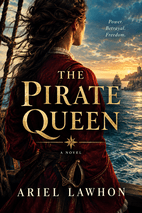
Underneath its ships and battles, The Pirate Queen is really asking who gets to belong to the sea, to a marriage, to a clan, and to their own name. It wrestles with freedom against duty, female power against empire and gender, vengeance as inheritance, and family as both shelter and weapon.
On this page, you will find theme breakdowns grounded in concrete moments: Grace's claim to the water, her marriages to Donal O'Flaherty and later suitors, the men who deny her authority, the cycles of retribution with Bingham, and the betrayals and endurance within her family. It also traces recurring symbols like Manannan and the sea, knives, braid and hair, and the fede ring.
Major Themes in The Pirate Queen
The sea as Grace's birthright, freedom, and fate
The notes repeatedly tie Grace's identity, joy, and power to the water, from childhood certainty that the sea is hers to her command of ships and her final surrender to Manannan. The sea is also a source of danger and grief, as storms, shipwrecks, and Manannan's questions test her.
- Grace thinks 'The sea belongs to her. It is mine, it is mine, it is mine' and asks the water, 'What will you be today?'
- She tells Manannan that only being on the sea rather than looking at it can bring her joy, and later she takes the helm of Niamh and feels the commands like a native tongue.
- At death she hears Manannan's voice saying 'I have never left you' and 'It is time, bird.'
Marriage as confinement and the fight for autonomy
The book frames marriage as a site of coercion, political alliance, and loss of self, especially in Grace's unions with Donal O'Flaherty and the suitors chosen for her. Grace resists by refusing her husband's name, wielding a dagger, and later proposing a brehon trial marriage on her own terms.
- Grace finds being a wife and Bean an Ti ill-suited to her, and Bunowen Castle is described as 'a very pretty prison.'
- She will not say her husband's name and calls him only 'my husband'; Donal O'Flaherty demands she say his name and strikes her, and she holds Richard's dagger under his chin and tells him to sleep elsewhere.
- Grace proposes a brehon trial marriage to Richard lasting one year and one day, insisting the decision to continue after that will be hers alone.
Female authority challenged by gender and empire
Grace's leadership is constantly contested by men who believe no woman should be chieftain, and by English officials who see her as a pirate or rebel. Yet she commands fleets, armies, and councils, and her confrontation with Elizabeth stages two queens negotiating power.
- The third killer says he acted because no woman should be chieftain, and a mourner grabs Grace's wrist and says no woman should be chieftain.
- The messenger insists, 'Your men? They belong to O'Flaherty,' and Grace answers, 'I am no O'Flaherty. I am an O'Malley, and I will remain an O'Malley until I die.'
- Grace refuses to bow to Queen Elizabeth and says her people consider her a queen; Elizabeth and Grace speak in Latin so the male courtiers cannot understand them, and Bingham shouts, 'She is only a woman!' while Elizabeth asks what he thinks women deserve.
Vengeance, violence, and cycles of retribution
Vengeance drives both Grace's and Bingham's actions, producing massacres, executions, and counter-attacks that pass through families and clans. The notes stress that violence is intimate and repetitive, from knife killings to public hangings.
- Grace sets out to kill John Bingham because he murdered her son Edin and says, 'I will have my vengeance.'
- After finding Mulranny razed and its people massacred, Grace's men ambush the sheriff's camp, and Young Richard kills the captured sheriff with a scythe and asks for credit.
- Bingham hangs Murrough O'Flaherty's son after being barred from the truce, and Grace tells Murrough their reckoning is yet to come.
Family loyalty, betrayal, and motherhood
The novel binds political survival to family love and betrayal: siblings protect each other, mothers lose or disown sons, and children are used as hostages and heirs. Grace's maternal grief and her role as matriarch are central to her choices.
- Donal follows Grace even after she deliberately gets them lost, and Grace helps Donal steer home and whispers, 'We'll do it together.'
- Grace tells Merrick, 'You are no longer my son,' after he swears fealty to Bingham; she leaves him tied to the tethering post, sails home, and weeps.
- Finola Bourke admits she had her brother kill Walter Bourke and that Grace was the price, while Grace pleads, 'Please do not force me to bury another son.'
Survival, endurance, and legacy
Grace survives imprisonment, torture, loss, and English conquest by enduring and waiting, then secures her legacy through legal documents, heirlooms, and her final surrender. The notes frame survival as a shared skill between Grace and Elizabeth and as the foundation of matriarchal inheritance.
- In prison Grace measures weeks by her fingernails and says, 'I want to go home. But I can wait'; FitzWilliam calls the spy agreement another set of shackles made of words, and she signs anyway.
- Grace tells Elizabeth in Latin, 'We both know how to survive.'
- Grace documents her holdings with Bald Alec; she gives Margaret her mother's fede ring and lands, 'From mother to daughter again. An unbroken chain,' and at death cuts off her silver braid and throws it into the channel.
Symbols and Motifs
The sea and Manannan
Represents Grace's birthright, freedom, joy, fate, and the divine or supernatural force that calls her. It is also a source of danger and grief, as storms, shipwrecks, and Manannan's questions test her.
- Grace thinks 'The sea belongs to her. It is mine, it is mine, it is mine.'
- She asks the water, 'What will you be today?' and asks Manannan what will bring her joy.
- She hears Manannan's steed before a deadly storm, and at death hears Manannan saying 'I have never left you' and 'It is time, bird.'
Knives and daggers
Represent power, defiance, protection, and intimacy; they are the tools by which Grace asserts autonomy or survives violence. The notes also attach luck to knives.
- Five-year-old Grace cuts off her braid with a knife; later she steals a bone-handled knife and hides it under her pillow, thinking 'Knives bring good luck.'
- She puts a knife beneath the steward's chin to keep her beach respite, and holds Richard's dagger under Donal O'Flaherty's chin, saying 'I said no.'
- Richard gives Grace his dagger to use on her husband; she hides a blade in her boot at Greenwich, and later presses a knife to Bingham's throat.
Braid and hair
Represents Grace's identity, gender norms, and eventual surrender or mortality. The cutting of her braid at beginning and end frames her refusal to be contained and her final acceptance.
- In 1535, five-year-old Grace cuts off her braid with a sharp knife and shakes it in her father's face.
- Richard once called her hair 'fire and rain' when he first noticed the change.
- At seventy-three, Grace severs her silver braid and throws it into the channel leading to Rockfleet Bay, doing 'the one thing she has never done in all her long life: she surrenders.'
Fede ring
Represents matrilineal inheritance, love, and the unbroken chain of women from Maeve to Grace to Margaret. It passes at key moments of womanhood and legacy.
- Maeve gives Grace the silver fede ring passed down from her own mother before Grace leaves across the bay.
- Grace keeps the ring through her life; at death she gives Margaret her mother's fede ring and the deed to Maeve's lands in Liscannor.
- The notes frame this as 'From mother to daughter again. An unbroken chain.'