The Pirate Queen Quotes
by Ariel Lawhon
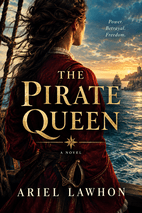
If you are looking for lines that sound like the sea and feel like a dare, this collection from The Pirate Queen has plenty. You will find sharp dialogue, stormy narration, and intimate inner monologue. Some passages are blunt and funny, others romantic or haunted. A few arrive like a slap and stay with you.
What makes the novel so quotable is how often its characters speak in plain, fierce language about loyalty, power, love, and survival. The words feel lived in rather than polished. They work as reminders, warnings, or small declarations you might want to keep nearby.
Top Quotes from The Pirate Queen
“She is storm born. Knives bring good luck. The sea belongs to her. It is mine, it is mine, it is mine.”
After eavesdropping on her parents and stealing a bone-handled knife, Grace returns to bed as the storm taps on the roof.
It distills Grace’s self-mythology into a chantlike refrain of storm, luck, and ownership. The repetition makes her claim on the sea feel like destiny.
“It doesn’t have to be my friend for it to be mine.”
— Grace
Aboard Niamh, after Edin tells Grace the sea is not her friend.
It flips his warning into a declaration of ownership and daring, showing Grace's instinct to master what cannot be tamed.
“They call this Mother Nature, but they are wrong. Oh, not about her being female. That's true enough. Nature is a right cruel bitch. But she isn’t your mother—she's an old lover and she intends to make you pay for your indifference. Bed her once and she'll punish you for the rest of your life.”
— Edin
During the storm, Edin reflects on the sea and the danger he has deliberately sailed into.
It recasts nature as a vengeful ex-lover rather than a nurturing mother, sharpening the novel's vision of a hostile world.
“It is important, she thinks, that every woman make a version of herself. To pass on the part of her that a son will never understand.”
Grace learns her daughter is pregnant again and hopes for a granddaughter.
It distills the novel's theme of female legacy into a memorable, quietly radical line.
“I would not be the first man to love a thing that wants to kill him.”
— Ultan
During the storm, Ultan answers Grace after cursing the ocean.
It captures the dangerous romance of the sea and Ultan's reckless devotion in a single line.
“No. You're a threat because she’s afraid of you. The people who fear you will always be the biggest danger to you.”
— Grace
Grace warns Richard that being feared makes him a target.
It distills political wisdom into a memorable warning about the power of fear. It also reveals Grace's sharp understanding of human nature.
“I have grown entire people inside my torso in less time than it's taking you to make this decision.”
— Grace
Grace grows impatient while Richard deliberates her brehon trial-marriage terms.
The line is funny, earthy, and unforgettable in its impatience. It shows Grace's wit and refusal to be passive.
Themes Behind the Quotes
These lines keep circling questions of identity and self rule. A woman can be daughter, wife, mother, leader, and outlaw all at once, yet the quotes keep asking who gets to define her. The sea, home, and inheritance pull against duty, marriage, and other people's expectations. Power is another constant, especially the way fear can make someone dangerous or obedient, and the way violence leaves marks on everyone.
Love runs through the collection too, but rarely as something simple. It appears as loyalty, grief, pride, obsession, and the stubborn choice to protect someone even when it hurts. Fate and survival sit close by, with characters trying to steer their own lives while storms, enemies, and old wounds push back. The overall feeling is fierce and human.
Quotes by Chapter
Part 1 - Chapters 1 to 7
“I think they are gray because the sea belongs to her.”
— Maeve
Maeve answers Edin after he asks why their daughter Grace has gray eyes, following the story of her stormy birth.
It transforms a simple physical detail into a mystical claim about Grace’s identity and fate. The line lingers because it gives the sea to Grace rather than the other way around.
“After all that, did you really think the sea wouldn't call to her?”
— Maeve
Maeve reminds Edin of the violent storm on the night Grace was born, after he questions whether their daughter belongs to the sea.
It frames Grace’s longing for the sea as inevitable rather than rebellious. The question is both tender and knowing, capturing a mother’s acceptance of her wild child.
“Eing a wife does not suit her. Nor does the role of Bean an Ti. She is young still—more than half wild— and Bunowen Castle is a strange place. Grace has not felt at home within its walls a single day since she arrived.”
The narration introduces twenty-year-old Grace as a new wife and Lady of the House at Bunowen Castle.
It captures her confinement and wildness in a few plain strokes. The passage makes her unhappiness feel like a mismatch of nature, not merely circumstance.
Part 2 - Chapters 8 to 9
“Edin O'Malley, Chief of the Name, is afraid because his daughter is not. And he's wagered everything on this. He needs her to be a noblewoman. He needs her to stay ashore and build his family name, to give him grandchildren. What he doesn't need is for her to take after him.”
As the storm tests his children, Edin sees that Grainne is fearless while Donal is frightened.
It lays bare the central conflict: he wants a son to inherit his daring and a daughter to stay safely ashore.
“Loving a wife is one thing. Loving a daughter is something else entirely. How is he supposed to contain all this pride and fear in a single heart? He could burst from the pressure.”
Walking Grainne to the galley, Edin is overwhelmed by his love for his daughter.
It captures the unbearable mix of pride and fear that parents feel, making his sternness feel like a thin defense.
Part 3 - Chapters 10 to 12
“Every week she is marched into the upper yard of Dublin Castle expecting to see one of her children. But it never happens. And the longer Bingham takes to find them, the better her odds of winning this game they're playing.”
Grace is imprisoned in Dublin Castle while Bingham hangs her husband's kin weekly.
It fuses maternal dread with strategic hope, making her endurance feel both intimate and defiant.
“Give her “barbarism” any day. Give her a life beyond the Pale. Woods and waters and endless skies.”
As Hook leads Grace through Dublin, she reflects on the city and the world beyond the Pale.
The passage defines Grace's love of freedom in a single, lyrical rejection of so-called civilization.
“I like knowing that I can always find my way home.”
— Grainne
After intentionally getting lost with Donal, Grainne explains what she enjoys about the experience.
It turns being lost into a quiet assertion of belonging and return, making home feel both compass and refuge.
Part 4 - Chapters 13 to 15
“Dark above and dark below, broken only by a stretch of white sand that splits the darkness in half.”
After Grainne leads the stranded souls over the hill, they see the North Atlantic and the beach below.
The image is stark and cinematic, turning the landscape into a stage for the coming voyage.
“That right there is more banshee than woman. Touched by Manannan himself, she is. I would sail under her before ten men who call themselves captain.”
— Ultan
After Niamh runs aground, Ultan defends Grainne to a Gallowglass who questions sailing under a woman.
It shows Ultan's fierce loyalty and the mythic awe Grainne inspires in her crew.
“We should have turned back for Islay. I Knew it and ignored it and now there are men dead.”
— Grainne
After the shipwreck, Grainne admits to Ultan that she ignored the Sense and feels responsible.
It lays bare the crushing guilt of leadership and the price of ignoring instinct.
Part 5 - Chapters 16 to 18
“He who has suffered shipwreck fears even a calm sea.”
— Grainne
The rescued Spanish sailors hesitate to board Niamh after surviving the wreck of El Gran Grin.
The aphorism distills the lasting trauma of disaster and gives Grace a rare moment of philosophical clarity.
“But fate had other plans. And doesn’t Grace know how that feels? To be at the helm, to be certain of a destination, only to have the sea itself turn against her.”
The Spanish Armada is driven off course toward the Irish coast after being scattered by English forces and storms.
It links the grand historical disaster to Grace's intimate experience of lost control, making the epic feel personal.
“She has always thought that the drowned look surprised, their eyes frozen wide, as if it never occurred to them that the sea might swallow them whole.”
Grace studies the body of a drowned Spanish sailor on the beach after the wreck.
The image is haunting and unsentimental, capturing both the shock of death and Grace's long familiarity with the sea's cruelty.
“Because I will miss you when you're gone. Both you and Donal.”
— Edin
Grace asks why her father has not sent her and Donal to fosterage yet.
It reveals unexpected tenderness beneath Edin's piratical authority, making his later choices feel more painful.
Part 6 - Chapters 19 to 20
“They move forward like ghosts. Grace and her hundred men out for the last part of her revenge. She will leave the MacMahons with a story to tell, with a reason never to strike against her again.”
At the start of the chapter, Grace and her men approach Doona Castle for the final part of her revenge against the MacMahons.
It frames Grace as both spectral and legendary, turning violence into a lasting warning. The line captures how deliberately she builds her reputation.
“Did those orders include killing babies in Mulranny? Did they include raping its women? Burning its homes? Because I have never seen an official order—English or otherwise—that allows such a thing.”
— Grace
Grace confronts the captured sheriff about Bingham's commission after the massacre at Mulranny.
Her words strip away legal cover and name the atrocity directly. It is a furious moral indictment delivered with cold clarity.
“Murder an Irishman, and it will cost your life. Slaughter an Irish child, and they'll make you beg before they let you die. But rape an Irishwoman, and they'll take your manhood before cutting out your tongue.”
As Grace's men attack the sheriff's camp, the narration explains the brutal code of retaliation.
The escalating structure makes the vengeance feel inexorable and culturally rooted. It is one of the chapter's harshest and most memorable statements of justice.
“It isn't pride that Grace feels deep within her chest, but hollowness. She is tired of having to fight—for her family and for her life—but she is relieved that this grandson of hers is able to do the necessary thing.”
After Young Richard kills the sheriff, Grace reflects on what his action means for her and her family.
It reveals the emotional cost of a life spent fighting while acknowledging the grim necessity of survival. The contrast between hollowness and relief feels painfully human.
Part 7 - Chapters 21 to 23
“That. Fecking. Face. It has haunted his dreams for twenty years.”
Richard finds Grace holding court among the guests in the Great Hall after years apart.
The fragmentary rhythm makes Richard's longing visceral and almost involuntary. It captures how one face can dominate decades of memory.
“The only thing I blame you for is that, try as I might, I can't love any woman but you.”
— Richard
Richard explains his duty marriage to Aoife and confesses that he cannot love anyone but Grace.
It is a raw romantic confession that cuts through duty, history, and guilt. It shows Richard's devotion as both burden and certainty.
Part 8 - Chapters 24 to 26
“No. The hope that she can choose her own future.”
— Donal
Donal and Nora inspect the throwing target after overhearing Grainne and Richard, and Donal speaks about not taking away Grainne’s hope.
It distills the novel’s concern with autonomy into a single, aching wish for the next generation.
“What a horrible thing to be shoved into such a bright, cold, loud world, then to be left naked on a bed, abandoned, instead of put to a soft warm breast.”
Grace hears her newborn crying in the cabin even as she forces herself to leave him and defend the ship.
The narration gives voice to the newborn’s terrifying entrance into the world while revealing Grace’s guilt at leaving him.