The Personal Branding Playbook Interactive Mindmaps for The Personal Branding Playbook (Free)

The Personal Branding Playbook — Interactive Mindmaps

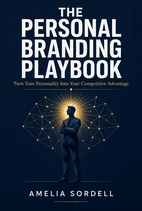
The Personal Branding Playbook by Amelia Sordell Book Cover

by Amelia Sordell

Amelia Sordell's The Personal Branding Playbook argues that everyone already has a personal brand formed through unnoticed impressions, and offers a four-part strategy—goal, audience, content, distribution—for taking deliberate control of it. Written for professionals, founders, and executives who post safely yet get no traction.

On Insta.page you also get an Apply This Book tool that lets you combine insights from up to 3 books to solve your specific situation.

Chapter mindmaps

Free preview: chapters 1–4 are fully interactive. Click any node to expand or collapse. Subscribe to unlock the rest.

Chapter 1: 1 Reputation at scale

Key concepts: 1 Reputation at scale

1 Reputation at scale

Reputation Scales Through Unseen Moments

  • Every impression forms in unnoticed moments; you can't be present for all.
  • Personal brand exists already; work is to take control of it.
  • Social media turns one-to-one interactions into one-to-many, scaling reputation.
  • Online reach can hit a million in 24 hours vs. 100 calls yielding ~4 conversations.

Authenticity Is the Foundation

  • Personality cannot be invented; a personal brand is tied to who you are.
  • Reframe branding as one-on-one interaction at scale to build self-esteem.
  • Authenticity is the highest frequency, 400 times stronger than love.
  • Strategic marketing, not ego: attention is the scarce currency.

Four Components of Personal Brand

  • How you look shapes the first impression in one-tenth of a second.
  • How you act must back up the first impression with integrity.
  • What you know is lived experience Google cannot supply.
  • What you believe attracts the right people and repels the wrong ones.

Price and Legacy Through Scarcity

  • Personal branding places you at the airport: fewer like you, more demand.
  • Give knowledge away without gatekeeping to build trust.
  • 70% of decisions are emotional; authentic relationships are harder to break.
  • Self-promotion is not dirty; post despite fear—Colonel Sanders, Picasso vs. Van Gogh.

Five Rules for Posting

  • Post the thing and accept imperfection; most content will barely land.
  • Be willing to live with consequences; being disliked by some is a source of power.
  • Don't take criticism personally; your opinion of yourself matters most.
  • Finished beats flawless; message outranks medium—typos don't make you an idiot.

Unfiltered Authenticity

  • Filtering waters you down; the point of a personal brand is to stand out.
  • Fear of being unrecognized in person outweighs the desire to filter.
  • Share intentionally but stay human—no make-up, old tracksuit bottoms.
  • Nobody ever wished for more make-up; they connect with the message.

Authenticity as a Reputation Strategy

  • Being fully yourself and visible attracts genuine people and opportunity.
  • Start from your existing personality, not a separate assembled persona.
  • The gap between persona and self closes doors a good first impression opened.

Chapter 2: 2 Defining your why

Key concepts: 2 Defining your why

2 Defining your why

Alignment Over Metrics

  • Likes and followers can rise while confidence falls
  • A clear why makes results feel nearly effortless
  • Confidence is the greatest return after years of building
  • Aim for the right attention, not virality

The Cost of Chasing Validation

  • Likes are a useful KPI but a poor destination
  • Chasing validation can reinforce harmful cycles
  • Shift from 'do they like me?' to 'do I like them?'
  • Five genuine fans beat 10,000 empty likes

Why vs. Goal

  • Why is the vision; goal is the mission that must happen
  • Early 'whys' are often really goals in disguise
  • The deeper why can take years to emerge
  • Why catches you when motivation fails

The Mission Statement Exercise

  • Combine the big why with the core goal
  • Be specific: name the role, number, or outcome
  • Answer five prompts: values, passions, goals, strengths, legacy
  • Format: I will [action] by [skills] to [result]

Know Your Values and Passions

  • Name five non-negotiables and how they show up
  • List five things that bring you joy
  • Align goals with values, passions, and skills
  • Mismatched roles may require reshaping the why

Leverage Strengths and Legacy

  • Ask others for three to five strengths; self-criticism hides them
  • A stack of skills makes you unique
  • Define what you want to be known for
  • Legacy is how people introduce you when you're not there

Get Out of Your Own Way

  • Social fear imagines friends mocking your posts
  • Real friends support the work from the first post
  • Mockery often reflects the mocker's own limits
  • Strengths feedback builds confidence to begin

Chapter 3: 3 What is a good brand strategy?

Key concepts: 3 What is a good brand strategy?

3 What is a good brand strategy?

Start with the Goal

  • Fix the goal first; reverse-engineer audience, content, and channels from it.
  • Sordell's goal: financial freedom via paid speaking; Klowt's goal: more clients.
  • Without a goal, no audience can be identified or content chosen.

Target the Ring of Influence

  • Reach decision-makers and those around them (assistants, adjacent staff).
  • An assistant forwarded a TikTok, leading to a $100,000 contract.
  • McDonald's Happy Meal: influence children to influence parents.

Content Must Adapt and Iterate

  • Be agile to react to news but consistent to always have something to post.
  • Repurpose, remix, and reuse old high-performing content when inspiration fails.
  • Treat algorithm changes as signals to change approach, not excuses.

Friends, Not Followers

  • Large following ≠ influence; followers must connect with the person.
  • Show vulnerability and personality; discuss mistakes to create recognition.
  • Aim for connections that behave like friendship, not just audience.

Decide What You Want to Be Known For

  • Settle on one core message that doesn't change; translate it per platform.
  • Don't copy others' stories; your story and reason are not transferable.
  • Sarah's 'heart in HR' message turned dull topics into 22,000 followers and business.

Chapter 4: 4 Challenge the norm

Key concepts: 4 Challenge the norm

4 Challenge the norm

Why Vanilla Brands Fail

  • Safe, forgettable content gets ignored; distinct personality stands out
  • Critics are useful: personality filters out wrong audience, attracts right one
  • Even Mother Teresa faced criticism; Ryanair thrives by not being for everyone

Deliberate Flavour

  • Every post must answer why it exists without explanation
  • Use the Klowt filter: does this build the reputation you want?
  • Flavour can be data or contrarian opinion, but must be owned

Authenticity with Boundaries

  • Authentic ≠ oversharing; create a no-fly list of off-limit topics
  • Content is the tip of the iceberg—audience sees only ~10% of life
  • Timing matters: oversharing for attention backfires (e.g., crying selfie)

Seven Fatal Flaws

  • Overthinking, thinking you must be 'smart,' not knowing audience
  • Not knowing channel, not engaging, inconsistency, talking about everything
  • Done well beats perfect; communicate complex ideas simply

Engagement as Conversation

  • Personal branding is a conversation, not a broadcast
  • Use the 10*3 rule: 10 influencers, 10 posts, 10 minutes daily
  • Give engagement before expecting it; reply to comments

Consistency Over Perfection

  • Brand is 10% great content, 90% consistency in posting
  • Keep message steady, vary mediums; test and iterate
  • Momentum takes ~12 months; avoid chasing every trend

Focused Messaging & Structure

  • Talk about one thing you want to be known for; don't opine on everything
  • Leave room for comments; start a conversation, don't have it alone
  • Use Klowt Kontent Sandwich: hook, context, call to conversation
You've reached the end of the free mindmaps

Next chapter: “5 Finding friends not followers” is locked

See every chapter of The Personal Branding Playbook as an interactive mindmap — and unlock all 700+ book summaries with audio and AI Q&A.

$0.00 due today · 7 days free, then $89.99/year ($7.49/mo) · Cancel anytime before day 7

plus sales tax where applicable

Continue exploring The Personal Branding Playbook