The Next Day Quotes
by Melinda French Gates
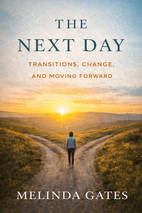
This page collects the most striking lines from Melinda French Gates's The Next Day. The book explores what happens after a major life change, when the dust settles and you face a new reality. These quotes capture that space with honesty and warmth. They are lines about courage, self discovery, and the messy process of letting go.
What makes the book so quotable is how directly it speaks to feelings we all know but rarely put into words. Melinda blends personal stories with universal truths. The result is a set of phrases that feel both intimate and widely relatable. Readers will find wisdom to carry with them through their own next days.
Top Quotes from The Next Day
“The next day—when the graduation confetti has been swept up or the wedding favors have been handed out or the movers have departed, leaving you in a sea of cardboard boxes—is when a transition truly begins.”
Melinda French Gates explains the true start of a transition.
It vividly paints the quiet, often overlooked moment after a big event, emphasizing that real change happens in the aftermath.
“The small wave is unmoved. “No,” it says, “we're not. And I can explain why in just six words: You're not a wave. You're water.””
The author retells a parable from spiritual teacher Ram Dass about two waves approaching the shore.
This parable offers a profound perspective on identity and change, reminding readers that our true nature transcends temporary forms.
“Soon after, I started to hear a whisper at the edge of my consciousness, the barest echo of a voice. It spoke with gentle authority, softly sharing its sad and solemn message: This isn’t right anymore.”
The author describes hearing her inner voice after a period of nightmares and self-reflection.
It captures the haunting yet gentle emergence of self-awareness that many readers can relate to. The simplicity of the message 'This isn’t right anymore' resonates as a universal truth about recognizing when something must change.
“Once, I had wondered, How could I possibly leave? Now, I wondered, How can I possibly stay?”
The author describes the shift in her thinking about her marriage after months of uncertainty.
The parallel structure highlights the profound internal transformation from fear of leaving to recognition of the impossibility of staying. It is a succinct, memorable expression of a pivotal decision.
“You can keep your head down and focus on finding the shortest possible distance to the next familiar thing, racing past the unknown without a second glance. Or you can find the courage to pause in that in-between space and see what it has to tell you—and then let what you learn there help you decide where to go next.”
The author reflects on two ways to encounter transitions in life.
This metaphor of the clearing captures the book's central tension between relentless goal-pursuit and the wisdom of pausing, offering a memorable choice that resonates with readers navigating their own crossroads.
“Some dreams undoubtedly propel us forward, but others hold us back. The trick is learning to distinguish between the two—and, when you decide an old dream no longer serves you, finding the courage to slip its bonds.”
The author summarizes the insight from Reverend Esau McCaulley's essay about letting go of dreams.
It offers a nuanced, liberating perspective on ambition, validating the difficulty of releasing goals while empowering readers to discern which dreams truly serve them.
“All of us have lost something precious on our journey here. A dear friend. A sister. A partner. A parent. A job we loved. A healthy working body we took for granted. None of us gets this far in life with everything intact.”
Melinda discusses the peace that comes with age, noting shared losses.
The stark, list-like structure makes the message hit hard—everyone can relate to losing something precious, and the conclusion offers a comforting sense of resilience.
Themes Behind the Quotes
One major theme is the experience of being in between, after an ending but before a new beginning. The quotes emphasize the importance of pausing in that space rather than rushing forward. Another theme is the tension between holding on and letting go, especially of dreams or identities that no longer fit.
Another thread is the power of relationships and the role of others in shaping our resilience. Melinda writes about parental influence, romantic partnership, and friendship as anchors during change. Finally, self acceptance emerges as a key lesson, learning to show up as yourself without needing to prove your worth.
Quotes by Chapter
Introduction
“I'm writing this at a moment of transition: a moment when one chapter has come to a close but the next has not yet begun.”
The author describes her current state as she begins the book.
This line captures the universal feeling of being in between life stages, making it instantly relatable to anyone facing change.
“All of us want to feel a sense of ownership over our lives and our stories.”
The author reflects on universal human desires shared across different circumstances.
This simple yet profound statement speaks to the deep need for agency and self-definition, resonating with readers seeking control.
“What shape waits in the seed of you to grow and spread its branches against a future sky?”
A line from the poem by David Whyte that Melinda French Gates quotes.
This poetic question inspires self-reflection and hope, inviting readers to imagine their own potential and growth.
Chapter One. Find Your Small Wave
“My father refused to see my mother and me that way, and in doing so, he taught me not to see myself that way either.”
After the author was humiliated at school for wearing nail polish, her father defended her and her mother.
It shows how a father's refusal to accept diminishment can empower his daughter to resist internalizing others' belittling views.
“I was lucky enough to have Dad's voice in my head reminding me of who he believed I already was and who he was confident I could become.”
The author reflects on her father's influence during her difficult first semester at Duke University.
This line captures the enduring power of parental belief to shape a child's self-confidence and perseverance through challenges.
Chapter Two. Feel the Ease of Letting Go
“I realized I would have died for her that night. I would have sacrificed Bill for her in an instant. I would have given my own mother’s life to save Jenn’s.”
After the earthquake, the author reflects on the depth of her new maternal love.
This line captures the raw, unconditional ferocity of a parent's love, showing how it can override all other bonds. It resonates because it acknowledges the primal instinct to protect a child at any cost.
“Here was undeniable evidence that, at the center of my heaving chest, pulsing from my hammering heart, was a force that hadn't existed there before: a maternal love so primal and ferocious it was almost violent.”
Moments after the earthquake, the author recognizes a new, overwhelming love for her daughter.
The vivid, visceral language powerfully conveys the intensity of maternal love as something both beautiful and terrifying. Readers connect with the honesty of experiencing a love that feels almost dangerous.
“I was making it about me when it should have been about them.”
Reflecting on her guilt spiral while balancing work and motherhood.
This succinct realization offers a powerful lesson in self-awareness and prioritization. It resonates with parents who struggle to separate their own anxieties from their children's needs.
“A good enough parent is one who cares for their child and tends to their needs without expecting perfection of either themselves or their child.”
The author introduces the concept of the 'good enough' parent from psychologist Donald Winnicott.
This line provides a liberating alternative to the impossible standards of perfect parenting. It reassures readers that competence and love matter more than flawlessness.
Chapter Three. Be a Greenhouse
“But when the hunger is inside, when the break is where no one can see, then all we can do is be a greenhouse for each other.”
Melinda reflects on Mark Nepo's poem "The Work of Care" while trying to support John and Emmy through his illness.
This line beautifully encapsulates the quiet, nurturing role a friend can play during someone's deepest suffering, offering a memorable metaphor for unconditional support.
“So if she gets to the point, Melinda, where she questions if she should marry somebody again, I want you to remind her that I thought that that would be a good path for her to choose.”
John, on his deathbed, asks Melinda to look after Emmy and encourage her to find love again.
It reveals John's extraordinary selflessness and love for Emmy even as he faces death, making it a heart-wrenching and inspiring testament to his character.
“John had an almost supernatural belief in what we were doing as a company and the charisma to help you see his vision.”
A colleague describes why people loved working for John at Microsoft.
It captures the magnetic, visionary quality that made John such an inspiring and effective leader, resonating with anyone who has followed a compelling mission.
“John, you can go. It's okay. I'm going to be okay.”
Emmy whispers to John as he lies dying.
This moment of selfless, courageous love is incredibly moving, showing how letting go can be the deepest gift.
Chapter Four. Distill Your Inner Voice
“Therapy made it possible for me to respond to the betrayals in my marriage without betraying myself in return.”
The author reflects on the role of therapy in her journey toward separation.
This line encapsulates the core lesson of the chapter: that true self-integrity requires not betraying oneself. It offers a powerful definition of healing and empowerment.
“It captures so many of the things I loved about him. Here’s this charming, well-meaning, mind-bogglingly brilliant nerd, all dressed up in his tux, just trying to have a good time at the party, happy because I’m happy even though he doesn’t exactly know why.”
The author recalls a joyful memory from her wedding reception, watching her husband try to cut the cake.
This tender, specific memory humanizes the couple and makes the eventual separation more poignant. It shows the love that existed, making the difficult choice to leave even more heartbreaking and relatable.
Chapter Five. Pause in the Clearing
“Yes, I got a lot done. But I also missed opportunities to embrace spontaneity, lean into the unexpected, and learn something new about myself and the world.”
The author looks back at her goal-driven youth.
This honest confession underscores the cost of relentless striving, making readers reflect on their own trade-offs between achievement and openness.
“Melinda, you've squeezed every bit of juice out of the turnip.”
The author's friend Charlotte says this gently during a walk.
The vivid, folksy metaphor perfectly captures the exhaustion of overachievement and the moment of permission to stop, making it instantly memorable.
Chapter Six. Plant Roots
“At their best, rituals and traditions keep us anchored in our values and firmly rooted—in ourselves, in each other, in what's important.”
The author reflects on how her parents' holiday traditions helped her reset after she missed her daughter's first Christmas Eve to play golf.
This line encapsulates the chapter's central theme—that rituals ground us in what truly matters—and offers a concise, inspiring takeaway for readers seeking meaning in their own family traditions.
“The routines and rituals and relationships that we all develop as we grow into ourselves serve as roots, keeping us grounded and secure when transitions come along to shape our branches in unpredictable ways.”
The author uses a yoga metaphor ('root to rise') to explain how foundational habits and connections provide stability through life's changes.
The vivid imagery of roots and branches makes abstract ideas about resilience tangible, and the sentence speaks to anyone navigating change while seeking steadiness.
“Because what is life if not a “subtle spell of changing forms”? Beginnings that become endings. Endings that become new beginnings. And a prayer for stability amid the thousand storms, for roots that reach deeply enough through rock and loam and clay to keep us anchored through it all.”
The author concludes the chapter by quoting Claude McKay's poem and offering her own reflection on the need for deep roots.
This poetic closing resonates because it acknowledges life's constant flux while affirming the power of inner stability, leaving readers with a memorable, hopeful call to cultivate their own foundations.
“It meant that every night, regardless of what else was going on, whether we sat down that night in a happy mood or a heavy one, we spent part of that day talking to the people we loved about what mattered to us.”
The author describes the family gratitude ritual at dinner, which became a cherished tradition even on difficult days.
This line captures the simple, profound power of consistent connection—showing that even small daily rituals can create deep bonds and emotional safety within a family.
Chapter Seven. Emerge
“I finally believe that it’s okay if I can’t instantly summon exactly the right statistic to substantiate the point I'm making or if the limits to my knowledge reveal themselves.”
Melinda French Gates reflects on her realization after a high-stakes meeting with a government official.
This line encapsulates the liberating shift from perfectionism to self-acceptance, a universal struggle for many high-achievers.
“Now that I'm finally okay showing up as no one but myself, I no longer treat every appointment on my calendar as a referendum on whether I deserve to be there.”
Melinda describes her new perspective on meetings and self-worth.
A powerful mantra for anyone who has ever felt like an imposter, reminding us that our presence is not a test of worthiness.