The Next Day Key Takeaways
by Melinda French Gates
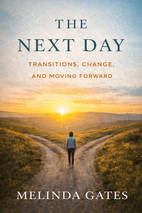
5 Main Takeaways from The Next Day
Embrace life's transitions by focusing on the quiet choices after pivotal events.
The book argues that while transitions are inevitable, the most formative growth occurs in the daily decisions made 'the next day.' For instance, after her divorce, Melinda had to consciously rebuild her life through small, intentional steps, demonstrating how these choices shape our new identities.
Cultivate belief from mentors and trust your inner voice to navigate change.
A parent's or mentor's genuine belief, as when Melinda's father challenged her school system, provides an internal compass during doubt. Similarly, distilling your inner voice through practices like therapy or journaling helps reclaim agency, as Melinda did during her personal crisis.
Practice letting go as a necessary act of love for independence and grief.
In parenting, letting go raises capable adults, while in grief, offering peaceful permission to let go honors deep love. Both actions, such as setting boundaries or planning a memorial, build inner resources and foster deeper relationships.
Build personal and family resilience through intentional rituals and community connections.
Family traditions and daily routines act as 'heart tending' that create belonging and teach values. Friendships and spiritual communities provide essential support, helping weather life's storms, as emphasized in the chapter on planting roots.
Find self-acceptance by embracing unplanned paths and compassionate reflection.
Success isn't about conforming to external goals but leaving space for spontaneity and joy. With time, authentic confidence replaces perfectionism, allowing us to look back with compassion, as Melinda describes in her journey to emergence.
Executive Analysis
The five key takeaways collectively form a roadmap for navigating life's inevitable transitions. They argue that growth is not in the pivotal events themselves, but in the conscious, daily choices that follow—choices guided by inner truth, nurtured by belief systems, and stabilized by rituals and community. This framework transforms transitions from disruptive crises into opportunities for self-discovery and reinvention.
'The Next Day' matters as a practical, reflective companion that blends memoir with actionable wisdom, standing out in the self-help genre for its emphasis on the 'in-between' moments. It empowers readers to find footing during change by offering tangible strategies, from distilling one's inner voice to planting roots through rituals, making it a valuable resource for anyone facing personal or professional upheaval.
Chapter-by-Chapter Key Takeaways
Introduction (Introduction)
Transitions, whether chosen or forced, are inevitable and universal parts of life.
The most significant and formative part of a transition often begins the day after the pivotal event, in the quiet choices of daily life.
While personal, these journeys are easier navigated with companionship—through the wisdom of others, shared stories, and a sense of community.
Within every period of change lies a "seed" of potential, a chance to discover and grow into a new version of oneself.
The book is designed as a practical and reflective companion for anyone standing in the "in-between," aiming to help them find footing and see possibility.
Try this: Acknowledge that your next steps after a major event define your growth, and start by making one small, intentional choice today.
Chapter One. Find Your Small Wave (Chapter 1)
Belief is a Gift: A parent's (or mentor's) genuine belief in a child's potential can be more valuable than any material advantage, providing an internal compass during times of doubt and failure.
The "Small Wave" Perspective: Having someone who helps you see your broader, enduring identity—beyond temporary setbacks or rigid labels—is crucial for navigating life's major transitions and overcoming obstacles.
Advocacy in Action: True support often means actively challenging systems, even respected ones, that seek to diminish or limit potential, as demonstrated by the author's father confronting the school's authority.
Intentional Modeling: Expanding a child's sense of what's possible requires intentional exposure to role models and opportunities that defy societal stereotypes, especially in fields where they are underrepresented.
Fathers as Allies: In both progressive and traditional settings, fathers have a unique and powerful role to play in championing gender equality and empowering their daughters by seeing and nurturing their full potential.
Try this: Identify someone who sees your broader potential and actively seek their perspective when facing setbacks.
Chapter Two. Feel the Ease of Letting Go (Chapter 2)
The goal of parenting is to raise independent, capable humans, not to create dependent children or parental companions. Healthy boundaries are a necessary act of love.
Striving to be a "good enough" parent—not a perfect one—is a liberating and sufficient standard that protects family joy from the tyranny of perfectionism.
Letting go is an active, essential part of parenting that builds a child’s inner resources and, ultimately, enables a deeper adult relationship.
The journey comes full circle; raising an independent child allows you to witness them step confidently into their own life and parenthood, which is the ultimate reward.
Try this: Practice setting healthy boundaries with loved ones to foster their independence and your own emotional freedom.
Chapter Three. Be a Greenhouse (Chapter 3)
Grief is the neurologically disruptive cost of deep love, a painful learning process where the brain adapts to a profound absence.
Offering a loved one peaceful permission to let go can be a final, courageous act of love.
Rituals and purposeful tasks, like planning a personalized memorial, can provide crucial scaffolding for early grief.
The "greenhouse" metaphor illustrates how we can nurture the legacy of those we've lost within ourselves and our community, allowing their influence to continue blooming.
Life, death, and new beginnings exist in a continuous, interconnected cycle, and profound moments often hold this duality.
The essence of a person persists through the memories and connections they fostered, capable of bringing comfort and presence even long after they are gone.
Try this: Create a personal ritual to honor a loss, and consciously nurture the positive legacy of that relationship in your daily life.
Chapter Four. Distill Your Inner Voice (Chapter 4)
Giving voice to private pain is empowering. Publicly articulating her heartbreak, even in a raw, unscripted moment, helped Melinda reclaim her agency and sense of self.
Support systems are crucial for navigating crisis. A dedicated therapist, understanding family, and close friends provided the essential scaffolding for her resilience during an intensely grueling process.
Self-care practices are non-negotiable tools. Techniques like meditation, physical activity, and audiobooks were practical, daily methods for managing anxiety and creating space for her inner voice to re-emerge.
Distilling your inner voice is an active practice. It requires consciously differentiating between external expectations and your own truth, and courageously giving that truth a form—whether through journaling, conversation, or therapy.
Major life transitions often start subtly. The most important decisions begin with a quiet internal whisper; learning to listen for and honor that whisper is a foundational skill for living with intention.
Try this: Dedicate time each day to quiet reflection or journaling to differentiate your inner truth from external expectations.
Chapter Five. Pause in the Clearing (Chapter 5)
Embrace Open-Ended Discovery: A degree or achievement is a starting point for self-discovery, not the final destination on a fixed path.
Resist Conformity to External Expectations: Success is not defined by a narrow, prescribed set of goals imposed by institutions or societal norms.
Leave Space for the Unplanned: Ambitious planning is valuable, but intentionally leaving room for spontaneity, joy, and new possibilities is essential.
Value Life's Transitions: While disruptive, transitional "clearings" are necessary and magical periods that allow for fundamental growth and redefinition.
Try this: Intentionally schedule unstructured time to explore new interests without pressure, allowing for spontaneous joy and redirection.
Chapter Six. Plant Roots (Chapter 6)
Rituals are Active Nourishment: Family traditions and daily routines are not trivial; they are intentional acts of “heart tending” that build belonging, create lasting memories, and teach core values.
Presence is the Priority: The essence of meaningful ritual is being fully present for the people who matter, consciously stepping away from daily distractions to honor special occasions and ordinary moments alike.
Roots Enable Resilience: The stable foundations built through consistent rituals and nurtured relationships allow individuals and families to weather life’s inevitable storms and transitions (“the thousand storms”) with greater steadiness.
Community is a Lifeline: Actively maintained friendships and spiritual communities function as essential support systems, with shared routines providing the structure for deep connection that enriches life and counters isolation.
Try this: Establish a simple, consistent family ritual or reconnect with a friend through a regular activity to build stability and connection.
Chapter Seven. Emerge (Chapter 7)
Authentic confidence often comes with time and experience, replacing the need for a performance of perfection.
Happiness can follow a U-shaped curve through life, with many people finding greater peace and self-assurance in their later years.
Looking back on our former selves with compassion, rather than regret, is a key to self-acceptance.
Life is a series of transitions—welcome and unwanted—and our response to them, “on the next day,” is what shapes our identity.
Even in difficult times, the potential for a new beginning is quietly forming within, a promise that can empower us to move forward and emerge.
Try this: Reflect on a past challenge with compassion for your former self, and recognize how it has contributed to your current resilience.
Newsletter Sign-up (Chapter 8)
The "good enough parent" model champions healthy development over perfection, teaching resilience by allowing children to face age-appropriate challenges.
Parenting with the goal of raising independent "people," not dependent "babies," establishes boundaries that can ultimately foster stronger adult relationships.
Deep, formative friendships provide a foundational support system through life's major transitions and challenges.
During a loved one's crisis, Ring Theory ("comfort in, dump out") offers a vital framework for providing support without adding burden, directing your own needs outward, not inward toward those most affected.
Love’s Final Acts: True love can manifest in selfless concern for a loved one’s future happiness, even at the end of one’s own life.
The Greenhouse Principle: A powerful form of support is to create a nurturing, stable environment (“a greenhouse”) where a grieving person can process and eventually grow.
Grief as Learning: Grief is a form of neural and emotional adaptation to a profound loss; it is the direct cost of having loved deeply.
The Convergence of Cycles: Life, death, and new beginnings are intimately intertwined, and holding space for this paradox can be a source of profound, if painful, connection.
Enduring Legacy: A person’s spirit lives on through the love they planted in others, the memories shared, and the ongoing connections they inspire between people.
Therapy is a process of discovery, not a transactional fix. Lasting change often requires letting go of preconceived goals to address deeper, unrecognized issues.
A supportive inner voice requires conscious cultivation and protection. It can fade under prolonged stress, and reclaiming it is essential for making authentic, life-altering decisions.
Major personal transitions rarely happen in isolation. They often intersect with external crises, requiring the maintenance of a public facade while processing private pain.
The decision to end a long-term partnership is rarely linear. It involves cycles of certainty and doubt, and must ultimately quiet the external "what about" questions to listen to one's own truth.
Recovery and public reinvention after a profound loss require time, private support, and deliberate pacing. Healing is an active process that involves building new personal tools for resilience.
Honor Your Inner Voice: True empowerment comes from distinguishing your own inner voice from external expectations and having the courage to speak its truth.
Beware the Tyranny of Goals: While goal-setting can drive achievement, an obsessive focus on a predetermined list can cause you to miss unexpected joys and opportunities for growth.
Value the Liminal Space: Life’s transitions and “clearings” are not just gaps to be crossed quickly, but sacred pauses rich with potential for redirection and self-discovery.
Embrace Planned Abandonment: Letting go of old dreams or plans is not a failure, but often a necessary step in making room for a more authentic and fulfilling path.
Lead with Humility: Whether in life or philanthropy, the most effective approach is often one of flexibility, humility, and a commitment to listening to those with lived experience.
Intentional Openness is Guiding: The most productive path forward often involves shedding rigid plans and remaining open to learning from new people and unanticipated opportunities.
Rituals Anchor Identity and Values: Family traditions and small daily rituals are not trivial; they “root” us, providing stability, reinforcing what matters, and creating lasting emotional bonds through life’s changes.
Friendship is Foundational Infrastructure: Invested, ritualized friendships act as critical support systems, offering spiritual growth, unwavering emotional sustenance, and proven benefits for long-term well-being.
Self-acceptance and peace are often hard-won gifts of time, experience, and survived losses.
We must treat our past selves with compassion and allow our current selves to be celebrated by them.
Life is a series of transitions; navigating change is a skill that evolves and deepens with each decade.
Significant personal transformation is possible at any stage, often beginning quietly within us long before we see it manifest.
Moving forward requires faith in the new beginnings that are always forming, even in difficult times.
This concluding portion of the chapter shifts from the core narrative to provide essential practical information and legal context for the reader. It serves as a bridge between the book's content and the reader's ongoing engagement with the author's work.
The book offers official channels for readers to stay informed about the author and publisher through newsletter sign-ups.
All content is protected by copyright, with a very specific prohibition against its use for training AI systems.
Practical information is provided for those interested in purchasing the book in bulk for institutional use.
Try this: Integrate the book's lessons by committing to one practice, such as joining a supportive community or respecting creative work through official channels.
Continue Exploring
- Read the full chapter-by-chapter summary →
- Best quotes from The Next Day → (coming soon)
- Explore more book summaries →