The Most Dangerous Games Themes
by MrBeast
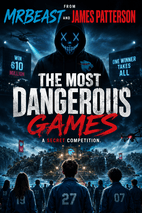
Underneath the brutal games and twists, the novel is wrestling with how easily control becomes invisible and how people stay human when everything is engineered to break them. It asks whether kindness, memory and mercy can survive when rules change, fears are weaponized and every bond is watched.
Here you will find each major theme tied to concrete moments, from rigged rules and found family to the weight of grief and the choice not to become a monster. The page also breaks down recurring symbols like the red pendant, wristbands, Luca's empty chair and 'In Flanders Fields,' showing how they carry the story's deeper meaning.
Major Themes in The Most Dangerous Games
Manipulation and the rigged game
The competition is presented as a fair test, but the book repeatedly shows the Host and the board changing rules, hiding truths, and engineering outcomes to break people. Characters learn that fairness was the first lie and that authority cannot be trusted.
- Alek thinks that being told the rules would be clear, consistent, and fair 'was the first lie,' and The Host says the map changes by the hour.
- After The Host claims no one will die if they are worthy, Reg quietly tells Wyatt, 'He's lying.'
- In the boardroom, Wyatt slides over a folder with six signatures, saying the games were a board decision and they are all on the murder paperwork.
Found family and protective bonds
Contestants abandoned or isolated form new family ties that become the strongest counterforce to the game's brutality. Alek and Hannah become sisters, Jack treats Rupert like a son, and the group repeatedly risks their lives for one another.
- Alek promises Hannah they will get through the cold together, and Jack tells Rupert that maybe now he does have a child when Rupert asks if Jack has children.
- Conner Lynch dies as a human shield for Hannah, and Jack says, 'Selfless service... So that others may live.'
- When Alek falls through Antarctic ice, Reg, Wyatt, and Hannah form a human chain to pull her out.
Surveillance and loss of privacy
Every word, hesitation, and relationship is watched, recorded, and used by The Host. The characters learn that intimacy itself can be leveraged against them, and even their bodies betray them to the game's monitoring system.
- The Host watches Jack, Elena, Wyatt, and Hannah on monitors and calls their emerging bonds predictable and useful.
- Hannah tells Wyatt that their kiss cannot happen again because 'it wasn't private... None of it is.'
- Wyatt feels a faint pulse from his wristband when he lies in his interview.
Fear, trauma, and the breaking point
The book weaponizes each character's deepest fear, showing that the body's terror can override conscious knowledge and that survival is often a matter of what a person can endure. The endgame chambers are literally built around each contestant's worst nightmare.
- In her chamber, Alek is overwhelmed by snakes and spiders, her pathological phobia, and screams 'I give up' despite knowing they have to be an illusion.
- Ant Tipton is forced through a plane-crash simulator recreating the crash that killed his family, and he finally breaks and shouts 'YOU WIN!'
- Rupert confesses that the thing he is most afraid of in the world is the dark, and later his scream is swallowed by the dark after he disappears.
Mercy and refusing to become the monster
The Host wants to turn contestants into killers, but the book repeatedly measures heroism by the choice not to destroy an enemy. Characters who win or survive by sparing others are contrasted with those who treat cruelty as necessity.
- Hannah defeats Jack in their duel but refuses to finish him, saying 'I won't' and pressing her own red button to quit.
- Alek disarms Carlos Lopez in the knife duel, pins him down, and spares him, later telling The Host she is not like him.
- Jimmy tells the A Team not to become the thing The Host wants and that if the game is about loyalty, they have already won.
Grief, sacrifice, and honoring the dead
Death is frequent and often meaningless, and the survivors respond by creating rituals of memory and by carrying the dead forward. The game treats casualties as collateral, while the contestants treat them as people who mattered.
- The survivors gather after the deaths of Elena, Luca, and Reg; Rupert quotes 'In Flanders Fields,' and they raise their arms together in a memorial gesture.
- An empty chair is kept in Luca's honor, and Rupert gives a tearful toast saying Luca treated him like a son.
- Jack cradles Elena's body after her last words—'I'll be right behind you'—and regrets not telling her how completely he had fallen for her.
Symbols and Motifs
The red button / red pendant
The red pendant is the official escape from the game, but it becomes a test of loyalty, fear, and moral limits: pressing it means safe but eliminated, while refusing it means you are choosing to stay and fight.
- Hannah refuses to press her button after nearly drowning and says she proved how hard she is to kill.
- Logan Bergeron and Gabrielle Fontaine press their red buttons rather than fight another human being with knives.
- Wyatt leaves his red-button necklace on the kitchen table with a note saying he wouldn't do what The Host asked.
Wristbands and trackers
The numbered wristbands represent surveillance, ownership, and hidden evaluation: the game can read a player's lies and measure them even when they think they are unobserved.
- Alek wears an H. Games, Inc. wristband tracker as The Host's warning that the games are starting for real.
- Wyatt feels a faint pulse from his wristband when he lies to his interviewer.
Luca's empty chair
The empty chair keeps Luca present after his death and symbolizes the human cost of the game. It also becomes a moral boundary: sitting in it disrespects what he meant.
- The table keeps an empty chair in Luca's honor, and Rupert raises a toast to him.
- Tipton tries to sit in the empty chair, and the moment becomes part of the dinner's grief and conflict.
'In Flanders Fields'
The war poem recurs as a symbol of dying young, remembrance, and the charge to keep faith with the dead. It marks the loss that the game keeps repeating.
- Rupert Chadwick recites 'In Flanders Fields' in his tent interview, and the interviewer weeps and says he knows exactly how this ends.
- After the deaths of Elena, Luca, and Reg, Rupert quotes the poem again during the survivors' memorial gathering.