The Most Dangerous Games Quotes
by MrBeast
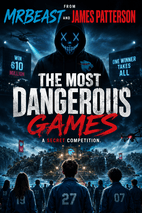
Inside this page you will find lines from every kind of moment: sharp dialogue between competitors, quiet narration that builds dread, and inner monologue that reveals why they keep going. Some lines hit like a challenge. Others sting like a memory.
What makes this book so quotable is how often a single sentence can carry the whole mood of the story. The language is direct, tense, and personal. Characters speak in ways that feel true to fear and hope. A line about survival can also be a line about grief, control, or trust. That is why these quotes stick. They work inside the novel and outside it too.
Top Quotes from The Most Dangerous Games
“Getting old is tough? Try post-traumatic stress on for size. Carry that around inside you like dead weight.”
— Jack
Jack looks down at the shark-filled water and remembers the inner damage left by war.
It turns an old saying into a raw confession about PTSD. The line makes Jack’s toughness feel like dead weight he has to carry, not just strength.
“They were told the rules would be clear. That they'd be enforced consistently. That this would all be fair. That was the first lie.”
Alek braces for the game in Antarctica and thinks about the promises made to the contestants.
The repeated assurances build hope before the blunt final line destroys it. It signals that the game’s real rules are cruelty and unpredictability.
“It's not that it's sad. It’s that I know exactly how this ends.”
— the man
The unnamed interviewer in Tent 19 responds after Rupert recites the war poem In Flanders Fields.
The line carries an unsettling sense of foreshadowing, suggesting the interviewer already knows the deadly cost of what lies ahead.
“But the rule is simple: You stop, you die. He stopped.”
— Tipton
Jack confronts Tipton about leaving Luca on the trail, and Tipton offers his justification.
Its bluntness captures the brutal logic Tipton lives by; it makes the moral fracture between him and the others explicit.
“Because to me, sport is not about fairness. It's about exposure.”
— The Host
Reg argues that being judged without a known finish line is not sport, and The Host answers.
It distills the Host's sadistic tournament philosophy and makes clear that fairness is not the point. Exposure is.
“The quicker you move, the more information you receive. The slower you move, the more you suffer.”
— The Host
At the start of the Death Valley hike, The Host explains that water-cache coordinates will be released only as they are earned.
It distills the Host's cruelty into a crisp rule of the game, making speed and suffering the same currency.
“He's afraid of one thing only. Being controlled.”
Ant Tipton assesses the other competitors and what threatens him.
It quietly redefines a hardened killer by his one vulnerability: losing power over himself.
Themes Behind the Quotes
One major theme is survival under pressure: characters face deadly rules, physical danger, and the constant cost of hesitation. The quotes show that stopping is not an option, yet moving forward often creates moral weight. Another theme is control. The games are designed to test how people react when every choice is watched and judged, and the characters struggle with being managed, manipulated, or turned into leverage.
There is also a strong current of connection. Many lines center on anchors: who reaches for you, who refuses to let go, and who helps carry the weight when the ground gives way. At the same time, the book explores what people carry internally, especially fear, grief, and the desire to matter. The most powerful lines tend to land where outer competition meets inner wounds.
Quotes by Chapter
Part 1 - Chapters 1 to 6
“We're going to have to pick a different day to die.”
— Jack
Jack prepares to plunge into the Pacific and swim to the island despite the sharks.
This bleak, funny mantra is a soldier’s way of refusing fear. It shows courage as a choice rather than an absence of dread.
“Don't you dare die on me, Hannah Wagner.”
— Alek
After the Zodiac flips, Alek spots Hannah face-down and fights the freezing water to reach her.
Alek’s command is both a plea and a promise, made stronger by her grief over her sister. It shows love turning into survival instinct.
Part 2 - Chapters 7 to 14
“The red is too bright. Too intentional. The color of a warning. One you can touch.”
The contestants arrive in the Ohio field and see the identical red tents for the first time.
It turns the tents into an almost living omen and establishes the story's sense of controlled dread.
“And for the games to begin. Remember: You are being evaluated in ways you won't perceive. We watch your wristbands. We know who freezes first.”
— The Host
The Host speaks over the loudspeakers just before the first tests begin.
It is a chilling reminder that surveillance and psychological pressure are built into the game from the very first moment.
“I'm not here to be handled. I'm here to win. So ask what you came to ask.”
— Jack McHenry
Jack cuts off the interviewer after she asks about his nightmares.
This line distills his hardened identity and his refusal to let anyone force him into vulnerability.
Part 3 - Chapters 15 to 21
“A routine of running and locking a door behind you and listening for the moment the world breaks. A routine that chased her and her family to all the places they’d called home with a bomb shelter in the basement. There was always a bomb shelter.”
Alek recalls the wartime rituals that made enclosed rooms unbearable before her interview.
The repeated sentence shape makes fear feel habitual and inescapable. The final short sentence lands like a quiet verdict.
“I'm here because I refuse to let my life be just running. I want a future that isn’t a shelter. I want my mother to never hear another siren again.”
— Alek
Alek answers when the interviewer suggests she came to the games for money.
It turns survival guilt into purpose and makes her prize less about wealth than about peace. The mother detail gives the ambition a human cost.
“It was for your tells. Your instincts. Your appetites. What you reach for when you're afraid. These are what convinced us those moving forward should stay while the majority of you will now be asked to leave.”
— The Host
The Host explains, after the interviews, why some contestants are eliminated.
It exposes the game's true method: reading people rather than hearing their stories. The curt fragments make every candidate feel exposed before they can react.
“I spend it in a way that makes it impossible for anyone to pretend they didn’t see me.”
— Saad
Saad is asked what he would do if he ended up winning the prize money.
It reduces all of Saad's ambition to one stubborn wish: to be undeniable. The phrasing is both arrogant and wounded.
Part 4 - Chapters 22 to 27
“They didn’t make him number one hundred as a favor. They made him leverage. A test. A warning. A leash. Who exactly did he choose to believe in?”
Jimmy processes what it means that the organizers made him the hundredth player.
The short, hammering fragments expose Jimmy’s selection as coercion rather than honor, and the final question deepens his unease.
“But, if I'm playing, I’m playing to win. Which means you'll really have to earn it.”
— Jimmy
After The Host names Jimmy as player #100 in front of the field, Jimmy accepts and issues his challenge.
It turns his shock into a promise of defiance; he transforms being used as leverage into a competition he intends to control.
“People think of them as only apex predators and orcas can be dangerous, sure, but they're not . . . mindless. They're social. Curious. Sometimes protective.”
— Hannah
In the rescue boat after the orcas seem to escort the group, Hannah explains how people misunderstand orcas.
It blends knowledge with wonder and then plants a troubling question: even an expert senses that something directed the animals.
“Outside, the world has turned into a showroom for survival.”
After Hannah refuses to quit, the remaining contestants look out at the staged vehicles and gear waiting at Shackleton's Hut.
One image condenses how the game packages mortal risk into a manufactured spectacle.
Part 5 - Chapters 28 to 32
“He came here because he wanted to matter. Because he thought he could help. That's what kills me.”
— Jimmy
After Rupert breaks down over Luca Tommasi's death, Jimmy tries to explain why Luca came to the game.
It names the quiet, unromantic reason people risk their lives, and it lands harder because Jimmy is barely holding himself together.
“A chain. A human anchor. All of them against the world. And still the three of them start to slide.”
When Alek breaks through the ice, Reg, Wyatt, and Hannah anchor one another to pull her out.
The clipped sentences make the rescue feel physical and hopeless; the final slide creates an image of courage barely holding against the world.
“But I know this: Somebody wanted us to see it.”
— Jack
Rupert asks who is responsible for Luca's death, and Jack looks toward the cameras and helicopter.
It turns grief into suspicion and suggests the death was engineered for an audience—a chilling note for the chapter.
Part 6 - Chapters 33 to 38
“But mostly he told me to believe in myself even when I wasn't feeling anything like that.”
— Rupert
Rupert stands and gives a halting toast to Luca at the survivors' dinner in the main house.
It turns Luca's memory into a quiet mandate to believe in yourself despite fear or self-doubt. The line lands with extra power because Rupert is barely holding back tears.
“I see the games taking on a life of their own, like some runaway train. I don't know who's responsible. But I'm going to find out. I'm asking you to trust me again.”
— Jimmy
Jimmy addresses the whole room after Luca’s death, trying to rally the contestants.
The runaway-train metaphor sums up how the competition has slipped its moral rails; the request for trust gives Jimmy direction and purpose.
“You have the same lifeline as everyone else. Red button. Press it. Walk away. We will escort you to safety. Nobody is keeping you here against your will. If this has gotten to be too much for you, push the button. That's all it takes.”
— The Host
The Host responds to Jimmy's accusation that sharks and deadly spiders were never part of the original framework.
It is control disguised as courtesy: every exit is offered as a personal choice, which makes staying feel like consent. The polished rhythm makes The Host more unnerving.
Part 7 - Chapters 39 to 45
“In the end, Jack McHenry loses a long, grueling game of Chess the way you lose a war you didn’t know you were fighting: slowly, then all at once.”
Jack’s AI opponent finally checkmates him after a long game of Chess.
The comparison turns a board-game loss into a visceral, recognizable collapse. The final phrase captures how defeat can feel sudden even when it has been building.
“There's an expression about selfishness we've got in Australia that covers the feeling you just described: I'm all right, Jack.”
— Reg
After half the players are dismissed, Wyatt admits his overwhelming feeling is relief, and Reg responds.
It names the guilty self-preservation of surviving eliminations with a darkly funny idiom. The phrase is cutthroat, yet Reg delivers it with a grin.
“She doesn’t tell her mother about the crack in the ice. The hole. The water. Reg’s hand on her wrist. Wyatt and Hannah anchoring—shoulder to shoulder, locked in.”
Alek is on the phone with her mother, who asks whether staying in the competition is worth it.
The fragment pile-up recreates the traumatic memory in flashes. It shows how much Alek protects her mother by keeping that terror to herself.
Part 8 - Chapters 46 to 51
“Loose rock. Unreliable holds. A fall that would not be cinematic. Just final.”
Wyatt looks up at the Huntington Ravine headwall before the free-solo climb.
The blunt fragments strip away any heroic glamour and make mortal danger feel immediate.