The Long Witch Goodnight Themes
by Amanda M. Lee
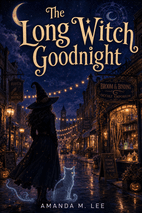
Underneath its plot, The Long Witch Goodnight is wrestling with blurred lines: care that becomes control, power that needs restraint, and guilt that lingers when people cannot prevent suffering. Bay keeps slipping between unconsciousness, a memory-built afterlife, and shared dreams with Amy, while her family turns worry into bed rest, wards, trackers, and collective plans. The book also looks hard at domestic violence, silence, and community failure, and at fear itself as a weapon.
Here you'll find each major theme tied to concrete moments, from Bay's refusal to banish Edith to Morton's creepy children and shark-filled illusion, plus recurring symbols like the hydrangea, the Copeland backyard rune, the dreamscape and bluff, and wards and locked magic.
Major Themes in The Long Witch Goodnight
Dreams, Liminality, and Blurred Reality
The book repeatedly places Bay in between states: unconscious after the attack, visiting a memory-built afterlife, and meeting Amy in shared dreamscapes. Dreams are not escape but investigative space where truth, danger, and family history surface. The line between dream and reality stays deliberately unstable, especially once Bay recognizes her hospital roommate from her vision.
- Bay wakes in a hazy, cloud-filled version of her childhood home and Ginger tells her she is in between life and death.
- Bay tells Amy the dreamscape is in between the plane of the living and the other side, where the dead go when they are done with the world.
- Bay recognizes her quiet hospital roommate as Amy Copeland, the woman she saw in her dream.
- Landon joins Bay in a dream on the bluff and questions Amy about the demon.
Family Protection, Control, and Autonomy
The Winchester family expresses love through worry, bed rest, wards, trackers, and collective planning, but those protections often become control. Bay pushes back by sneaking out, negotiating, and insisting she can decide what to do with her own body and magic. The novel keeps asking when protection is care and when it is confinement.
- Landon puts a tracker on Aunt Tillie's truck and admits he knew Bay would sneak out.
- Mom reveals the family knew Bay would approach Aunt Tillie and agreed not to provide her an escape route.
- Bay fakes sleep with pillows, escapes through Aunt Tillie's enchanted window slide, and calls the outing a jailbreak.
- Chief Terry shoots Morton and says it is his family.
Domestic Abuse, Trauma, and Buried Past
Amy Copeland's and Joanne Copeland's stories are built from domestic violence, silence, and community failure. Bay's dreams show Joseph's violence directly, while interviews reveal how neighbors and institutions let abuse continue. The past is not past: it traps Amy in a dream state and shapes Dustin's refusal to look back.
- In Bay's dream, Joseph advances on Joanne with raised fists and punches her while the child Amy screams.
- Mrs. Little says everyone knew Joseph Copeland was abusive, but people did not intervene because they considered it someone else's business.
- Dustin says he believes Joseph Copeland killed their mother and urges Bay to let Amy rest in peace.
- Amy says she hoped Sid would be a better man even after he hurt her.
Power, Restraint, and Vulnerability
Bay's magic is both an ethical burden and a source of safety. She refuses to banish Edith because she does not want to become a tyrant over the dead, but when her necromancer powers fail she feels unprotected for the first time in a long time. The story contrasts restraint with the desperate, addictive feeding of the mares.
- Bay refuses to use her necromancer powers to banish Edith because she does not want to become a tyrant over the dead, and Landon tells her she sets the tone.
- Thistle says Bay's magic is locked away like a cell or fortress, and Bay panics when she cannot summon ghosts.
- Bay uses her magic to force Joseph Copeland into a chair when he refuses to sit.
- Larry warns that Matthew can use Bay's necromancer powers against her.
Fear, Nightmares, and Confronting Monsters
The mare feeds through fear and nightmares, making terror itself a weapon. Morton manifests creepy children and a shark-filled illusion, while Bay and her family try to prepare for the things they fear most. Bay's refusal to show fear becomes a tactical choice as much as a moral one.
- Evan explains that the mare frightens Amy and feeds off fear, and can drain life force only when it has control of the body.
- Bay warns that Morton can bring their nightmares into the world and says the family must prepare for what they are most afraid of.
- Morton's magic fills the floor with water and a shark as a distraction, and Gunner sees a creepy girl resembling the one from The Ring.
- Bay refuses to duck when Morton attacks so she will not give him the fear he needs.
Guilt, Responsibility, and Second Chances
Characters carry guilt for what they did not do or could not prevent, and the novel repeatedly asks who is responsible for another person's suffering. Dustin protects his second chance by refusing guilt, Mrs. Little offers to help Amy now, and Chief Terry kills Morton without apology because he has decided protecting his family matters more than guilt. Bay also learns she does not always have to be the hero.
- Dustin says he got a second chance through adoption and refuses to feel guilty about living his life.
- Mrs. Little admits she failed Amy and offers to help her this time.
- Chief Terry tells Bay he is not sorry for killing Morton and explains he decided during the planning to stop Morton from hurting anyone else.
- Chief Terry tells Bay she does not always have to be the hero.
Symbols and Motifs
The hydrangea
Care and impermanence: a living thing brought to a grave even though it will die, and a flower whose color changes with the soil it is planted in.
- Terry places a new potted hydrangea and a Petoskey stone on his mother's grave.
- Bay replants the hydrangea properly and explains that its flower color may change depending on the soil's pH.
- The notes describe Terry bringing the potted hydrangea to the grave even though he knows it will die.
The rune in the Copeland backyard
Hidden magical threat and the mare's mark: an ordinary-looking yard arranged as a symbol from Amy's dream, tying Morton to the dream demon and the buried family history.
- Evan notices the fire pit and chairs are off-center because the whole Copeland backyard is arranged as a rune.
- Bay recognizes the backyard rune as the symbol from her dream.
- Dr. Morton is revealed to own and have fixed up the old Copeland house.
The dreamscape and the bluff
A threshold between life, death, memory, and nightmare, where Amy and Bay can communicate and where the mare hunts.
- Bay wakes in a hazy childhood home between life and death and speaks with Ginger and Uncle Calvin.
- Bay meets Amy on the bluff in a dream or other plane and questions her about the demon.
- Amy says the things from before feel like the dream, while Bay notes she has a headache in this dream.
Wards and locked magic
Protection that can also become containment: wards keep danger out and family members in, while Bay's necromancer magic is described as locked in a cell or fortress.
- Scout's pink-thread wards trap Aunt Tillie so she can only enter the family living quarters, kitchen, and dining room.
- Thistle says Bay's magic is locked away like a cell or fortress.
- Bay wards Thistle's and Clove's rooms before Morton comes to the inn.