The Long Witch Goodnight Quotes
by Amanda M. Lee
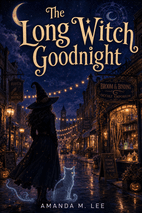
On this page you will find a mix of dialogue, quick narration, and inner monologue from The Long Witch Goodnight. Some lines are funny, some are blunt, and some land with a quiet emotional punch. They work because Bay's voice stays clear even when the situation is strange, tense, or unexpectedly tender.
The quotes here are the kind that stick with you after the page turn. They capture family loyalty, ghostly complications, romantic devotion, and the weird humor that shows up when life gets serious. You do not need to remember every plot detail to appreciate how these lines sound on their own.
Top Quotes from The Long Witch Goodnight
“Dying is just a different part of living. There's more out there.”
— Bay Winchester
Bay speaks at Hayley Mortensen's fresh grave after explaining that dying isn't the end.
Her calm, childlike wisdom reframes death as a continuation rather than a final stop.
“I, Bay Winchester, was about to wade in and serve as a conflict resolution manager between two ghosts. I did not have that on my bingo card for the year.”
— Bay Winchester
Bay finds Edith and Viola arguing over the television in her newspaper office.
It captures her reluctant, self-aware humor while showing how absurd her supernatural life has become.
“I thought I was dead, but don’t tell Landon. I don’t want him freaking out.”
— Bay
Bay privately tells her mother what she experienced while unconscious.
The line balances dark humor with protectiveness toward Landon. It reveals how much she cares about his feelings even after trauma.
“I'm warning you that there's a big, philosophical discussion in our future about life, death, and how I can't be without you. It doesn’t need to happen tonight.”
— Landon
Landon agrees to keep the conversation light after Bay returns but warns of a future serious talk.
It balances his love and grief with a promise that the hard reckoning is only postponed. The line is tender, vulnerable, and quietly ominous.
“I know I've said this before, but I really mean it. Don’t you ever leave me.”
— Landon
Landon holds Bay in bed after her recovery and asks her never to leave him.
The repetition makes his fear feel raw rather than rehearsed. It reveals how deeply her absence shook him.
“You did steal my thunder. I was supposed to save you and get all the accolades. Then you saved yourself.”
— Aunt Tillie
Aunt Tillie complains to Bay while agreeing to help her sneak out of The Overlook.
It perfectly captures Aunt Tillie's comic pride and her affectionate, grudging admiration for Bay's independence.
“I won't tattle. I use the window all the time. I enchanted it so an invisible slide comes out and everything.”
— Aunt Tillie
After being called a tattletale, Aunt Tillie admits she uses an enchanted window slide to sneak out.
The confession is pure Aunt Tillie: petty, practical, and secretly magical.
Themes Behind the Quotes
The novel keeps circling around death, but not in a grim way. These lines treat mortality as part of living, something that can be frightening, strange, and even practical when ghosts are involved. Running alongside that is the importance of family and the pull of home. Bay may be stubborn and independent, but she is still shaped by the people who love her and worry about her.
Another big thread is protection versus trust. The characters wrestle with who gets to decide what is safe, when to ask for help, and when to act on their own judgment. Romantic devotion shows up too, often in the form of promises, anxiety, and the refusal to walk away. Humor and affection keep the heavier moments from feeling too dark, giving the story a warm, human center even when the supernatural chaos takes over.
Quotes by Chapter
Prologue
“It would die — they all died — but he wanted something colorful.”
Terry Davenport places a potted hydrangea on his mother's grave, knowing it won't last.
It captures the ache of small rituals that cannot outlast grief, yet are meaningful because they are attempted.
“When you're not sure, sticking with what you know is easier. All Hayley knows is her mom. She doesn't want to leave her mom.”
— Bay Winchester
Bay explains why Hayley's spirit has not crossed over.
It makes ghostly grief feel achingly human: the familiar can be harder to leave than the unknown is to choose.
“It's not that you can't trust law enforcement. You just need to learn what you can trust law enforcement with.”
— Terry Davenport
Terry answers Bay after she says her family can trust only him among police officers.
It offers a measured lesson in caution without surrendering to blanket distrust.
1. One
“Edith was worse. She was a judgmental pain in the ass, and I didn't want her here. As a necromancer, I had the power to banish her. I tried really hard not to exert my will on the dead, however. It felt wrong.”
— Bay Winchester
Bay compares the two ghosts and considers using her necromancer powers to send Edith away.
It reveals Bay's ethical restraint and the personal cost of tolerating a ghost she dislikes.
“You don't belong here. Cross back over, or whatever it is you ghosts do.”
— Landon Michaels
Landon confronts Edith after realizing she is still haunting the office.
It is blunt and protective, cutting through the ghostly bickering with no-nonsense finality.
“I started to turn when I felt an explosion of pain at the base of my neck and everything went dark.”
— Bay Winchester
As Bay locks up the newspaper office, she senses a powerful presence behind her.
The abrupt violence makes for a sharp, memorable cliffhanger that ends the chapter.
2. Two
“You're not supposed to cross for a long time. We're here to make sure that you don’t accidentally screw everything up.”
— Grandma
Grandma explains why she and Uncle Calvin have come to Bay's in-between world.
It mixes cosmic stakes with Grandma's dry humor, making the in-between feel both dangerous and familial. The rule also sets the chapter's central tension: Bay must stay put to survive.
“Shouldn't I be begging to go home? Why was I so calmly waiting things out here?”
— Bay
Bay realizes she feels no urgency to return home even though she wants to see Landon.
It captures the eerie calm of the in-between and Bay's fear that something is wrong with her. The questions make limbo feel psychologically unsettling rather than merely strange.
“Being able to understand where another person is coming from is always good.”
— Uncle Calvin
After Bay reflects on her anger at her father and uncles, Uncle Calvin answers.
It distills the chapter's theme of complicated family forgiveness into a simple, humane principle. It feels like wisdom earned rather than preached.
“He loves you, and he’s not ashamed to show it. I'm thrilled with all the choices you made for husbands. You have much better pickers than your mothers.”
— Uncle Calvin
Uncle Calvin talks about Bay's husband Landon and the husbands Bay and her cousins chose.
It reveals Landon's devotion through a ghostly observer and adds warmth and humor to Bay's limbo. It also shows Uncle Calvin's affectionate pride in the family's choices.
3. Three
“I was in a real hospital, not a clinic. The sound of beeps coming from equipment and the sterile drop ceiling over my head told me that.”
Bay wakes injured and pieces together where she is from the beeps and ceiling.
The sensory details make her return from the dream world feel immediate and fragile. It grounds the fantastical story in a stark, physical reality.
“In what world does that equate to me being upset about coming home?”
— Landon
Bay apologizes for Landon having to drive over the bridge and come back for her after work.
It shows Landon's devotion and his wounded disbelief that she would think his inconvenience outweighs her safety. The blunt question captures love as indignant loyalty.
“I couldn't either. It's okay. I'm just ... it wasn't two days for me.”
— Bay
After Landon admits his bargain with the Goddess, Bay laughs and tells him she couldn't stop complaining either.
It releases the chapter's tension with humor while revealing that her two-day coma felt like a different span entirely.
“You're up, and you're talking. I got everything I prayed for. I refuse to be a jerk about it.”
— Landon
After apologizing for being short with Bay, Landon vows not to waste his answered prayer.
It balances raw gratitude with self-aware humor, making his relief feel human rather than saccharine. The line also echoes the bargain he made with the Goddess.
4. Four
“I had questions — oh, so many questions — but there was no time to ask them.”
— Bay
Bay is waking in the hospital and has just noticed the woman in the next bed.
It captures her disorientation and urgent curiosity after waking. The stacked questions make her voice feel immediate and relatable.
“I was an adult, but still wanted my mommy when things got difficult.”
— Bay
Mom reassures Bay before a nurse wheels her away for tests.
It is a vulnerable, honest admission that cuts through her usual toughness. It highlights the enduring comfort of a mother’s presence.
“He argued for you at every turn and refused to back down when the doctor suggested certain tests might not be necessary. He was your champion the last two days.”
— Mom
Mom tells Bay how Landon advocated for her care while she was unconscious.
It shows Landon’s devotion through action rather than sentiment. The word “champion” makes his love feel fierce and steady.
5. Five
“I know it's hard to believe given where we are — and I'm going home tomorrow no matter what the doctor says — but I have zero intention of ever leaving you.”
— Bay
Bay reassures Landon that she will not leave him, even as they debate her hospital discharge.
It answers his vulnerability with stubborn commitment. The line captures her defiance and devotion in one breath.
“I make the rules. Don’t you forget that, little girl.”
— Joseph
In Bay's dream, Amy Copeland's father turns from assaulting his wife to threaten Bay.
It is a chilling assertion of abusive control that lingers after the dream fades. The threat feels especially menacing because it is aimed at a child.
6. Six
“You're here, and you're okay. That's what I prayed for, and I refuse to be ungrateful. We'll take it one step at a time.”
— Landon
Landon pulls Bay close after she jokes that they are getting back to normal.
The line is a raw expression of relief and devotion, showing how deeply her recovery has affected him.
“They're still a danger, especially when they realize they didn’t kill you.”
— Chief Terry
Chief Terry warns Bay that whoever attacked her remains a threat.
It delivers a chilling reminder that the danger has not passed and raises the stakes for Bay's investigation.
“I couldn't stay here. There were things to do and people to save. I also needed to know who attacked me. Landon would be angry, of course, but it was always better to seek forgiveness than ask for permission.”
— Bay
After Aunt Tillie agrees to help her escape, Bay resolves to leave despite Landon's orders.
It sums up Bay's determination to act on her own terms and sets the chapter's turn toward investigation and rescue.
7. Seven
“It's suspicious when someone wears clothes meant to blend in. This outfit will have people thinking that I'm just doing my normal stuff.”
— Aunt Tillie
Aunt Tillie defends her loud leggings and combat helmet as ideal undercover attire.
It flips the logic of going incognito and captures her eccentric confidence in one line.