The Invisible Coup — Interactive Mindmaps

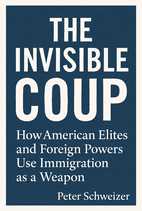
The Invisible Coup by Peter Schweizer Book Cover

by Peter Schweizer

Peter Schweizer's The Invisible Coup details a bureaucratic seizure of power by the permanent administrative state, arguing that unelected officials in agencies like the FBI and CIA subvert presidential authority and democratic accountability. It is for readers engaged in debates about bureaucratic power and institutional integrity.

On Insta.page you also get an Apply This Book tool that lets you combine insights from up to 3 books to solve your specific situation.

Chapter mindmaps

Free preview: chapters 1–4 are fully interactive. Click any node to expand or collapse. Subscribe to unlock the rest.

Chapter 1: Chapter 1: Proof of Concept

Key concepts: Chapter 1: Proof of Concept

1. Chapter 1: Proof of Concept

The Mariel Boatlift as Warfare

  • Fidel Castro weaponized mass migration by embedding criminals, agents, and the mentally ill among refugees
  • Operation was designed to exploit U.S. humanitarian ideals to sow chaos and inflict damage
  • Served as a 'proof of concept' for using migration as an asymmetric weapon against a superpower

Anatomy of the Attila Plan

  • Meticulously planned Cuban operation, not a spontaneous refugee crisis
  • U.S. authorities dismissed early warnings from intelligence sources demanding impossible proof
  • Seeded 16,000-20,000 criminals among 125,000 migrants, causing dramatic crime spikes
  • Weaponized public health (diseases) and national security (trained saboteurs)

Strategic Consequences and Impact

  • Demonstrated migration as low-cost, high-impact weapon forcing U.S. into weak position
  • Damage compared to Pearl Harbor or 9/11 but without conventional military response
  • Embedded drug traffickers to establish networks for profit and social decay
  • Created lasting template for future asymmetric warfare

Institutionalization and Scaling

  • Castro's success inspired other leaders (Lula, Ortega) to adopt similar tactics
  • São Paulo Forum formalized shift from armed struggle to political/cultural subversion
  • Coalition promoted 'world without borders' as strategic tenet
  • SPF member governments became staging grounds for orchestrating mass migration north

Chapter 2: Chapter 2: Mexico’s Reconquista of the US Is Real

Key concepts: Chapter 2: Mexico’s Reconquista of the US Is Real

2. Chapter 2: Mexico’s Reconquista of the US Is Real

Political Rhetoric and Official Endorsement

  • High-level Mexican politicians openly discuss Reconquista as a strategic vision
  • José Gerardo Rodolfo Fernandez Noroña calls U.S. states 'occupied territories'
  • Former President AMLO affirmed migrants are 'reconquering our lands'
  • President Sheinbaum's 'Migrant Hymn' promotes loyalty to Mexico among migrants
  • Government reports frame U.S. Mexican population growth as reclaiming territory

Historical Resentment and Strategic Migration

  • Rooted in 1848 Treaty of Guadalupe Hidalgo territorial losses
  • Strategy focuses on demographic/cultural reconquest rather than military action
  • 1997 constitutional change allows dual citizenship to maintain cultural bonds
  • Mexican presidents govern with expanded nation including diaspora in mind
  • Migration seen as causing 'demographic reconquest' of lost territories

State-Led Apparatus and Institutional Support

  • Mexican government ships state-produced textbooks to U.S. schools
  • Consulates issue Matrícula Consular IDs and mobilize migrants politically
  • Institute for Mexicans Abroad (IME) organizes migrant political action
  • Curriculum promotes Mexican patriotism and decolonial perspective
  • Ideological foundation in José Vasconcelos's 'Cosmic Race' concept

Cultural Expression and Public Sentiment

  • Viral Absolut vodka ad celebrated Mexican reconquest of Southwest
  • Media figures describe migration as 'unstoppable invasion' and 'weapon'
  • Widespread cultural resentment fuels Reconquista narrative
  • Popular culture reinforces Mexican identity and territorial claims
  • Migration framed as peaceful reconquest without military conflict

U.S. Collaboration and Political Mobilization

  • U.S. politicians echo 'the border crossed us' sentiment
  • Organizations like UnidosUS and SEIU partner with Mexican networks
  • 2006-2007 protests demonstrated power of coordinated migrant mobilization
  • Foreign lobbying activities often unregistered with U.S. authorities
  • Model being copied by other Latin American nations creating broader front

Broad Cultural Resonance of Reconquista

  • Polls indicate majority Mexican belief in rightful ownership of U.S. Southwest and right to unauthorized entry.
  • Common casual sentiment expressed as 'we're taking it back' among Mexican populace.
  • Absolut vodka's 'Reconquista' ad campaign with redrawn U.S. borders hailed as marketing genius for popular appeal.
  • Major media figures describe migration as 'an unstoppable invasion' returning land to Mexico.
  • Intellectuals frame migrants as cultural imposers and political weapons against the U.S.

U.S. Political Alliances and Foreign Endorsement

  • U.S. politicians like AOC argue immigration laws shouldn't apply to indigenous peoples, using 'the border crossed us' rhetoric.
  • Prominent figures have past affiliations with MEChA, advocating for reclaimed 'Aztlán' in the Southwest.
  • Russian officials publicly endorse Reconquista, predicting U.S. fragmentation and return of 'stolen' territories.
  • Mexican media proudly republishes adversarial foreign commentary supporting the narrative.
  • Reconquista's success is framed as dependent on preventing migrant assimilation into American society.

Mexican Government's Educational Campaign in U.S. Schools

  • Annual distribution of ~1 million Mexican state-produced textbooks to American classrooms.
  • Textbooks promote 'decolonial' perspective inspired by Marxist pedagogy, openly criticizing capitalism.
  • Materials teach Mexican patriotism, framing Mexican-American War as 'the North American invasion'.
  • Proponents describe program as part of concerted effort to transition U.S. into 'bicultural society'.
  • Consular network of 50+ offices works to bolster migrant loyalty to Mexico rather than U.S. assimilation.

Ideological Foundation: The Cosmic Race and Civilizational Struggle

  • José Vasconcelos's 'Cosmic Race' theory frames continental battle between Anglo-Saxon and mixed-race Iberian-indigenous cultures.
  • Calls for united Hispanic front to prevent Anglo-Saxon triumph, leading to superior 'fifth race'.
  • Despite racist elements, Vasconcelos remains foundational figure in Mexican education and inspired major U.S. Latino groups.
  • Modern Mexican leaders embrace pre-European indigenous heritage while rejecting Spanish colonialism.
  • Symbolic acts include indigenous cleansing ceremonies and state funerals for Aztec emperors, overlooking historical atrocities.

Cultural Reinforcement Through Music and Continental Posture

  • Protest songs like 'Somos Mas Americanos' serve as unofficial anthems, claiming stolen territory and cultural superiority.
  • Lyrics declare mixed-race Hispanics 'more American than the son of an Anglo-Saxon'.
  • Songs like 'La Jaula de Oro' lament assimilation, portraying thinking 'like an American' as negative outcome.
  • Mexican policy extends advocacy to all Latin Americans in U.S. based on shared colonial past.
  • Official doctrine treats Mexicans abroad as national extensions: 'Where there is a Mexican, there is Mexico'.

Institutional Mechanisms Against Assimilation

  • Vast consular network specifically designed to maintain migrant loyalty to Mexico rather than foster U.S. integration.
  • Textbook distribution represents ideological export to shape historical perspective of Mexican-origin youth in U.S.
  • Programs framed as helping U.S. transition to bicultural society with ascendant Mexican influence.
  • Cultural narratives emphasize victimhood and territorial grievance to sustain separate identity.
  • Combined efforts create parallel institutions that compete with American assimilation processes.

Diplomatic Infrastructure Against Assimilation

  • Mexico issues Matrícula Consular IDs to undocumented migrants as a strategy for 'creeping legalization' within the U.S.
  • Mexican consulates propagate 'militant activities' and coordinate with U.S. Hispanic nonprofits for political lobbying.
  • The Institute for Mexicans Abroad (IME) creates a permanent advocacy group for Mexican immigrants within the United States.
  • U.S. academics and officials explicitly reject assimilation, favoring transformation of the host country's values and power structure.
  • Major Hispanic advocacy groups like UnidosUS promote 'self-determination instead of assimilation' for immigrant communities.

Formal Political Network Creation

  • The IME created formal advisory boards enlisting U.S.-based activists and labor leaders to lobby for Mexican government interests.
  • Major U.S. organizations like the National Council of La Raza (UnidosUS) and SEIU participated in this foreign-influenced network.
  • None of these individuals or groups registered as foreign agents under U.S. law (FARA), despite working for a foreign government's agenda.

Covert Diplomatic Strategy

  • Mexican diplomats publicly denied organizing a political bloc while privately doing exactly that with Mexican-American leaders.
  • Early initiatives included efforts to change U.S. media language, specifically targeting the word 'illegal' in immigration discourse.
  • The network's stated goal was to strengthen migrant political organizing to influence U.S. domestic policy for Mexico's benefit.

Network Expansion and Regional Imitation

  • By 2021, the IME had partnerships with two thousand groups, demonstrating the model's effectiveness and scalability.
  • Other Latin American nations like Ecuador and Central American countries began模仿 Mexico's approach, forming consular alliances like TRICAMEX.
  • This strategy deliberately extended political influence beyond national borders, working even with non-Mexican migrants in the U.S.

Demonstration of Political Power

  • The organized network mobilized millions in the 2007 immigration protests across U.S. cities, successfully defeating a congressional bill.
  • Protests featured Mexican and other Latin American flags, symbolizing transnational allegiance rather than American assimilation.
  • A Mexican TV reporter covering the Los Angeles protest stated on air that it showed 'Los Angeles has never stopped being ours.'
  • The protests revealed the network's ability to successfully shift U.S. policy through mass mobilization of immigrant communities.

Chapter 3: Chapter 3: Mexico: Organizing Militancy in the US

Key concepts: Chapter 3: Mexico: Organizing Militancy in the US

3. Chapter 3: Mexico: Organizing Militancy in the US

Mexican Government Intervention in U.S. Politics

  • Consulate-hosted strategy meetings to influence U.S. immigration policy
  • State-funded media (TV Migrante) broadcasting political messaging in the U.S.
  • Institutional activism through Institute for Mexicans Abroad (IME)
  • Historical precedent of meddling during Trump's first term

Dual-Loyalty Activists and Political Strategy

  • Activists like Karina Ruiz holding positions in both U.S. activism and Mexican government
  • Strategy to turn Republican states Democratic through Latino voter mobilization
  • Concept of treating Mexicans abroad as a '33rd state' of Mexico
  • Framing immigrant situation as 'genocide' to justify political action

Coordination with U.S. Political Infrastructure

  • Involvement of U.S. political operatives like Nevada governor's advisor
  • Partnerships with major Latino organizations (Mi Familia Vota, UnidosUS, MALDEF)
  • Consular officials participating in domestic U.S. political strategy sessions
  • Blurring lines between grassroots movements and foreign government sponsorship

Radicalization and Militant Organizing

  • Morena Party officials training 'militancy abroad' as 'civil resistance'
  • Collaboration with radical U.S. groups like Union del Barrio
  • Endorsement of Reconquista ideology by Mexican political elite
  • Escalation to violent protests with official glorification of clashes

Cultural and Narrative Warfare

  • Use of cultural tools like 'Migrant Anthem' to claim superior Americanness
  • Organized demonstrations (Day Without Immigrants, May Day rallies) with consular support
  • Political messaging attacking specific U.S. candidates and administrations
  • Historical framing of resistance from AMLO's 2017 U.S. tour to present

State-Sponsored Propaganda: TV Migrante

  • Mexican government-funded television channel beamed to millions of Mexicans in the United States.
  • Programming contained overt political messaging, including glowing profiles of Vice President Kamala Harris and repeated criticisms of Donald Trump.
  • After Trump's 2025 inauguration, broadcast segments accused his administration of racism and labeled ICE as part of a 'repressive machinery.'
  • Used cultural tools like the 'Migrant Anthem' to instill patriotic duty and political alignment.

Political Party Organizing of U.S. 'Militancy'

  • Mexico's ruling Morena Party explicitly worked to organize 'militancy' within the United States.
  • Alejandro Robles, a Morena official, was dispatched to U.S. cities to organize, declaring that 'extreme' MAGA speech 'deserves an extreme response.'
  • Mission involved 'organizing disadvantaged people to come out of the shadows' through training workshops and a network of chapters in 49 states.
  • Framed the work as being on the 'front line' of 'civil resistance' within the U.S., collaborating with radical U.S. groups like The People’s Forum.

Historical Precedent of Mexican Meddling in U.S. Politics

  • Efforts built upon active interference during Donald Trump's first presidential term.
  • Mexican consulates, like in Chicago under Carlos Jiménez, built alliances with U.S. sectors opposed to Trump.
  • Consulates supported campaigns training people for deportation, distributed confrontation guides, and financed citizenship applications for political influence.
  • Held political training seminars ostensibly about Mexican politics but designed to mobilize activism within the United States.

Direct Presidential and Official Electoral Interference

  • In 2017, then-candidate AMLO conducted a U.S. tour to rally Mexicans against President Trump, aiming to create a 'national defense front.'
  • AMLO proposed converting consulates into 'migrant defense offices' and linked migration to a critique of 'Anglo-Saxon individualism.'
  • As president, AMLO directly advised Mexicans in Texas not to vote for Governor Greg Abbott or Republican legislators.
  • Other senior officials, like Senate President José Norofia, similarly called on dual nationals to reject Republican candidates.

Institutionalizing Activism Through Government Bodies

  • The Institute for Mexicans Abroad (IME) committed to 'using the diaspora as a strategic resource.'
  • President Claudia Sheinbaum reinforced Mexico’s consular network, instructing migrants that Mexico 'will always defend them.'
  • Government-funded entities like Migrant Force and Migrant TV were established to organize and broadcast messaging from Washington, D.C.
  • Mexican officials were embedded in U.S. activist circles; key protest leaders also served as advisors to the Mexican Foreign Ministry or members of Congress.

Cultural Mobilization and State-Supported Protests

  • A potent cultural narrative was promoted, exemplified by the 'Migrant Anthem' declaring 'We are more American / Than the children of the Anglo-Saxons.'
  • Officials like Alejandro Robles criticized assimilated Mexicans as 'traitors,' a term also reportedly used by President Sheinbaum.
  • Large-scale demonstrations like the 'Day Without Immigrants' and May Day rallies were organized, often with consulate support.
  • Protests aimed to block traffic, initiate work stoppages, and featured flags from multiple Latin American countries, blurring lines between grassroots activism and foreign state sponsorship.

Radicalization and Separatist Confrontation

  • Opposition escalated to organized resistance against U.S. law enforcement.
  • Groups like Union del Barrio established street-level networks to monitor and confront ICE officials.
  • Social media calls for support led to violent clashes, assaults on officers, and attempted vehicle blockades.
  • Actions were underpinned by a radical separatist ideology, embracing concepts of 'Reconquista.'

Political Goals and Reconquista Ideology

  • The group's stated political goal is the liberation and reunification of Mexico under a revolutionary government.
  • It seeks the dismantling of the U.S. as an 'illegal settler state' through a philosophy openly described as Reconquista.
  • This fringe ideology finds echoes within the Mexican political establishment, with officials drawing parallels to other occupied territories.
  • The president of the Mexican Senate explicitly compared Los Angeles to Palestine as 'two sides of the same coin' following the 2025 riots.

Official Endorsement of Violent Escalation

  • The June 2025 riots in Los Angeles marked a significant escalation that several Mexican officials appeared to sanction and observe.
  • Mexican Congressman Aniceto 'Cheto' Polanco posted videos glorifying the violent confrontation while living in and serving from Los Angeles.
  • Polanco's rhetoric included ethnocentric slogans like 'For our race' and likened protestors to Aztec warriors.
  • Following the violence, Polanco declared a state of 'permanent resistance,' moving from support to active endorsement of militancy.

Synergy Between Militancy and Political Rhetoric

  • Key organizers like Alejandro Robles described the unrest as 'very encouraging,' validating radical self-reliance narratives.
  • A unified front of resistance emerged from the synergy between street militancy in the U.S. and supportive rhetoric from officials in Mexico.
  • This synergy explicitly positioned itself against U.S. immigration enforcement, framing violence as legitimate community defense.
  • The movement's rhetoric shifted from protest justification to glorification of lawlessness and confrontation on U.S. soil.

Chapter 4: Chapter 4: Voter Mills

Key concepts: Chapter 4: Voter Mills

4. Chapter 4: Voter Mills

The 1996 Citizenship Drive: Political Origins

  • A 1996 memo from activist Father Miguel Vega requested expedited citizenship for amnesty recipients, presenting a political opportunity.
  • The politically vulnerable Clinton White House seized on the idea to generate new partisan voters for the 1996 election.
  • Officials imposed an artificial September 30, 1996 deadline to naturalize one million citizens before voter registration cutoffs.
  • Internal communications revealed the explicit goal was to naturalize citizens in time for the November election, presuming their support for Clinton/Gore.

Systemic Breakdown of Safeguards

  • The INS dismantled standard safeguards: waived English/civics tests and eliminated FBI criminal background checks.
  • Internal investigations found over 75,000 new citizens had arrest records ignored; 61,000 were approved without fingerprints.
  • The push relied heavily on applicants from the fraud-ridden Special Agricultural Workers (SAWs) program.
  • Warnings about being seen as running a 'pro-Democrat voter mill' were overridden to meet political targets.

Activist Partnerships and Illegal Voter Registration

  • Groups like Hermandad Mexicana Nacional illegally registered non-citizens to vote, using incentives like a car lottery.
  • White House officials like Harold Ickes pushed for voter registration drives at naturalization ceremonies.
  • Mass ceremonies were coordinated with Democratic field organizers to create a pipeline from citizenship to voter rolls.
  • The collaboration blended official government action with external partisan group activity.

Investigation and Lack of Accountability

  • A DOJ Inspector General investigation concluded the naturalization process 'suffered badly' for 'political benefit.'
  • Key figures (Ickes, Emanuel, Gore) refused to be interviewed by investigators.
  • No criminal charges or firings resulted, despite evidence of systemic fraud and compromised integrity.
  • The 1996 drive was deemed a success, delivering 1.2 million new citizens and establishing a durable political playbook.

Institutionalization and Evolution of the Strategy

  • The Obama administration institutionalized a 'get to yes' culture at USCIS under Alejandro Mayorkas, pressuring officers to approve applications.
  • Vetting standards collapsed as denial rates plummeted; a White House task force and taxpayer-funded ad campaigns targeted swing states.
  • The Biden administration further simplified tests and forms to streamline naturalization.
  • A 2024 hidden-camera admission revealed officials acknowledging the policy aims to change U.S. demographics with left-leaning populations while 'letting in criminals daily.'

Core Thesis: The Voter Mill Playbook

  • A continuous, decades-long effort transformed naturalization into a partisan political engine.
  • Immigration law and citizenship integrity were subordinated to the goal of altering the electorate.
  • The strategy involves artificial deadlines, dismantled safeguards, activist partnerships, and waived fees to drive naturalizations before elections.
  • The calculated policy aims to admit populations perceived as politically favorable to one party, regardless of fraud or security risks.

The 1996 Experiment and Its Legacy

  • Created 1.2 million new citizens, three times the previous year's number, with 85% voting for Clinton-Gore
  • Established a playbook: circumventing immigration laws yields significant electoral rewards with minimal consequence
  • Replicated in subsequent election years (2000, 2008), cementing transactional immigration policy within Democratic Party
  • Created equation: more migrants = more Democratic voters

Obama's Political Alignment with Immigration Strategy

  • Personal background as community organizer with immigrant rights groups positioned him as natural ally
  • Campaign adopted immigrant rights slogan "¡Sí se Puede!" and worldview shaped by multicultural upbringing
  • Polling showed immigrants, especially newly naturalized, overwhelmingly supported Obama's expansive government agenda
  • Newly naturalized immigrants significantly to the left of native-born on issues like national pride and Constitution authority

Systemic Corruption of Citizenship Process Under Mayorkas

  • Alejandro Mayorkas instructed USCIS employees to prioritize approval rates over fraud detection
  • Adopted "get to yes" philosophy and told staff to view petitions "from the perspective of the customer"
  • Employees who resisted were labeled as having "black spots on their hearts" and sidelined or reassigned
  • Resulted in 30% drop in application denials and dangerously low standard of proof for approvals

Institutionalizing the Voter Mill for Reelection

  • Formalized and expanded efforts as Obama's reelection approached
  • Created White House Task Force on New Americans co-chaired by former La Raza official Cecilia Muñoz
  • Launched multi-million-dollar media campaign in key states urging green card holders to naturalize
  • Waived application fees, forcing taxpayers to fund partisan political project
  • Direct line from Clinton-era strategist Rahm Emanuel to refinement and escalation of tactics

Biden's Continuation and Candid Admissions

  • Further "fine-tuned" the machinery with simplified citizenship test and reduced questions
  • Changed test format to multiple-choice and shortened disability forms, increasing fraud susceptibility
  • Hidden-camera recording (June 2024) featured State Department officials admitting policy aims to change U.S. demographics
  • Officials stated "Latin Americans are all leftists" and conceded they are "letting in criminals daily"
  • Encapsulates accusation that migration is being weaponized by political elites for partisan gain

Continue exploring The Invisible Coup