The Housemaid's Secret Quotes
by Freida McFadden
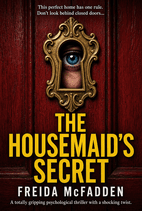
Inside these pages, you'll find the kind of lines that make you stop and reread. There are tense first-person narrators recounting terrible mistakes, snappy dialogue that cuts deep, and inner monologues full of anger, guilt, and dark humor. These are not polished literary proverbs. They are raw and personal, often unhinged, and that is exactly why they stay with you.
The Housemaid's Secret is a fast, twisty thriller, but it earns its quotes through voice. McFadden keeps her sentences lean and her emotions loud, so every page delivers a sting of recognition or a jolt of suspense. Readers who love unreliable perspectives will appreciate how these lines shift blame, hide truths, and refuse easy redemption.
Top Quotes from The Housemaid's Secret
“Tonight, I will be murdered. Lightning flashes around me, illuminating the living room of the small cabin where I'm spending the night, and where my life will soon reach an abrupt end.”
The opening scene places the narrator alone in a small cabin while lightning flashes during a storm.
The blunt declaration of imminent death hooks the reader instantly, and the lightning-lit setting deepens the sense of doom.
“I didn't slip on a puddle of water or some spilled milk. I slipped on blood.”
After slipping in the kitchen, the narrator realizes the floor is slick with blood.
The final reveal lands like a shock, turning an ordinary accident into a scene of horror.
“I breastfed her for over a week! Isn't that worth anything?”
— Amber
Amber is furious because baby Olive keeps calling Millie ‘mama’ instead of her.
Amber’s outrage is darkly comic and instantly reveals how little actual mothering she has done.
“But even after you hear my side of the story, you might still think I'm a terrible person. You might think that Douglas didn't deserve to die. You might think that I am the one who deserves to go to prison for the rest of my life. And the truth is, I don’t really care.”
— Wendy
At the start of Part II, Wendy addresses the reader after Douglas’s murder.
It is chilling because Wendy anticipates being judged and then rejects that judgment entirely. The lines establish her ruthless, unapologetic voice.
“Who you are is not something you did when you were a teenager.”
— Enzo
Enzo tells Millie this after she explains why Brock felt he did not know her.
It separates past mistakes from present character, giving Millie a grace she does not give herself. Its simplicity makes it stay with you.
“I don’t understand why Russell is crying. I’m the one who killed Douglas. And I don’t feel even the slightest bit sorry. As far as I’m concerned, Douglas deserved everything he got.”
— Wendy
Wendy watches Russell weep with guilt in the bathtub after Douglas’s murder.
It captures Wendy’s chilling narcissism and total lack of remorse, cementing her as a memorable villain.
Themes Behind the Quotes
One theme running through these lines is the messy relationship between who you were and who you become. Several characters are shaped by poverty, abuse, violence, or time in prison. They worry that one terrible act will always define them, yet they also cling to the belief that survival and growth matter more than their worst mistakes.
Another major theme is moral ambiguity. People are capable of protecting the innocent and lashing out violently, and those same people often feel no regret. Loyalty gets twisted into friendship, love fades into contempt, and wealth offers comfort but never safety. The book asks uncomfortable questions about blame, justice, and what someone is willing to do when they feel trapped.
Quotes by Chapter
Prologue
“The storm is bad, but not bad enough to cut off the electricity. No, somebody else is responsible for that. Somebody who has already taken one life tonight and expects that I will be next.”
After the cabin suddenly loses power, the narrator realizes the outage is not accidental.
The clipped, urgent sentences move the threat from weather to an unseen human adversary, making the danger personal and chilling.
“It all started with a simple cleaning job. And now it might end with my blood being mopped off the cabin floor.”
The narrator reflects on how an ordinary cleaning assignment led to this lethal situation.
The contrast between domestic routine and violent death captures the central, brutal irony of the story.
PART I
“Nothing is hurting. I’m still intact. That means the blood isn’t mine. Not yet, anyway.”
— Millie
At the novel’s opening, Millie lies in a dark kitchen and assesses her body after a terrifying encounter.
It hooks the reader immediately by implying violence and danger, and Millie’s clinical calm makes the moment even more unsettling.
“I have made an incredibly bad judgment call. I have underestimated an extremely dangerous person. And now I will pay the ultimate price.”
— Millie
She realizes that someone has entered the dark kitchen with her and that she is trapped.
This blunt escalation creates dread and signals that Millie has walked into a life-or-death situation.
“Stop feeling sorry for yourself, Millie. You've been in worse situations than this and come out of it.”
— Millie
After losing her job and agonizing over her finances and criminal record, Millie pushes herself out of self-pity in the shower.
It captures her grit and hints at the hard past she is hiding, making readers root for her.
Part II
“I hated living like that. I used to lie awake in bed and fantasize about what it would be like to be rich someday. And now that we are, why shouldn't we get everything we've ever dreamed of? After spending our childhoods being poor, we both have money. And we're damn well going to act like it.”
— Wendy
Wendy thinks about buying the penthouse and remembers growing up poor.
The memory makes her ambition feel raw and personal, but the final line shows how resentment has curdled into ruthless entitlement.
“She's hardcore, believe me—she's dangerous. If she thinks a guy is hurting a woman, she will do pretty much anything to make it stop. She went to prison for wailing on some guy who was trying to rape her friend. She killed him.”
— Audrey
Audrey tells Wendy gossip about Millie’s dangerous reputation.
The gossip turns Millie into a mythic, dangerous figure and undercuts Wendy’s dismissive view of her.
“It's at that moment I know that I can no longer be faithful to my husband, because I no longer respect him.”
— Wendy
Douglas walks out to get KFC after complaining about the salad she served during their fertility diet.
This is the moment Wendy openly connects her contempt for Douglas to her decision to betray him, revealing how resentment can justify infidelity.
Part III
“I've been terrible at getting close to people over the last four years because I've been so scared of what they'll think of me when they find out about my past. And I was right.”
— Millie
Brock has just left her after learning about her prison record, and Millie realizes how alone she is.
It captures the self-fulfilling shame of hiding your past from people you love. The blunt follow-through—and I was right—makes it devastating.
“But after you shot him, you went home. Did you check and make sure he is dead? Not breathing? No pulse?”
— Enzo
Millie says somebody is dead because of her, and Enzo challenges whether she actually saw the man die.
It introduces the possibility that the shooting was staged and turns the story around. The short, pointed questions are hard to shake.
“I liked him, but the truth was, every time he told me he loved me, it made my skin crawl. That's not how you're supposed to feel about your significant other.”
— Millie
After Enzo says he is sorry she lost Brock, Millie privately questions whether she ever really loved him.
It is brutally honest about recognizing that a perfect-on-paper relationship can still be wrong. The visceral image of being made to feel sick by a declaration of love is unforgettable.
Part IV
“Well, when Doug explained it to me, he mentioned something about you being a lying, manipulative bitch, and he didn't want you to have any of his money.”
— Joe
Joe Bendeck tells Wendy over the phone that Douglas changed his will to leave everything to charity.
It delivers Wendy’s comeuppance in brutally direct language, exposing how completely Douglas saw through her.
“I just... I can’t believe we killed him. I've never done anything like that.”
— Russell
Russell cries in the bathtub while Wendy tries to soothe him after they murdered Douglas.
Russell’s shaken confession is a rare flash of human guilt that contrasts sharply with Wendy’s cold calculation.
“You know, we were happy before you came along. For twenty years. He wasn’t perfect, but he loved me.”
— Marybeth
Marybeth has forced Wendy into a chair at the cabin table and asks how long she slept with Russell.
Marybeth’s broken voice makes her more than a killer: a betrayed woman whose grief is just as real as her rage.