The Glass Castle Quotes
by Jeannette Walls
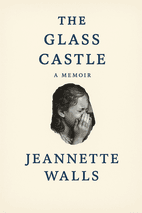
This collection pulls together some of the most striking lines from Jeannette Walls's memoir. You will find raw observations about poverty, family loyalty, and the strange beauty of a childhood that was both chaotic and freeing. What makes this book so quotable is its unflinching honesty. Walls never sugarcoats the hard truths, yet she also captures moments of surprising tenderness. The language is plain but powerful, painting scenes that stick with you. Whether it is a moment of shame, a father's promise, or a lesson about fear, each quote reveals the complex love that runs through this unforgettable story.
Top Quotes from The Glass Castle
“I WAS SITTING IN a taxi, wondering if I had overdressed for the evening, when I looked out the window and saw Mom rooting through a Dumpster.”
The narrator sees her mother rummaging through a Dumpster while she is in a taxi on her way to a party.
This line immediately establishes the stark contrast between the narrator's privileged life and her mother's homelessness, setting the central conflict of the memoir.
“Mom pointed her chopsticks at me. “You see?” she said. “Right there. That's exactly what I’m saying. You're way too easily embarrassed. Your father and I are who we are. Accept it.””
Mom responds to her daughter's offer to help by telling her to accept them as they are.
Mom's blunt dismissal of the narrator's concerns highlights her unapologetic embrace of her lifestyle and challenges the narrator's values.
“Don't you worry,” Dad said. “You leave that to me. Don’t I always take care of you?”
Dad reassures his daughter after she asks if someone is after them.
It reveals the father's pattern of making false promises and using emotional manipulation to maintain control and allay fears.
“All we had to do was find gold, Dad said, and we were on the verge of that. Once he finished the Prospector and we struck it rich, he'd start work on our Glass Castle.”
Dad's promise to build the Glass Castle, a dream home for the family.
Captures the central metaphor of the book—hope and delusion intertwined, the promise of a better future that never materializes.
“All you have to do, Mountain Goat, is show old Demon that you're not afraid.”
Dad comforts the narrator after she hears a noise under her bed, framing it as the monster 'Demon' and teaching her to face fears.
This quote encapsulates Dad's quirky but empowering parenting style, reinforcing the idea that bravery and defiance can overcome any threat.
“Years from now, when all the junk they got is broken and long forgotten,” Dad said, “you'll still have your stars.”
Dad says this to his children after giving them stars as Christmas presents.
It encapsulates the family's philosophy of valuing intangible, enduring gifts over material possessions. The line resonates as a poignant reminder of what truly matters in life.
Themes Behind the Quotes
One major theme is resilience in the face of hardship. The Walls children learn to adapt to neglect, hunger, and danger, often with a mix of pride and resentment. Yet the book also questions whether this toughness comes at a cost, blurring the line between strength and denial. Another theme is the tension between freedom and responsibility. Rex and Rose Mary value adventure and nonconformity, but their choices leave their kids to fend for themselves. The quotes capture that painful paradox. Finally, the power of storytelling itself emerges. The family creates myths about the Glass Castle, gold, and the FBI to make their struggles bearable, showing how imagination can both sustain and deceive.
Quotes by Chapter
Chapter 1
“I slid down in the seat and asked the driver to turn around and take me home to Park Avenue.”
The narrator hides from her mother out of shame.
It captures the narrator's shame and her instinct to conceal her family background, a key emotional struggle.
“After ducking down in the taxi so Mom wouldn't see me, I hated myself—hated my antiques, my clothes, and my apartment.”
After avoiding her mother, the narrator feels deep self-loathing for her own lifestyle.
It powerfully conveys the narrator's guilt and the conflict between her desire for a normal life and her loyalty to her parents.
Chapter 2
“I know,” I said, “but if I'm not, that's okay, too.”
Three-year-old Jeanette is lying on ice cubes at the hospital after being severely burned, and a nurse tells her she will be okay.
This line reveals Jeanette's extraordinary resilience and unexpected acceptance of her own mortality, hinting at the emotional survival skills she develops amid neglect.
“You don't have to worry anymore, baby,” Dad said. “You're safe now.”
Dad kidnaps Jeanette from the hospital, carrying her out and telling her she is safe as they escape.
The irony is striking: the hospital provided consistent care and safety, while home is chaotic and dangerous, showing the family's distorted sense of what safety means.
“Mom says I'm mature for my age,” I told them, “and she lets me cook for myself a lot.”
Jeanette explains to the hospital nurses why she was cooking hot dogs alone at age three.
This line starkly illustrates the neglect normalized in Jeanette's childhood, as she defends her dangerous independence with a child's belief that it is normal.
“You never had to worry about running out of stuff like food or ice or even chewing gum.”
Jeanette reflects on her extended hospital stay, contrasting it with the scarcity at home.
This observation underscores the profound deprivation Jeanette endures at home, making the hospital's abundance feel like paradise and highlighting the family's poverty.
Chapter 3
“You've got to get right back in the saddle. You can’t live in fear of something as basic as fire.”
Mom says this after the narrator, who was recently hospitalized for burns, cooks hot dogs by herself.
It captures the parents' unconventional and empowering philosophy of facing fears head-on, even in dangerous situations.
“Y the hell would she?” Dad bellowed with a proud grin. “She already fought the fire once and won.”
Dad responds to a neighbor who is surprised that the narrator is not afraid of fire after being burned.
This line showcases Dad's pride and the family's narrative of triumph over adversity, reframing a traumatic event as a victory.
“I loved the scratching sound of the match against the sandpapery brown strip when I struck it, and the way the flame leaped out of the red- coated tip with a pop and a hiss.”
The narrator describes her fascination with lighting matches after the burn incident.
The vivid sensory details convey the dangerous allure of fire and the child's growing obsession, blending beauty and risk.
“Suddenly, her eyes grew wide, as if with fear; I realized, to my horror, that her face was starting to melt.”
The narrator holds a match too close to her favorite plastic Tinkerbell toy, causing it to melt.
This moment of unintended destruction symbolizes the loss of innocence and the sobering consequences of playing with fire, both literal and metaphorical.
Chapter 4
“The Indians didn’t use pillows, either, he explained, and look how straight they stood.”
Dad explains why the family sleeps without pillows in the desert.
It shows the father's habit of romanticizing poverty and deprivation, turning material lack into a supposed lesson in virtue and posture.
Chapter 5
“Mom, however, told us that the FBI wasn’t really after Dad; he just liked to say they were because it was more fun having the FBI on your tail than bill collectors.”
Mom explaining Dad's paranoia about being chased.
Reveals the family's peculiar romanticism about their chaotic life, turning poverty into adventure.
“She said it was good for you to drink unpurified water, even ditch water, as long as animals were drinking from it. Chlorinated city water was for namby-pambies, she said.”
Mom teaching the children survival skills in the desert.
Shows Mom's defiant pride in their unconventional, tough upbringing and disdain for mainstream comfort.
“But when Dad pulled out a bottle of what Mom called “the hard stuff,” she got kind of frantic, because after working on the bottle for a while, Dad turned into an angry-eyed stranger who threw around furniture and threatened to beat up Mom or anyone else who got in his way.”
Description of Dad's dangerous drinking behavior.
Hints at the darker side of their adventurous father, foreshadowing later trauma and instability.
Chapter 6
“I didn't propose to you,” Dad said. “I told you I was going to marry you.”
Dad recounts how he met Mom at a cliff and dove after her.
This line captures Dad's unyielding confidence and sets the tone for their unconventional, domineering relationship.
“You were to replace Mary Charlene," Mom said."”
Mom tells the author about the death of her second child and the birth of the author.
This stark, matter-of-fact statement reveals Mom's detached view of her children and the emotional weight of being a 'replacement' child.
“Suffering when you're young is good for you, she said. It immunized your body and your soul, and that was why she ignored us kids when we cried.”
Mom explains her philosophy of child-rearing.
It encapsulates the parents' unconventional, harsh parenting and the rationalization of neglect that defines the family's dynamic.
“God knows what He's doing,” she said. “He gave me some perfect children, but He also gave me one that wasn't so perfect, so He said, ‘Oops, I better take this one back.”
Mom reflects on the death of Mary Charlene.
The casual, almost flippant tone about a child's death highlights Mom's emotional detachment and her peculiar religious fatalism.
Chapter 8
“Damn, honey,” he said. “You busted your snot locker pretty good.”
Dad says this after cleaning pebbles from his daughter's face following her fall from the car.
It shows Dad's ability to turn a frightening moment into a humorous one, and the term 'snot locker' is memorable and endearing.
“I tumbled out of the car. I rolled several yards along the embankment, and when I came to a stop, I was too shocked to cry, with my breath knocked out and grit and pebbles in my eyes and mouth.”
Jeannette describes the moment she fell out of the moving car.
This vivid description captures the sudden danger and vulnerability of a child in a chaotic family, making the reader feel her shock and isolation.
“I lived in a world that at any moment could erupt into fire. It was the sort of knowledge that kept you on your toes.”
Jeannette reflects after the hotel fire, considering the connection between her own fire-play and the hotel blaze.
This line encapsulates the novel’s theme of living with constant unpredictability and resilience, resonating as a powerful metaphor for survival.
Chapter 9
“From the time the Joshua tree was a tiny sapling, it had been so beaten down by the whipping wind that, rather than trying to grow skyward, it had grown in the direction that the wind pushed it.”
The narrator describes the ancient Joshua tree that Mom stops to paint near the Mojave Desert.
This passage captures the tree's resilience and adaptation to harsh conditions, mirroring the family's own struggles and setting up a central metaphor for the memoir.
“Mom, however, thought it was one of the most beautiful trees she had ever seen.”
Mom disagrees with the narrator's view that the twisted Joshua tree is ugly.
This simple contrast highlights Mom's unconventional perspective, emphasizing that beauty can be found in struggle and imperfection—a key theme in the book.
“It's the Joshua tree's struggle that gives it its beauty.”
Mom tells the narrator this when she wants to replant a young Joshua tree sapling to protect it from the wind.
This line distills the book's core philosophy: adversity shapes character and creates value, making it one of the most memorable and quotable lessons from the chapter.