The Firefly Hour Themes
by Annie Rains
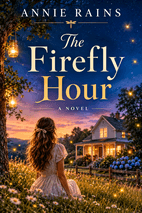
Underneath the plot, The Firefly Hour is really wrestling with how families carry grief and secrets without breaking, and whether protection is love or control. It asks how memory, illness, and old wounds shape the choices siblings make, and how a place like the Shelter Inn can hold both pain and belonging.
On this page you'll find theme and symbol analysis: grief and family legacy through Grandma Laverne's recipes, sayings, and shared memories; Duncan's hidden Huntington's diagnosis and the family's protective lies; Amelia and Maggie's clashes, baking, and late-night talks; illness and choosing to live; the inn as hospitality and belonging; and Amelia's control versus Duncan's view of hope and the need to let go. Symbols include the recipe box, Shelter Inn, sea glass mosaic, and rainbow.
Major Themes in The Firefly Hour
Grief, memory, and family legacy
The siblings process Grandma Laverne's death through her recipes, sayings, the inn, and shared memories, and her legacy continues to guide their choices. Duncan's final return and death are framed by memory and family welcome, and the family keeps his memory visible at the inn.
- Duncan hears Grandma Laverne's voice on the porch and follows her instruction to ride to Pearl Circle as the first step in a 'recipe for goodbye.'
- Maggie reads Grandma Laverne's recipe for the lonely heart to Mr. Todd and impulsively plans a dance for him.
- Lydia sends Amelia and Maggie a watercolor portrait of Duncan, and the sisters agree to hang it in the inn's entryway.
Secrets, protective deception, and the cost of honesty
Duncan hides his Huntington's diagnosis and lies about his genetic test, while Amelia and Ruby become keepers of the secret. The novel shows how protective secrecy strains trust, especially when Maggie learns she was kept in the dark.
- After Dr. Lambert tells Duncan he has the Huntington's gene, he texts his sisters a misleading 'positive' message and keeps the result confidential.
- Duncan tells Amelia and Maggie that low blood sugar caused his seizure, then later admits to Amelia that he lied about a negative genetic test.
- Amelia secretly reads Duncan's medical records and is caught hiding in his closet; later Maggie reads Duncan's letter and leaves in anger at being protected rather than trusted.
Sibling estrangement, conflict, and reconciliation
Amelia and Maggie clash over responsibility, trust, and approval, and Amelia often feels like an outsider in her own family. Baking, late-night talks, shared work at the inn, and the final toast gradually rebuild the sisters' bond.
- Amelia calls Maggie childish and accuses her of freeloading, while Maggie says Amelia has not checked on her since Grandma Laverne died.
- The sisters bake Grandma Laverne's Best Life Cookies together, read the recipe, and squeeze hands.
- During a sleepover Amelia admits she has been a 'horrible sister,' and at the end Amelia adds 'To sisters' to the toast while sharing a look with Maggie.
Illness, mortality, and choosing to live
Duncan's Huntington's disease dominates the family's crisis, and his sisters respond with denial, fear, control, and grief. Duncan ultimately chooses to spend his remaining time living rather than being reminded only that he is dying.
- Dr. Harmon privately tells Duncan his symptoms suggest early-onset Huntington's disease and advises him to tell his family.
- Duncan tells Mr. Todd he watched Huntington's shrivel his father and wants to enjoy his remaining life.
- Lydia tells Duncan, 'You're not a dying man to me,' and Duncan later sees a full rainbow and all its colors for the first time before going into cardiac arrest.
Hospitality, shelter, and belonging
The Shelter Inn functions as a place of welcome, family legacy, and emotional shelter, and Maggie especially embraces hosting as a way to create meaning. The novel ties hospitality to imperfect people being made to feel at home.
- Grandma Laverne's recipe says the 'perfect host makes imperfect people feel perfectly welcome,' and Maggie acts on this by inviting Matthew and Lydia to breakfast.
- Duncan lets Chase Beckett stay at the Shelter Inn despite the inn being closed because Hurricane Daniel damaged Chase's home.
- Amelia quits her job and returns to the inn, where Maggie shows her the Lavender Room she and Chase converted for her; Amelia says it feels like home because Maggie is there.
Control, fear, hope, and letting go
Amelia tries to control Duncan's illness and her own life through work and hovering, while Duncan calls hope dangerous to a dying man. Grandma Laverne's wisdom and Duncan's departure push the family toward letting go, facing fear, and handing over responsibility.
- Amelia reads Duncan's private medical records and hovers over him, then recalls Grandma Laverne's baby-bird story and begins packing to leave.
- Duncan panics in the garage after snapping at Amelia and thinks hope is dangerous to a dying man; Grandma Laverne's voice tells him to breathe and that it is time to hand over the reins.
- Maggie enters the water at the pier despite her fear, and Duncan mentally accepts handing over the inn to Maggie before leaving.
Symbols and Motifs
Grandma Laverne's recipe box and recipes
The recipes and sayings serve as emotional guidance and family legacy, offering instructions for grief, sisterly love, hospitality, self-love, and goodbye.
- The sisters bake Grandma Laverne's Best Life Cookies and find the labeled 'Pixie Dust.'
- Grandma Laverne's 'Recipe for Sisterly Love' instructs granddaughters to make tea, hold hands, respect one another, and choose to act like sisters.
- Duncan writes down the first step of a 'recipe for goodbye,' and the chapter closes with Grandma Laverne's 'Truth Serum Sweet Tea.'
- Maggie finds the Recipe for Summer, walks the beach speaking affirmations, and later welcomes Amelia to the inn.
The Shelter Inn
The inn represents a safe harbor, family legacy, home, and shelter from storms, both literal and emotional.
- Duncan remembers Grandma Laverne calling the Shelter Inn a safe harbor.
- Maggie resolves to stay and help restore the Shelter Inn and prove she can put down roots.
- Amelia returns to the inn, and the Lavender Room feels like home because Maggie is there.
- During the final summer storm, the group does not mind because they have shelter at the inn and each other.
Sea glass mosaic and collage
Sea glass represents brokenness transformed into beauty and the idea that people are not ruined by breaking.
- Grandma Laverne made a sea glass collage with Amelia and Maggie.
- The chapter closes with Grandma Laverne's sea glass mosaic recipe about making beauty from broken things.
- The recipe says shattered glass is more beautiful than whole bottles and that 'you're not ruined by breaking.'
The rainbow
The rainbow represents wholeness, beauty, hope, and farewell, especially through Duncan's colorblindness and his final vision.
- Duncan and Maggie's rainbow exchange is muted by his colorblindness and his cold hand deepens her unease.
- Walking toward the inn in the rain, Duncan collapses and sees a full rainbow and all its colors for the first time before going into cardiac arrest.