The Firefly Hour Quotes
by Annie Rains
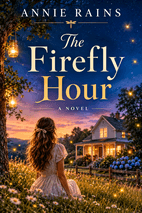
On this page you'll find lines from The Firefly Hour that mix easy conversation with quieter moments of reflection. Some come from characters talking things through, some from the narrator setting a scene, and some from the private thoughts that reveal what people are afraid to say out loud.
What makes the novel quotable is the way it turns everyday images like recipes, storms, and small acts of care into advice you can carry with you. The lines feel warm and direct, but they also leave room to think about family, love, and the choices that shape a life.
Top Quotes from The Firefly Hour
“Some storms come to destroy, but most come to clear the path for something better. Life might not look the same after, but, sugar, regardless of how the cookie crumbles, it tastes just as good in the end.”
— Grandma Laverne
The sisters read aloud from Grandma Laverne’s recipe for life’s storms while baking cookies.
It reframes hardship as something that can clear a path rather than only destroy. The warm, plainspoken voice makes resilience feel possible.
“When considering the ingredients for your best life, don’t add in what you think you're supposed to want. Search your heart.”
— Grandma Laverne
Amelia reads the life-recipe on the back of the cookie card aloud to Maggie.
It directly challenges Amelia’s habit of measuring her life by achievement. The advice points her toward a happiness she has to define for herself.
“I love you, Amelia. I also believe in you. If you think you're bad at being a sister, and you decide that you want to do better, you'll find a way. But only if you want to.”
— Duncan
After Amelia admits she feels like a horrible sister, Duncan responds with both affection and a challenge.
It affirms her worth while insisting that real change must come from her own desire.
“As long as we have our heart, we have memories. And if we have memories, we have each other.”
— Amelia
Amelia comforts Duncan by explaining her belief about hearts and memories.
It turns memory into a form of continued presence and comfort.
“Because everyone needs a safe harbor sometimes.”
— Grandma Laverne
Duncan recalls Grandma Laverne explaining why the inn is called the Shelter Inn.
It captures the novel’s theme of refuge and care.
“Screw what everyone expects. What do you want?”
— Maggie
During the sisters’ sleepover, Maggie challenges Amelia to stop living by others’ expectations.
It cuts through Amelia’s polished evasions and invites her to name her own desires.
“When you love something, or someone, you love them softly. That way, one day, when you let go, they'll be able to fly.”
— Grandma Laverne
Grandma Laverne tells Amelia a parable about a boy who held a baby bird too tightly.
It distills the chapter's central lesson about love, control, and the courage to let go.
Themes Behind the Quotes
The novel keeps circling back to family and the messy work of showing up for one another. Grief, illness, and old misunderstandings push characters to reconsider what loyalty looks like, while small rituals like cooking and shared memories become ways to reconnect when words fail.
Another thread is self-discovery and the tension between other people's expectations and a person's own desires. The quotes explore love as a steadying force, but also as something that can become too tight if it refuses to allow change. Running away, staying, and learning when to hold on or let go all feed into the book's larger question of how to build a life that feels honest and connected.
Quotes by Chapter
Part 1 - Chapters 1 to 3
“You follow the recipe, but sometimes you gotta trust your instincts and throw in a pinch of this or that. Don’t be afraid to listen to that little voice that guides you. That's where the magic happens.”
— Grandma Laverne
Amelia recalls her grandmother’s baking wisdom while standing on the inn’s porch.
It distills the book’s homespun philosophy and the instinct Amelia has learned to distrust.
“Those were the very best weeks of Amelia's life. She just hadn't realized it back then.”
Amelia surveys the Shelter Inn and remembers the childhood summers she spent there.
It captures the ache of recognizing happiness only in hindsight.
“Now, at thirty-two, Amelia knew better. These days she dealt in facts, empirical evidence, and rigorous testing protocols.”
After recalling Grandma Laverne’s homespun remedies, the narration describes how Amelia now trusts science instead.
It marks Amelia’s turn from childhood faith to hard evidence, setting up the story’s tension.
“Something was off. Maybe the storm hadn't caused as much damage as Amelia had worried it might, but even so, her stepbrother looked like he'd taken a direct hit. If not by Hurricane Daniel, then by what?”
Amelia sees Duncan after the hurricane and senses that something beyond storm damage is wrong with him.
It turns storm damage into a personal mystery and makes Duncan’s condition urgent.
Part 2 - Chapters 4 to 6
“I hope these cookies at least bring a smile to Duncan's face. Let them remind him of all the love and laughter we shared with Grandma Laverne. And... and maybe help us find our way back to being a family again.”
— Maggie
Maggie speaks while she and Amelia bake Grandma Laverne's cookies, hoping to cheer Duncan.
It turns a simple baking plan into a quiet plea for family reconciliation. The line captures the chapter’s hope that shared rituals can repair what has drifted apart.
“I'm glad you got good news, son, but I need you to know that if it had been different, I would roll up my sleeves, wash my hands good, and step up to the stove to help. All of us would.”
— Grandma Laverne
Grandma Laverne speaks to Duncan on the back porch after the family celebrates his test results as good news.
The offer of practical, unconditional support is deeply moving. It leaves room for the truth Duncan cannot yet say while showing he would not face it alone.
Part 3 - Chapters 7 to 10
“Life is the opposite of what you believe it is. Hate is really love. If you think two people can't stand each other, I promise you that the opposite is often the case.”
— Grandma Laverne
She explains her idea of “opposite world” to young Duncan as his sisters bicker nearby.
It reframes sibling conflict as a paradoxical sign of deep, enduring love.
“Why can't I just bite my tongue instead of spewing out a bunch of words I later regret?”
— Amelia
After another clash with Maggie, Amelia feels her heart race and silently berates herself.
It captures the raw self-reproach of someone who knows her own sharp tongue too well.
“The one for self-worth. First ingredient is truth. Peel away the lies you tell yourself. Sprinkle on some unbridled honesty and fold in the memories.”
— Grandma Laverne
In Duncan’s memory, Grandma Laverne shares her metaphorical recipe for self-worth.
It turns an abstract lesson into a vivid, lasting recipe that readers can remember.
Part 4 - Chapters 11 to 13
“Please. I'm not ready for her to look at me like I'm dying.”
— Duncan
Duncan begs Amelia not to tell Maggie about his diagnosis yet.
It shows how much he fears being reduced to his illness in his sister’s eyes.
“This isn't funny, Dunk. I wasn’t ready for Henry, or Grandma Laverne, and I'll never be ready to say goodbye to you.”
— Amelia
Amelia lies beside Duncan after discovering he lied about his genetic test.
It reveals her grief and her refusal to lose another person she loves.
Part 5 - Chapters 14 to 17
“It wasn’t the description of colors he missed. It was her. The way she could make even the most ordinary day feel special. The way her laughter filled every corner of the old inn. The way she always knew exactly what to say when life got hard. Like it was now.”
Sitting alone on the porch, Duncan remembers how Grandma Laverne described sunsets and realizes he misses her presence more than her words.
It captures the ache of grief and how a loved one can turn ordinary life into something magical.
“When you're facing the end of life, there's a lot of reflection. Don’t let it all happen in your mind. Get up and let your body, and your heart, retrace those steps.”
— Grandma Laverne
Duncan hears his late grandmother’s voice while sitting on the porch, urging him to turn reflection into action.
It transforms grief and nostalgia into a call to move, feel, and honor the past with the body as well as the mind.
“No, sugar. It's the recipe for goodbye.”
— Grandma Laverne
When Duncan asks if her instructions are a recipe for self-pity, the voice of his late grandmother answers him.
It reframes the bike ride as a deliberate farewell, giving Duncan’s strange journey an emotional purpose.
“You're not a failure, Maggie. Life is just throwing curveballs, but everyone gets ‘em. Life would be boring without those unexpected curves.”
— Chase
While driving to the church shelter, Chase reassures Maggie after she calls herself a failure.
It offers grace without minimizing her pain, reframing setbacks as a shared human experience.
Part 6 - Chapters 18 to 20
“I want to matter. I want to wake up excited about my day instead of dreading it. I want to feel like I'm making a difference, not just filling space in some corporate machine. I want friends.”
— Amelia
Amelia finally answers Maggie’s question about what she truly wants.
It lays bare the loneliness and longing beneath her accomplished facade.
“None of this is your fault. I'd rather you be mad at me. I can take it.”
— Matthew
On the beach, Matthew offers to absorb Amelia’s anger after she learns there is no cure for Duncan.
His willingness to be a target for her grief shows quiet, selfless care.
“I'm angry at my mom and at Grandma Laverne. And at Maggie because she doesn’t even recognize that Duncan is sick. Is she blind? All she can think about is this foolish fantasy about connecting with her teenage crush and living happily ever after. While our brother will never get the happy ending he deserves.”
— Amelia
Amelia pours out her grief and anger to Matthew after hearing the specialists’ verdict.
It captures how grief can splinter into blame and how deeply she loves Duncan.
Part 7 - Chapters 21 to 23
“There comes a time in life when you're not the little sister anymore, and she's not the older one.”
— Grandma Laverne
Maggie remembers her grandmother's words after Amelia criticizes her party plans.
It captures the quiet shift from childhood sibling roles to equal adulthood and gives Maggie courage to stand her ground.
“Everything had changed and nothing had changed. Both were true. She was still the same girl who drifted on the wind, who ran when things got hard, and the girl that no one believed in.”
Sitting alone in the rain, Maggie feels her family is hiding something from her despite her recent growth.
It powerfully expresses the ache of old insecurities persisting even amid change and newfound confidence.
“Holding on to the belief that love meant never letting go. But the truth was she was suffocating the very people she was trying to protect.”
Amelia finally understands Grandma Laverne's baby-bird lesson while standing in Duncan's empty room.
It sharply names the harm that can hide inside protective love and marks Amelia's moment of self-recognition.
Part 8 - Chapters 24 to 27
“The irony wasn’t lost on Maggie. For once, she was the one staying while someone else ran away.”
Maggie scans the decorated event room and realizes Amelia has left without a word.
It captures the reversal in the sisters’ roles and Maggie’s sudden sense of being the one left behind.
“Once I make up my mind about something, I'm all in. I've been all in about Maggie Black for well over a decade now. Have you made up your mind yet?”
— Chase
Chase brings Maggie wildflowers before the dance and tells her he is committed to her.
His confession is direct and vulnerable, turning years of longing into a clear question about their future.