The English Bookstore in Bologna Ending Explained
by Boo Walker
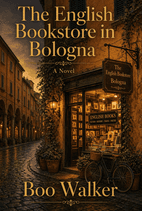
Finished The English Bookstore in Bologna and still wondering about that final chapter? You are not alone. This page walks through what actually happens at the end, why Boo Walker chose to close things that way, and where each character ends up. No spoilers here, just a heads up: details come after a warning.
The Ending, Explained
ListenWhat Happens at the End of The English Bookstore in Bologna
At the end of the final chapter, Sandy stops George from leaving Bologna. She has just spilled her feelings; when he tries to catch his plane, she tells him she likes him and does not want him to leave, argues that Arizona is dumb and he does not belong there, and asks him to come upstairs for real coffee so they can talk. George hesitates and says sorry, but then takes his bag out of the taxi. They kiss, the driver yells, and Sandy tells him, 'Lui sta con me!' He is staying with her. In her apartment, she shows him around, he meets Nicolo, and they begin a relationship. Bianca then arrives to confront Sandy for letting George leave, calling her a classic wall builder. George appears in a towel, and Bianca realizes Sandy did not let him leave. Sandy says she was trying to tell her, and Bianca awkwardly takes back some of her speech while still telling Sandy to deconstruct her walls.
In the epilogue snapshots, five days later Bianca goes to Corrado's apartment naked as an apology and a commitment. Corrado's mother answers the door, mortifying Bianca. Corrado comes out, laughs, and explains he turned Bianca away not because of her father but because he was waiting for her to show up naked and commit. He asks her to walk and return in ten minutes so they can try again. Seven days later Moira takes Harold to the airport. They kiss despite their no-kissing promise. Moira says she wants him to know her real name, but Harold says she can tell him next time; he promises to return after debt and school. Three months later, George fills his Scottsdale bird feeder for the last time, surrenders to Mr. Nutz, and says ciao, mentioning major incoming life changes.
Fourteen months later, The Only English Bookstore in Bologna is having its best year yet, featured in travel blogs and hosting the European launch party for Bianca's new release. Bianca stands with Corrado, who has just earned a Michelin star, while her book The Megawatt Detox: Recipes for a Slow Life has hit the New York Times bestseller list. Sandy and George are an official couple; George has moved to Bologna, works as a bookseller in a green apron, sells American items, and is shopping a squirrel feeder invention. Moira is still running bookstore efforts and Harold is coming for a fall-break visit. Sandy refuses to cut the long line, jokes with George and Moira about a laundromat and slushy machine, then hugs them. The last of her icy walls melts as she chooses love, friends, and heaps of books over Lonelytown.
The Ending, Explained
The ending pays off the novel's central arcs by turning each character's fear into a chosen connection. Sandy has spent the book guarding herself after an abusive first husband, a cheating second husband, and the death of her son Jack; she pushes Moira around, considers selling the bookstore, and plans to flee to Lisbon. George's patient presence, his handyman work, and his willingness to stay make her confess first. George's own arc has been about suicidal depression, retirement, and lost purpose. By staying with Sandy and later moving to Bologna to work in the bookstore, he finds both love and a reason to keep going, which answers his earlier belief that without work or purpose there is no point. Bianca's arc moves from self-help performance and control to vulnerability. After her book fails, her agent drops her, and she repeatedly runs from Corrado, she finally commits by showing up naked and apologizing. Her later success with The Megawatt Detox suggests that writing for herself and living slowly, rather than chasing megawatt-dom, is what actually works.
The book also resolves its community and found-family themes. Moira's secret witness-protection identity makes the bookstore a literal hiding place, but her kiss with Harold and her wish to tell him her real name show her choosing intimacy over isolation. Harold's Aroldo persona fails to win Alice, but honesty at Bianca's book-club event and his apology to Moira lead to a real, if unresolved, connection. The final image of Sandy hugging George and Moira and admitting her icy walls have melted completes her transformation from cynic to someone surrounded by love and books. The ending means that trying, not perfection, equals love; that endings need not be final; and that the bookstore, once a sour dream, becomes a lifeline for a chosen family. It is deliberately open-ended: the characters are happy, but their futures, especially marriage, Harold's return, and Moira's real name, remain in motion.
The ending hits harder if you see how you got there.
The ending of The English Bookstore in Bologna makes more sense with the full plot.
Read the full plot, chapter by chapterWhere Every Character Ends Up
Questions the Book Leaves Open
- What is Moira's real name? She deliberately withholds it and plans to tell Harold next time they meet.
- Will Harold actually return to Bologna and begin a committed romance with Moira, given his debt, schooling, and her witness-protection restrictions?
- Will George and Sandy marry? Sandy thinks she might be crazy enough if he ever asks, but he has not asked.
- Will George's squirrel feeder invention find a manufacturer and succeed?
- What happens to Alice and Renzo after Harold punches Renzo at the restaurant? Their relationship and Alice's reaction are left unresolved.
- Will Bianca and Corrado formalize their future beyond being a couple at the launch party? The epilogue shows them happy but does not specify marriage or long-term plans.
- Does Sandy fully heal from Jack's death? She calls his phone and keeps his account active, and the ending suggests progress but not complete resolution.
These are answered in the chapter summary. See the full plot →