The Date Quotes
by T. H. Murdock
As an Amazon Associate, we earn from qualifying purchases.
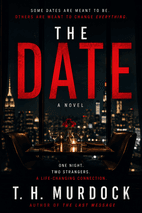
The quotes on this page come from a novel that revolves around a single date and its devastating aftermath. You will find lines full of sharp observations on modern dating, the weight of suspicion, and the intrusiveness of media attention. Some are deeply personal, others are strikingly universal. The collection includes lines that capture the moment before a life changes forever.
What makes these quotes so shareable is their blend of vivid imagery and raw honesty. They capture everyday feelings of dread and hope in just a few words. Whether it is a metaphor about cutting into a perfect cake or a simple admission of packing a bag, each line feels earned and memorable. They are the kind of lines you might underline and share with a friend.
Top Quotes from The Date
“It only takes a couple of ghostings, a handful of disastrous dates and a few false starts before it all begins to look quite bleak.”
Narrator describes Caira's disillusionment with online dating after filtering out problematic matches.
This line captures the weariness and emotional toll of modern dating, resonating with anyone who has experienced repeated disappointments.
“Being with him would be like making the first cut into a perfectly iced and beautiful cake - and that always feels wrong, however satisfying it's meant to be.”
Caira reflects on the guilt she feels about being attracted to the much younger, flawless-looking Miles.
The metaphor beautifully conveys the conflict between desire and a sense of impropriety, making the moment both tender and unsettling.
“Normally, she wouldn't dream of inviting someone in ona first date. But it’s freezing, and it’s only for a few minutes. And, honestly, what's the worst that could happen?”
Caira decides to let Miles wait inside her flat after their date, rationalizing the risk.
This line creates ominous foreshadowing, as the reader knows something bad likely awaits, making it a classic thriller hook.
“But it's now undeniably possible, because he's packed a bag for it.”
Miles concludes his internal reflection on the reality of a guilty verdict.
This short, stark sentence drives home the moment when denial shatters and acceptance begins, making it deeply resonant for readers facing their own hard truths.
“One night, that's all it was — one night that changed everything.”
The narrator recalls the date with Caira that led to Miles's murder charge.
This simple, stark statement underscores how a single choice or chance encounter can irrevocably alter the course of a life, a universally relatable fear.
“He's in a black suit and tie, like a mourner at his own funeral.”
Elis observes Miles being led into the dock during the trial.
The vivid metaphor powerfully conveys the gravity of Miles's situation and the sense of impending doom.
“What she's got can't even be described as fifteen minutes of fame; she's not famous — she's infamous. And there's a big difference.”
Polly distinguishes her unwanted notoriety from the fame she once dreamed of as a teenager.
The sharp, memorable contrast between fame and infamy strikes a chord in an age of viral notoriety, reminding readers that being known for the wrong reasons is a burden, not a blessing.
Themes Behind the Quotes
A dominant theme is the fragility of life and reputation after a single event. Characters find themselves caught between innocence and guilt, their identities reshaped by public perception and legal procedures. The quotes explore how a date turns into a nightmare, highlighting the sudden shift from normalcy to suspicion and the lasting damage to personal relationships.
Another theme is the emotional dissonance that accompanies such trauma. Moments of relief are undercut by grief, and celebration feels hollow. The quotes capture the struggle to feel pure happiness when surrounded by loss, and the way media scrutiny dehumanizes those involved. Ultimately, the story examines how people cope with the unthinkable and the slow process of reclaiming a sense of self.
Quotes by Chapter
Prologue
“Sometimes, when Caira stands here and looks out, she can decipher a whole life story from a pair of battered old boots or shiny Mary Janes.”
Caira watches pedestrians from her basement window, inferring their lives from their shoes.
It reveals her sharp observational skills and introduces a theme of judging people by surface details, which becomes ironic given the date's outcome.
Chapter 1: Eleven Months Later Miles
“There comes a point when the brain has been put under so much stress that it pulls up the drawbridge and refuses to allow in any non-essential information.”
The narrator describes Miles's mental state as he waits for the jury's verdict.
This metaphor perfectly captures the feeling of cognitive overload under extreme stress, making it instantly relatable to anyone who has faced overwhelming pressure.
“They were taking precautions, Miles instantly realised, against people like him: people who enter this place with their character in the grey purgatory between innocent and guilty.”
Miles understands why the interview room is stripped of potential weapons.
It powerfully articulates the liminal, dehumanizing space that accused individuals occupy—neither innocent nor guilty in the eyes of the system—and the chilling realization that precautions are taken against them.
“Miles almost refused to pack it. Doing so added a real, tangible weight to the possibility that he might be found guilty, and he's been doing his best not to believe it could genuinely happen.”
Miles packed a bag of essentials in case he is remanded into custody after a guilty verdict.
This highlights the psychological denial that accompanies a potential life-altering outcome, and the moment an abstract fear becomes concrete through a simple physical object.
Chapter 2: Miles
“It all comes down to this. What's about to follow is both the beginning and the end.”
The narrator describes Miles's state of mind as he waits to return to court for the verdict.
This line captures the immense weight of a single moment that will define the rest of his life, resonating with anyone facing a pivotal, life-altering decision.
“That's the thing with the unthinkable. It takes a seismic change to your mindset and a lot of time to break through the impossibility of it.”
The narrator reflects on how Miles has come to accept the possibility of a life sentence after months of waiting.
It powerfully articulates how humans can adapt to even the most terrifying realities, making the abstract feel terrifyingly concrete.
“Before that date, he'd never met Caira Kennedy, hardly knew anything about her. And now his name and hers will be inextricably linked in the most awful way, not only in people’s minds but also as a matter of public record and the subject of internet speculation.”
The narrator explains the profound impact of Miles's date with the victim.
It highlights the eerie permanence of a tragic connection and the loss of anonymity, striking a chord in an age of digital scrutiny and sensationalism.
Chapter 3: Elis
“It's the chance to see the man who has it all lose all that he has.”
Elis reflects on why the press is so fascinated by Miles's trial.
This line encapsulates the public's schadenfreude and obsession with watching a privileged person's downfall, making it instantly memorable.
“Yes. Such a simple word, but it sends a shiver up Elis's spinal column.”
The jury foreman confirms that the jury has reached a verdict.
It highlights how a single, ordinary word can carry immense emotional weight in a high-stakes moment.
“Elis can't wipe the smile off his face. He has his friend back.”
After the not guilty verdict is announced, Elis feels overwhelming relief.
This simple, heartfelt line underscores the profound value of friendship and the joy of vindication.
Chapter 4: Polly
“A lifetime's worth of good news has been served up unexpectedly quickly and in a single potent shot, and it’s almost impossible to digest.”
Polly reflects on the overwhelming relief after her brother Miles is found not guilty.
This line captures the surreal, almost indigestible nature of sudden relief after prolonged anxiety, making it deeply relatable for anyone who has experienced a dramatic emotional turnaround.
“Elation, as it turns out, can’t be purely felt in circumstances as horrendous as these.”
Polly realizes that despite the acquittal, a woman has been killed and no one knows why.
It articulates the painful complexity of joy in the midst of tragedy, resonating with readers who understand that some contexts taint even the happiest moments.
“That's something they don’t tell you when your brother's charged with murder: that you'll be photographed to the same extent he is, simply by virtue of the fact you are young and female.”
Polly reflects on the invasive media coverage she endured during the trial.
This exposes the unfair collateral damage of high-profile cases, highlighting how women are often objectified and dragged into the spotlight through no fault of their own.
Chapter 5: George
“His whole aura seems diminished by his ordeal; it's robbed the colour from his cheeks and the zest from his movements.”
Narrator describing Miles's demeanor after being found not guilty.
It vividly captures the psychological toll of a traumatic legal ordeal, showing that freedom doesn't instantly heal all wounds.
“You're a free man again. You've got your life back. If that’s not worth a glass of Bolly, I don’t what is.”
George says to Miles while offering champagne.
This line encapsulates George's optimistic, celebratory attitude and his desire to lift his friend's spirits, contrasting with the somber mood.
“It’s strange, how some people can take an occasion as happy as this and still manage to suck the spirit out of it.”
George's internal observation of the restrained atmosphere at the gathering.
It is a sharp, relatable critique of how people can dampen joyful occasions, highlighting George's frustration and his role as a counterbalance.
Chapter 6: Miles
“Until Caira’s death, he'd never felt it before, or anything close to it; the darkest shade of black in the spectrum of human emotion had not been visible to him and then suddenly it was — he was standing on a precipice and staring into it from a great height.”
Miles reflects on the return of his feeling of doom after the reporter's visit.
This line powerfully captures the sudden, overwhelming onset of a previously unknown emotional depth, using vivid imagery of a precipice to symbolize his confrontation with despair.
“The thing is, these journalists are vampires — they suck blood, but they're fickle. Fickle as the wind.”
Eleanor warns Miles about the press after he spoke to a reporter.
The vampire metaphor is brutally apt and memorable, and the repetition of 'fickle' underscores the transient nature of media attention, offering a cynical yet reassuring perspective.
“But he feels it returning: the swirling doom, It's not as heavy or all-encompassing as it was, but still it's coming back, pecking lightly at his skin and curdling in his stomach, and right now he should be free of all that.”
Miles experiences the creeping return of his anxiety after a moment of relief.
The visceral, tactile description of anxiety—'pecking' and 'curdling'—makes the emotional resurgence tangible, highlighting the cruel persistence of trauma even after a victory.
Chapter 7: Reubyn
“He feels terrible that he hasn't been in court every day to support his friend during his trial, but he’s worked so hard to get his channel off the ground, and now that it’s finally taking off, the last thing he needs is to damage his reputation by getting drawn into that media black hole.”
Reubyn reflects on his absence from Miles's trial.
This line captures the painful trade-off between personal ambition and friendship, a conflict many readers will recognize. It reveals Reubyn's guilt and his calculated self-preservation.
“The media want more dirt on him. Even though the poor sod has had a light shone on even the most private aspects of his life.”
Reubyn senses the lingering media intrusion after Miles's acquittal.
It succinctly condemns the relentless, invasive nature of tabloid journalism. The empathy for Miles and the bluntness of the phrase 'poor sod' make it resonate.
“It's a broad, unconvincing smile, the kind of beam you'd get from a used-car merchant who knows what he's selling is a dud.”
Describing Miles's mother's forced smile when she greets Reubyn.
The vivid simile perfectly conveys false cheerfulness and underlying tension. It’s a sharp, memorable image that sticks with the reader.
“When he first saw images of the derelict Wonder Park, with its broken rides, crumbling towers and rotting kiosks strangled by climbing weeds, like some post-apocalyptic hellscape, he knew he had to go in there and film.”
Reubyn recalls the inspiration for his viral video.
The poetic, visceral language makes decay and ruin compelling. It illustrates how creative vision turns abandoned places into content gold.