The Court of Venus Ending Explained
by Bel Banta
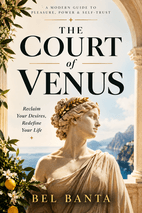
The ending of The Court of Venus leaves plenty of readers with questions. This page walks through what literally happens in those final pages, why Bel Banta chose to end it that way, and where each character lands once the story closes.
The Ending, Explained
ListenWhat Happens at the End of The Court of Venus
The ending cannot be described from the material supplied. The final chapter text provided for Part 10 (Chapters 28 to 32) reads only "[No content available for this chapter]" for every chapter, and the notes for Parts 4 through 10 consist solely of placeholder headings ("Chapter 4: Part 5 - Chapters 12 to 14," and so on) with no characters, events, or themes recorded beneath them. The only fully documented portions of the book are Part 1 (Chapters 1-3) and Part 2 (Chapters 4-6). Anything I stated about the closing sequence — who lives, who dies, who takes the throne, how the tournament resolves — would be invention, not consolidation.
The record therefore stops at the end of Part 2. At that point the narrator has spent the banquet and hunt in Roland's orbit, has entered his memory of Hal's death and funeral, and has agreed to impersonate Joan Rockford at the masque in exchange for information about Hal. Disguised as Joan, she dances with Roland, watches Ambrose collapse with blood frothing from his lips, and feels his heart stop, while Fulke Roet alone stays unshocked. She then shifts into a mouse and spies on the Guildfords in the queen's chapel, learning that they keep a hidden Marsborn woman, that they will put another Guildford girl before the king if Cecily fails to bear a child, and that Ambrose's murder is tied to his exposure of Fulke. She realizes the Marsborn woman will be her tournament opponent and means to kill her, and in a later tutoring scene she manipulates Prospero's emotions and sees two figures walking in the knot garden. That is the last documented moment.
Because the ending text is absent, there is no closing sequence to break down: no account of the three-round coronation tournament, no resolution of the king's decay or Roland's masking magic, no outcome for Cecily, Fulke, or the Guildford plot, and no final word on Hal's death. The honest summary of "what happens at the end" is that the supplied notes do not contain it.
The Ending, Explained
An explanation of why the book ends as it does requires the ending, and the supplied notes do not reach it. What the notes do provide is setup, and that setup is unusually dense: a three-round magicians' tournament announced by Wyatt Francis; a bargain in which Bianca impersonates Joan Rockford in return for what Roland knows about Hal; a letter Bianca burned that Roland denies writing; the question of whether the king or Roland sent Prospero to the Tomb; a Guildford faction with a concealed Marsborn woman and a plan to substitute another Guildford girl if Cecily fails; a king whose decay Roland masks with magic that is visibly draining him; and Fulke Roet biding his time as a rival heir who despises Roland. Every one of these is a loaded gun, and the notes record the loading but never the firing.
The nearest thing to an interpretive through-line in the documented chapters is the interdependence of grief, manipulation, and proof. Bianca's stated motive for coming to court is to learn how Hal died, and she explicitly wants "something she can only find at the palace"; Roland's counter-motive is that he needs Hal's death to have been a terrible accident so that he can bear it. The notes frame court as a web of spiders and flies, and they repeatedly stress that Bianca's power is over minds and emotions while Roland's is over desire and illusion — a contrast that seems built to matter in a tournament where magicians fight. Bianca warns Oliver that Roland will use his desires against him, and by the end of Part 2 she is already practicing emotional manipulation on Prospero during tutoring. That arc is clearly heading somewhere, but the notes stop before saying where.
I can therefore say what the ending means only in the negative: the documented material establishes questions of guilt, proof, and self-deception, and any reading of how those questions resolve would be speculation. If you can supply the text of Chapters 28 to 32 or notes for Parts 4 through 10, I can give a grounded account of the ending, its payoffs, and its final character fates.
The ending hits harder if you see how you got there.
The ending of The Court of Venus makes more sense with the full plot.
Read the full plot, chapter by chapterWhere Every Character Ends Up
Questions the Book Leaves Open
- Was Prince Hal's death an accident or a murder, and was Roland involved? Bianca's central question is never answered in the supplied notes, and Roland's stated need for it to have been an accident implies doubt.
- Who wrote the letter Bianca received and burned at the start? Roland denies writing it, and the notes never identify the sender or its purpose.
- Did the king or Roland send Prospero to the Tomb? Roland claims the king did; the notes record only competing assertions, with no confirmation.
- What happens in the three-round coronation magicians' tournament, and does Bianca survive her match with Mistress Mortlake?
- Who is Mistress Mortlake, the mysterious female magician named as Bianca's opponent?
- Who is the hidden Marsborn woman in the Guildfords' chapel, and what is her relationship to the Guildford family?
- Does Queen Cecily bear the king's child, and if not, do the Guildfords succeed in putting another Guildford girl before the king?
- Does the magic Roland uses to mask the king's decay eventually harm or kill him, as the notes suggest when he admits it is affecting him?
- How long can the king be kept alive and presentable, and who succeeds him — Fulke Roet, or someone else?
- What exactly is Bianca's bargain with Roland worth, and does he deliver the truth about Hal in exchange for her spying?
- What is the "something she can only find at the palace" that Bianca came to court to get?
- What consequences, if any, follow from Ambrose's murder and from his exposure of Fulke Roet?
These are answered in the chapter summary. See the full plot →