The Big Leap Key Takeaways
by Gay Hendricks
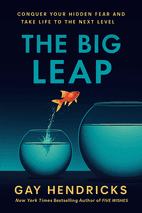
5 Main Takeaways from The Big Leap
Recognize and overcome the Upper Limit Problem to stop self-sabotage.
This universal barrier causes people to undermine their success when approaching peak potential in wealth, work, or love. By noticing negative thoughts during good times, you can expand your tolerance for positive energy and make the Big Leap.
Escape the Zone of Excellence to enter your Zone of Genius.
The Zone of Excellence is a seductive trap that drains energy and prevents full potential. Your Zone of Genius holds your unique gifts, and aiming to spend up to 70% of your time there leads to extraordinary fulfillment and success.
Confront hidden fears like outshining others to embrace success without guilt.
Childhood conditioning often makes people fear surpassing others, leading to muted enjoyment or self-sabotage. Recognizing this pattern through reflection allows you to celebrate achievements fully and transcend this barrier.
Take full responsibility for your life to liberate yourself from stress and time pressure.
Ownership eliminates stress by accepting responsibility for disowned aspects of life. Changing language, like eliminating time complaints, helps you become the source of time rather than its victim, achieving more with less effort.
Use mindful awareness and daily practices to sustain growth in all life areas.
Consistent practices, such as the Ultimate Success Mantra and reflective exercises, help you notice limiting thoughts, breathe through them, and choose expansion. This leads to balanced success in relationships, creativity, and wealth.
Executive Analysis
Gay Hendricks argues in 'The Big Leap' that the primary obstacle to extraordinary fulfillment is the Upper Limit Problem, an internal thermostat that causes self-sabotage when success approaches. By understanding the four zones of activity—Incompetence, Competence, Excellence, and Genius—readers can identify where they are stuck and take actionable steps to move into their Zone of Genius, where unique gifts lead to profound satisfaction. This requires confronting deep-seated fears, taking responsibility, and practicing mindful awareness to expand one's capacity for abundance.
This book matters because it moves beyond generic success advice to address core psychological barriers like fear of outshining others and inherited family stories. Its practical impact lies in daily exercises that cultivate ownership of time and relationships, helping readers achieve a harmonious balance between professional achievement and personal joy, thus distinguishing it as a transformative guide in self-help literature.
Chapter-by-Chapter Key Takeaways
Introduction (Introduction)
The Upper Limit Problem is a universal barrier that causes people to self-sabotage when they approach their peak potential in wealth, work, or love.
Recognizing and overcoming this problem is essential for making the "Big Leap" from ordinary success to extraordinary fulfillment.
Personal awareness, such as noticing when you manufacture negative thoughts during good times, is the first step toward change.
The solution involves cultivating openness to learning and practicing new habits to expand your tolerance for positive energy.
Addressing this problem can lead to balanced growth in all life areas, preventing the common pitfall of achieving financial success at the expense of relationships or creativity.
Try this: Notice when you create negative thoughts during positive moments to identify your Upper Limit Problem in action.
One (Chapter 1)
Most activities fall into four zones: Incompetence, Competence, Excellence, and Genius
Time spent in Zones of Incompetence and Competence drains energy that could fuel your genius
The Zone of Excellence is a seductive trap that prevents reaching your full potential
Your Zone of Genius represents your unique gifts and ultimate path to fulfillment
Ignoring the "Call to Genius" often leads to physical, emotional, and relational consequences
Moving into your Zone of Genius can begin with small, consistent investments of time
The ultimate goal is spending up to 70% of your time expressing your natural genius
Try this: Audit your daily activities to categorize them into the four zones and deliberately reallocate time from Competence and Excellence toward Genius.
Two (Chapter 2)
The fear of outshining others often originates in childhood and can lead to self-sabotage or muted enjoyment of success.
Recognizing this pattern through personal reflection or pivotal moments—like Kenny's microphone failure or Joseph's childhood memory—is crucial for liberation.
Transcending the barrier involves acknowledging that success isn't a "crime" and embracing one's Zone of Genius without guilt.
Practical steps include examining past influences and consciously choosing to celebrate achievements fully.
Try this: Reflect on a childhood memory where you felt guilty for success and consciously celebrate your next achievement without reservation.
Three (Chapter 3)
Identify and question your inherited family stories that limit genius, then shift focus to empowering new narratives.
Adopt a playful, curious attitude toward Upper Limit Problems to accelerate growth and maintain joy in the process.
Implement daily actions like mindful commitment, behavior tracking, and narrative reframing to sustain progress toward wholeness and success.
Try this: Playfully challenge one limiting family story today by writing down an empowering new narrative to replace it.
Next chapter: “Four” is locked
Keep learning from The Big Leap — and unlock all 600+ book summaries with audio, mindmaps and AI Q&A.
$0.00 due today · 7 days free, then $89.99/year ($7.49/mo) · Cancel anytime before day 7
plus sales tax where applicable