The Back Bedroom Quotes
by Gregg Olsen
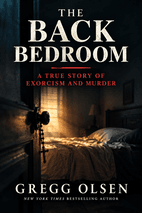
This page collects memorable lines from Gregg Olsen's The Back Bedroom. The quotes move between eerie atmosphere and close-up family tension, from ash and end-times dread to the small, controlling moments inside a house that feels increasingly unsafe.
What makes the book quotable is its plainness. The language often sounds calm even when describing obsession, loyalty, cruelty, or paranoia. That contrast gives the lines staying power, whether they are about a marriage, a child, a leader, or a group convinced the world is ending.
Top Quotes from The Back Bedroom
“Shame and regret are like an IED buried deep in the sand. It doesn't always explode, but it's always there, ready to take down those who tried to hide it.”
The narrator reflects on Tina Cunningham's ongoing guilt over what happened in the house.
The metaphor captures how buried shame can remain explosive even after years of survival.
“Though only forty-five, she looked like someone's sweet old grandma. That is, if Grandma had just lost a battle with Satan.”
The narrator describes Velma Cunningham as she arrives at the Yakima County Sheriff's Office.
The line mixes dark humor with dread, instantly signaling that this ordinary-looking woman is carrying something monstrous.
“They believed the Devil was already among them. Whether at the store or walking in the park, they saw nonbelievers as zombies—like the walking dead. They considered themselves superior, thinking they had risen above others and were special. Better than.”
After joining Leon’s home church, the members begin viewing outsiders as beneath them.
It chillingly shows how the group dehumanizes outsiders while exalting itself, a hallmark of cult thinking.
“Everyone was, or could be, a target. Informing the group, especially Leon, meant staying in his good graces. And removing the target from your own back. If the group was focused on someone else, it meant self-preservation.”
The chapter describes how the family turns confession into surveillance and self-protection.
It names the mechanism of scapegoating: loyalty is bought by handing someone else to the leader.
“Leon suddenly, and inexplicably, seemed satisfied. The turnabout was swift and strange. “You are forgiven, Tina.” Then he fixed his eyes on his son. “You see, you're wrong, Gary,” he said. “God told me you are going to leave us.””
After Tina insists she believes, Leon abruptly forgives her and then turns on Gary.
The whiplash exposes Leon's authority as arbitrary: forgiveness and condemnation are just tools to keep everyone off balance.
“It was like a game. He watched her fall apart a little. She begged for another chance. Good.”
The narrator describes Leon’s manipulative cycle of breaking Tina down and then granting forgiveness.
The flat, clinical tone makes Leon’s enjoyment of her suffering especially disturbing. It turns emotional abuse into a kind of entertainment.
“An unseen presence was observing, judging, and recording every word and thought of everyone in the house. It seemed to be testing them, assessing the strengths and weaknesses of their beliefs.”
The narrator describes the eerie, oppressive atmosphere settling over the household.
It gives the domestic conflict a supernatural, almost apocalyptic weight. Every private thought suddenly feels exposed and judged.
Themes Behind the Quotes
The main theme is how belief in an approaching end can reshape everyday life. A household becomes a closed world where loyalty is demanded, doubt is dangerous, and ordinary decisions are tied to survival. Leaders gain power by keeping fear alive, making members watch one another, and turning forgiveness into another form of control.
Running underneath that is family damage. Love can motivate courage, but it can also trap people in cycles of poverty, abuse, and silence. Women and children often carry the cost, while shame and regret linger like something buried and waiting. The quotes also show how people rationalize cruelty when they think they are chosen, superior, or simply doing what their faith requires.
Quotes by Chapter
Prologue
“Five inches of ash fell like powdery gray snow. It was unlike anything anyone had experienced.”
The chapter describes the 1980 Mount Saint Helens eruption and its impact on Washington state.
The simile makes the disaster feel surreal and immediate, setting the apocalyptic mood.
“Fear and a foreboding sense of isolation led some to see it as a reminder not only of nature's power but also of God's. The apocalypse. Armageddon. The End of Times.”
The eruption leads some residents to interpret the event as divine judgment.
The escalating fragments capture how natural disaster can become a theological omen.
“For a small group in the visitors’ room at the women’s correctional facility near Gig Harbor, Washington, that spring, it was exactly as they'd imagined. Even wanted. And were willing to kill for it.”
A small group at the women’s correctional facility had anticipated and even desired the end times.
The line chillingly links apocalyptic faith to violence and foreshadows the crimes behind the story.
Chapter One
“The sheriff's office was the last place she wanted to be, but also the only place she needed to be.”
Velma arrives at the sheriff's office to report what happened in her home.
It captures the unbearable pull between fear and moral obligation that drives her to speak.
“What she had to report was so dark and ugly, she wondered if anyone would—or could—believe her.”
Velma hesitates before telling the deputy her story.
It names the isolation of holding an unbelievable truth and the fear of not being believed.
Chapter Two
“To the members of the household, who were also the only congregants, it wasn’t scary but a heady and happy time. Maybe even their happiest time ever.”
The Cunningham home’s religious life feels joyful and purposeful to those inside it.
The line makes the group’s isolation sound warm and happy, which makes the looming danger more disturbing.
“She felt she had found a home, and the idea of anything coming between them was unthinkable.”
Debbie, newly immersed in the Cunningham family, describes her sense of belonging.
Her total belonging makes the idea of leaving feel impossible, highlighting her vulnerability.
“Baby Davey was special, different. Debbie didn't seem to notice it, but David could see it right away. His son's big blue eyes took in everything. Everything. His focus was extraordinary. He wasn’t a kid who needed to be distracted.”
David watches his infant son Davey and notices something unusual.
The observation hints at Davey’s unsettling precocity and sets him apart from the start.
Chapter Three
“On Sundays, David would watch sisters Deb, Barb, and Rhonda get into Herm’s white truck, wearing their little white skirts and white tops, with little doilies on their heads, on their way to catechism. Debbie was David's first love. He barely recognized her.”
David recalls the churchgoing girls he grew up with before he sees how much Debbie has changed.
The white-clad Sunday image contrasts innocence with the present crisis, making Debbie's transformation feel like the loss of an entire world.
“She kept talking in circles, as though repeating the same denials would make them true.”
Debbie dismisses the bruises as ordinary toddler accidents and keeps denying any problem.
It captures the frustrating logic of denial, where repetition is used to overwhelm the truth.
“It crossed David's mind that, while he could care for his son, a boy should be with his mother.”
After finally seeing Davey and finding no visible injuries, David weighs what to do.
It shows how a reasonable-sounding belief can lead to a fateful mistake, making the line deeply unsettling.
“Later, the boy's father would wonder what was going on behind the scenes at the Bossert home. What had Debbie said to Herm to change how things played out? It was unsettling, and it played repeatedly in his thoughts.”
After returning to Yuma, David keeps replaying the visit and wondering what was decided without him.
It names the haunting gap between what David saw and what he suspected, leaving the reader with a sense of unresolved dread.
Chapter Four
“If poverty seemed unavoidable, it was because it genuinely was. Not a single family member seemed able to move forward or upward. Their lives were a constant struggle of sideways moves.”
The narrator describes the Cunningham family's generational poverty.
It captures how poverty can feel like an inescapable inheritance rather than a temporary hardship. The image of sideways moves is especially haunting.
“But the theory that blood's thicker than water was born into a loyalty, interbred loyalty, deep clannish, no matter whether they were right or wrong. If they were your people, you took care of them, either socially or physically. That was my way of life.”
Leon explains his belief in fierce, unquestioning family loyalty.
It reveals how clannish loyalty can justify any behavior and keep a family sealed off. The line feels like a personal creed with dangerous implications.
“I could only take so much, and then I would blow up. But I was never physically beat up enough to go to a doctor. This seemed like a normal part of marriage. I never went and told anyone.”
Velma reflects on her temper and the normalization of abuse in her marriage.
It captures how domestic violence can be endured and rationalized as ordinary. The quiet final sentence is devastating.
“As the date drew closer, the Cunninghams kept moving, never truly settling down. They didn’t buy a home or make long-term plans. Why bother making friends? Why start a family? The world was about to end.”
The narrator describes the family's life as Leon's predicted date for Armageddon approaches.
It shows how apocalyptic belief shapes everyday choices and prevents rootedness. The questions make the logic chillingly clear.
Chapter Five
“So, he always had to keep it at the boiling point of water. We don’t keep it boiling, and if you let it go cool, you may not get it to boil again. He didn’t want to quit. He always had to have something happen.”
Gary later explains why his father kept the household in constant crisis while they awaited the Antichrist.
The boiling-water metaphor shows how a manipulative leader needs perpetual conflict to hold followers together.
“It was like she was stuck in the snow, car in gear, tires spinning. How can I prove something others refuse to see? Why don’t I fit in? Later, another question percolated in her thoughts. How did I get here?”
The chapter closes with Tina isolated and questioning how she ended up in the group.
The stalled-car image and unanswered questions make the cost of belonging painfully concrete.
Chapter Six
“Truth be told, it was difficult to be a good girl, a perfect girl, within a conservative household where the Old Country controlled every part of the day.”
The narrator describes Tina's upbringing in a conservative Italian Catholic family in San Pedro.
It captures the suffocating weight of family and religious expectation that shaped Tina.
“She had no idea how hard it would be to wait for the End of Times. Or what life would be like under Leon's roof.”
The narrator foreshadows Tina's life after moving in with Gary's family.
It signals the loss of freedom and the looming cultic control she is about to endure.
“Her mother was crying by then. “We love you,” she said. Her father, in the background, called out too. “We love you, Tina!””
Tina's parents respond with love after she tells them they will burn in hell.
Their simple repeated blessing cuts through the manipulation and makes the scene heartbreaking.
Chapter Seven
“One time, Leon told Tina she needed to leave and reflect on what it would be like to burn in hell rather than to enjoy paradise when the end came.”
Leon torments Tina with threats of hell before offering conditional forgiveness.
It captures the spiritual abuse at the heart of Leon’s control. The cruelty is made more chilling by being framed as religious concern.
“Gary became more concerned for his wife and son than for himself. His love for them was the only reason he found the courage to do what he had to do in the face of his father's dire predictions, controlling edicts, and escalating cruelty.”
The narrator explains what motivates Gary to resist his father despite the consequences.
It defines love as the force that makes courage possible under oppression. Gary’s devotion contrasts sharply with Leon’s escalating cruelty.