Swan Song Quotes
by Charles Spencer
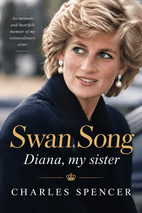
This page gathers lines from Charles Spencer's Swan Song, a work that moves between family history, royal life, and public grief. You will find candid narration, sharp dialogue, and moments that feel like inner monologue, all shaped by memory and loss.
What makes the book quotable is its mix of plain speech and emotional precision. Some lines are tender, some are cutting, and others simply stop you because they sound like something you might think but never say out loud.
Top Quotes from Swan Song
“Diana had the heart of a lion, and this made her rarely shrink from the truth. She never feigned perfection, and she presented herself to the world in an unusually frank way - especially for a royal figure, where playacting is such a crucial part of the role.”
The narrator defends Diana's honesty and openness, especially her refusal to hide her struggles.
It defines Diana's courage as authenticity, contrasting her with the performance expected of royalty.
“It would appear that every proprietor and editor, of every publication that has paid for intrusive and exploitative photographs of her, encouraging greedy and ruthless individuals to risk everything in pursuit of Diana’s image, has blood on their hands today.”
In the public statement he writes after Diana's death, the narrator condemns the press for exploiting her.
It turns grief into a searing indictment of media exploitation and remains one of the most memorable accusations surrounding Diana's death.
“It is wonderfully reassuring for a child to know that the parents who created them were truly in love, even - perhaps especially — if their marriage subsequently failed.”
Reflecting on his parents' early love letters and engagement happiness despite their later divorce.
It finds consolation in origins even when a marriage ends. Many children of divorce will recognize the sentiment.
“In her final year or two Diana had gained her liberty, but at the cost of her safety.”
While drafting Diana's eulogy, the narrator reflects on the vulnerability that came with her freedom.
It compresses the tragedy of her life into a single paradox: liberation and exposure arrived together. The sentence feels both political and painfully personal.
“For Diana had this extraordinary magnetism. I can go further, and state that I have never seen anything remotely like it in anyone else.”
— Charles
Charles describes Diana's effect on the orchestra after a charity concert.
It names the almost inexplicable charisma that drew people to Diana. The personal comparison makes the claim feel deeply felt rather than abstract.
“I stand before you today, representative of a family in grief, in a country in mourning, before a world in shock.”
— Charles
Charles drafts the opening line of Diana's eulogy early in the morning after her death.
It is the famous, measured opening that gives public voice to private grief. The triad of family, country, and world makes the loss both intimate and global.
“I thought Diana had many decades to go, and I would always be there for support, when and if really needed. There always seemed to be so much time. And then there was none.”
At the end of Chapter Twenty-Three, the narrator reflects on assuming Diana would live a long life.
It captures the cruel shock of grief and the illusion that there will always be more time.
Themes Behind the Quotes
The quotes circle around grief and memory, especially the way a public death becomes a private wound. They also explore family loyalty and duty, showing how old obligations can shape or damage parent child relationships. Royal life appears as a performance, with image, press attention, and public expectation pressing hard against personal truth.
Another current is the gap between public story and private reality. Love, marriage, divorce, and parenthood are presented as complicated and often painful. The collection also touches on mortality and timing, the sense that there should have been more years and more chances. Running through it all is admiration for a woman who could be warm, brave, and magnetic while also trapped by forces larger than herself.
Quotes by Chapter
Part 1 - Chapters 1 to 4
“People wanted a fairytale, and that morning Diana was installed as the heroine of a global fantasy. Nobody other than Diana really knew it at that moment, but her reality was quite different.”
The narrator reflects on Diana's 1981 royal wedding and the gap between public spectacle and private truth.
It captures how the world projected a fantasy onto Diana while her real life was already diverging from it.
“Eulogies are not meant to be complete pictures of the deceased. They are, rather, a celebration of their finer points — a way of seeing someone at their best, one last time, as they start to fade from everyday reality and take their place in memory only.”
The narrator explains his purpose in writing and delivering Diana's eulogy.
It is a moving meditation on grief, memory, and the selective grace of farewell tributes.
“You do realize,’ I said, ‘that one of us four will be at the funeral of all the other three?”
— Charles Spencer
As the Spencer siblings walk through the churchyard carrying their father's ashes, the narrator makes a macabre observation.
Its casual logic becomes hauntingly prophetic, turning an ordinary sibling walk into a meditation on mortality.
Part 2 - Chapters 5 to 8
“It was the first time I had acknowledged her death out loud, and the cold finality of the words shook me.”
The narrator tells his children that Aunt Diana has died, and the words make her death feel final.
It captures the moment private grief becomes undeniable once spoken aloud.
“But not in real life, Daddy?’ she said, her disbelieving smile prompting me to please unravel the perplexing adult riddle I had just presented to her.”
— Eliza
Five-year-old Eliza responds to being told that Aunt Diana has died.
The child's disbelief makes the enormity of Diana's death feel intimate and unbearably human.
“While one family struggled with dull domestic chores inside their suburban Capetonian home, the outside world was trying to make sense of what had so cruelly befallen perhaps its most famous female inhabitant.”
As the narrator's family grieves at home, the world reacts to Diana's death.
It juxtaposes ordinary domestic mourning with global shock, emphasizing how huge and yet personal the loss is.
Part 3 - Chapters 9 to 11
“My father would become tearful when recalling the extraordinary noises his tiny son made when crying, saying that the poor boy sounded more animal than human.”
Recounting the death of John, the first son of the narrator's parents, who was born severely malformed.
It captures a father's grief with raw, haunting imagery. The comparison to an animal makes the infant's suffering unforgettable.
“When John stopped emitting those scarring noises, my mother had neither seen him up close nor held him.”
After John's short life ended, his mother was kept from seeing or holding him.
The sentence conveys a devastating maternal deprivation in plain language. It lingers as an image of irreversible loss.
“After the divorce, although distraught at her departure, not once did he say anything against my mother to me - or, I believe, to my three sisters. I am for ever grateful for that rare selflessness.”
The narrator recalls his father's restraint after his mother left the marriage.
It honors a quiet act of grace amid family rupture. It shows how protecting children can be a form of love.
Part 4 - Chapters 12 to 15
“Rest assured,’ he hissed, ‘we'll forget her soon enough!”
— Prince Charles
During a phone call about funeral arrangements, Prince Charles erupts after the narrator refuses to let William and Harry walk behind Diana's coffin.
It is a chilling, unforgivable line that exposes Prince Charles's contempt for Diana and the grief surrounding her.
“That's the problem with your family. They've got no bloody sense of duty!”
— Prince Charles
In the same phone argument over whether William and Harry should walk behind Diana's coffin, Prince Charles attacks the narrator's family.
The outburst turns grief into a battle over duty, and the irony cuts deep given the narrator's family history of service.
“He even resented it when I taught him the alphabet.”
— the Queen
A courtier reports that Prince Charles resented a reprimand; the Queen responds dismissively.
The Queen's dry punchline reveals the royal family's emotional coldness and long-running tensions with Prince Charles.
“If you loved me, you wouldn't leave me here.”
— Diana
As a child on her first day at Riddlesworth, Diana begs her father not to leave her at boarding school.
A heartbreaking child's plea that captures Diana's early vulnerability and the pain of abandonment.
Part 5 - Chapters 16 to 18
“I've been so lucky! My house is so full of gorgeous flowers that the place looks like a funeral parlour!”
— Diana
Diana wrote to thank a family member for a birthday bouquet roughly two months before her death.
The line's playful dark humor becomes hauntingly ironic so soon before her funeral. It captures Diana's irreverent charm even in a casual thank-you note.
“My father was appalled and said it was impossible to pull out of such an enormous commitment at that point. Maybe he had spent too many years in thrall, and in service, to the Queen to put his duty as a father first.”
After Diana tells her father she cannot marry a man who clearly does not love her, he refuses to allow her to break the engagement.
It exposes the conflict between royal duty and parental protection with devastating restraint. The second sentence turns private grief into a broader indictment of institutional loyalty.
“Diana had dreamt of spending the party at Windsor Castle at her fiancé’s side. But he had shown next to no interest in her, and she — deeply hurt, confused and increasingly concerned — danced with others, including me, instead.”
At Prince Andrew's twenty-first birthday party, Diana hoped to be with Charles but was ignored by him.
It reveals an early crack in the fairy tale, turning a glamorous royal party into a scene of quiet heartbreak. The image of her dancing with others makes her loneliness vivid.
Part 6 - Chapters 19 to 21
“They always do, Carlos,’ she replied, with resignation, ‘they always do.”
— Diana
After a restaurant photographer breaks a promise of privacy, Carlos asks Diana about the betrayal.
It captures Diana's weary certainty that promises of privacy are routinely broken. The repetition makes her resignation feel both intimate and prophetic.
“Even the Queen was aware that Diana was a commodity.”
— Charles
At lunch at Buckingham Palace, the Queen asks whether Diana would be the difference that makes Charles's planned restaurant stand out.
It is a blunt, memorable summary of how Diana's fame was treated as a marketable asset. Even the monarchy, not just the press, understood her public value.
Part 7 - Chapters 22 to 24
“That's for the pain you're causing us all.”
— Diana
After learning that their father had secretly married Raine, Diana slapped him and said this on behalf of her siblings.
It captures the raw betrayal and heartbreak behind Diana's sudden loss of faith in her father. The line turns family disappointment into a single, unforgettable accusation.
“It’s rather difficult for her ladyship to see quite how much you love your children?”
— Mr Pendry
When Raine falsely accuses the narrator and demands punishment, the butler intervenes to calm the father.
It is a wise, humane defense of the children that gently exposes Raine's blindness. The line shows the quiet moral courage of the household staff.
“I have always felt so very sorry for the Prince of Wales, marrying somebody quite as stupid as you.”
— Raine
During the staircase argument after Diana confronts Raine for excluding their mother, Raine retaliates with this cruel remark.
It reveals Raine's capacity for vicious, personal spite. The insult is so severe that it makes Diana's physical response feel almost inevitable.
“This is Charles's mother, Raine,’ she said, ‘and she has to be included with the rest of us — not sent to a separate room like some naughty child! Do you really have no idea how to behave?”
— Diana
At the tea after Charles's wedding rehearsal, Raine had their mother seated alone, so Diana confronts her.
It shows Diana's fierce loyalty and moral clarity in defending her mother. The line also highlights the stark contrast between Diana's empathy and Raine's cruelty.
Part 8 - Chapters 25 to 27
“In good times and bad, she never lost her capacity to smile and laugh, nor to inspire others with her warmth and kindness. I admired and respected her — for her energy and commitment to others, and especially for her devotion to her two boys.”
— Queen
In her televised tribute before Diana's funeral, the Queen praises Diana's gifts.
It is a rare, gracious royal tribute that honors Diana's warmth and devotion.