Sometimes I Scare Myself Quotes
by Jeneva Rose
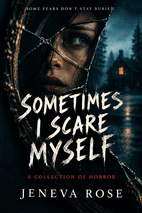
This page gathers lines from Sometimes I Scare Myself, and they cover a lot of ground. You will find tense dialogue, sharp narration, and the kind of inner monologue that makes a character feel exposed. Some lines are darkly funny, some are eerie, and some land because they sound like a thought you might have had yourself.
What makes the novel quotable is how it mixes everyday stress with something stranger underneath. A dinner party, a schedule, a relationship, a quiet house. The words stay with you because they turn ordinary fear into something controlled and unsettling, often in a single sentence.
Top Quotes from Sometimes I Scare Myself
“Sometimes I scare myself. It starts with a thought. The kind that makes me pause and wonder where it came from, or how it slipped past whatever part of my brain is supposed to keep things normal.”
The introduction describes the intrusive thoughts that inspired the collection.
It immediately establishes a chilling intimacy, making ordinary thoughts feel like a door to something dangerous.
“Erica had planned this night down to the minute—not because she enjoyed hosting but because plans made the world behave. When things followed a schedule, they didn’t spiral, they didn’t swerve, and they didn’t die.”
Erica prepares her meticulously controlled thirtieth birthday dinner.
It reveals that her need for order is really a defense against loss, chaos, and death.
“Chad paced the living room like he was supervising a very expensive renovation rather than a crime scene. He moved with purpose now—gesturing, directing, narrating. It was the same energy he brought to open houses and contract negotiations, except this time the asset was a body.”
Chad directs the group as they try to wrap Elias's body and clean the crime scene.
The real-estate metaphor makes the cover-up feel grotesquely ordinary, highlighting the group's moral collapse.
“This wasn't the Liv Erica knew—the careful one, the practical one who triple-checked directions and never raised her voice. This was someone stripped down to instinct, just nerves and survival. It terrified Erica how quickly that version of Liv had appeared. How quickly fear could erase a person.”
While Liv holds the gun in panic, Erica sees her transformed into someone unrecognizable.
It captures how terror can strip away identity and make even familiar people feel alien. The repetition of “How quickly” makes fear itself feel contagious and erasing.
“The second you let something scare you, it owns you.”
— Hailey
While walking home from the bus, Hailey notices Eddie following her and reflects on being bullied in Chicago.
It distills Hailey's armor against fear and explains why she refuses to be intimidated by Eddie or the town.
“But I'd read enough about postpartum to know that sometimes things didn’t get loud before they broke. Sometimes they went quiet.”
— Hailey
Hailey privately doubts her dad's reassurance that her mom's eerie calm means she is improving.
It names the terrifying possibility that a breakdown can be silent rather than loud. The line lingers because it makes quiet feel more dangerous than panic.
“This wasn't losing control. This was taking it back.”
— Kristin
Kristin methodically pours gasoline through the basement, guided by whispers she cannot fully place.
It reframes a terrifying act as an assertion of control rather than loss of it. The paradox makes her descent feel deliberate and chilling.
Themes Behind the Quotes
The quotes keep circling fear that starts inside a person and then spreads outward. Characters try to manage it with schedules, rules, and careful behavior, but the dread comes from sensing that those safeguards may not hold. Intrusive thoughts, quiet houses, and ordinary objects all become ways to explore how fragile normal life can feel.
Another thread is what people do when control slips. Some cling harder to plans, some turn practical or cold, and some discover a survival mode they did not know they had. Grief, sisterhood, relationships, and motherhood add emotional weight, while the supernatural or psychological unease keeps asking whether the threat is outside or within. The result is a portrait of people trying to hold themselves together and decide what they can reclaim.
Quotes by Chapter
Part 1 - Chapters 1 to 6
“He was always telling her to relax, as if tension were a personal failure instead of a warning system.”
Chad repeatedly tells Erica to relax while she prepares for the dinner.
It captures the quiet gaslighting in their relationship and validates instinct as something not to be dismissed.
“Belief isn’t a requirement for what I do.”
— Elias
Erica tells Elias she doesn’t believe in mediums after Zach reveals the surprise.
The calm line is ominous, suggesting belief won’t protect her from whatever is coming.
Part 2 - Chapters 7 to 11
“It was as if something had slipped in and taken a seat. Erica could still feel her sister's name vibrating in her chest, the way a struck bell keeps ringing long after your hand leaves it.”
After Joslyn's name seems to fill the room, Erica senses a presence that feels less comforting than invasive.
The striking bell image makes grief feel both lingering and physical, while the shift from relief to dread raises the supernatural tension.
“She didn’t plan for a dead medium on her rug. Or her boyfriend, soon to be ex, holding her dinner party guests at gunpoint like a hostage negotiator who'd skipped training.”
Erica scrubs Elias's blood from her rug while Chad holds the guests at gunpoint.
The line captures how a carefully planned birthday dinner collapses into horror, blending domestic detail with violent absurdity.
“It's meant to keep salad fresh, not substitute for Dexter's kill room.”
— Derek
As they wrap Elias’s body, Derek mocks the flimsy Saran Wrap.
Dark humor cuts through the horror, turning a grisly cleanup into an absurd crime-scene joke.
Part 3 - Chapters 12 to 16
“This wasn’t panic. This wasn't hysteria. This was despair.”
After Liv suggests they might as well get it over with themselves, Erica recognizes a deeper despair beneath the panic.
The triadic rhythm separates ordinary fear from total hopelessness. It makes Liv’s despair feel clinical, quiet, and final.
“Whatever had done that to Chad hadn't burst in. It hadn't forced its way through. It had responded. And now they were trapped in the condo with it.”
After Chad is violently dismembered by an unseen force, Erica understands it is not an intruder but the room itself responding.
The horror shifts from something breaking in to something already present and answering. It makes escape feel impossible because the danger is not at the door—it is the space itself.
“It had been wrong about almost everything, but she hadn't had her sister on the other side then. That was the difference now.”
Erica remembers using the Ouija board as a teenager with Joslyn before she recognizes what it means now.
It marks the shift from childhood game to a genuine link with her dead sister. The line turns old grief into a new, terrifying kind of hope.
Part 4 - Chapters 17 to 21
“The door is closed. Whatever was there, it’s done. And whatever happens now happens. We'll go with the flow, and we'll figure it out.”
— Erica
In the interrogation room, Erica tells Zach and Liv they should tell the police what happened.
It captures her hard-won certainty and pragmatic resolve after supernatural terror.
“Whatever they'd opened had been closed again. Her sister had helped her do that. Now there were only the consequences that belonged to the living.”
As Erica is cuffed and led out, she senses the presence in the condo is finally gone.
It separates supernatural victory from human aftermath. The final sentence is haunting and grounded.
“For the first time in years, Erica didn’t have a plan. Whatever came next could come. And she would handle it when it did.”
Erica steps out of her ruined condo in handcuffs, leaving the aftermath behind.
It shows a shift from control to acceptance. It’s both vulnerable and resilient.
“My emotions lived just under my skin, waiting for the smallest excuse to break through.”
— Kristin
Kristin reflects on her fragile emotional state while moving to Tillington with Patrick and Hailey.
It vividly captures how raw and unmanageable grief or trauma can feel. The image is immediate and relatable.
Part 5 - Chapters 22 to 25
“What if knowing made the difference between life and death?”
— Eddie
After Hailey dismisses Tillington's history as small-town drama, Eddie asks this in a low, heavy voice.
It transforms a ghost story into an immediate threat and shows Eddie's ominous seriousness.
“There was a faint resistance beneath my thumb, like the switch was breathing against me.”
— KRISTIN
Alone in the new house, KRISTIN tries to switch off the bedroom light and feels the switch resist her.
The image makes the house feel alive and predatory, turning an ordinary domestic action into a moment of dread.
“But when I stepped around the island counter and surveyed the site, not one dish was broken. Not one had spilled even a drop of its contents. They lay perfectly intact on the floor as if someone had set them there.”
— KRISTIN
When the casseroles tumble out of the refrigerator, KRISTIN braces for a mess but finds every dish intact and unspilled.
The impossible neatness makes the supernatural feel quiet and deliberate rather than chaotic, deepening Kristin's unease.
Part 6 - Chapters 26 to 30
“What was I... ARE YOU KIDDING ME! YOU RAN A RED LIGHT! I HAVE A BABY IN THE CAR, FOR CHRIST'S SAKE!”
— Kristin
After a truck runs a red light and hits her SUV, the other driver blames her.
It captures her shock and maternal fury when she is unfairly accused. The raw dialogue makes her fear and outrage immediate.
“But the truth settled in my stomach like a stone. We were not okay. Not here. Not in Tillington.”
— Kristin
After the accident and citation, Kristin reassures Henry but realizes they are not safe in Tillington.
It distills her growing dread into a blunt, memorable realization. The repetition makes the town itself feel like a threat.
“If I said it out loud and Hailey didn’t feel it too—if she looked at me like I was imagining things—then it wouldn't be the house or the town that was the problem. It would be me.”
— Kristin
Kristin considers confiding in Hailey about the strange happenings but fears being seen as imagining them.
It exposes her isolation and the terrifying possibility that she cannot trust her own mind. The line turns the supernatural fear inward.
“I held Henry tighter, forcing myself to breathe, to pretend everything was fine. Behind me, the window creaked like someone was testing the lock.”
— Kristin
After lying to Hailey about the open windows and spilled paint water, Kristin tries to steady herself.
It combines maternal protectiveness with the eerie sense that the house is testing her. The quiet ending makes the menace feel intimate.
Part 7 - Chapters 31 to 35
“Patrick wasn’t going to save us—not because he didn't want to, but because he didn’t think we needed saving. And the terrifying truth was, I wasn’t sure he was wrong.”
— Kristin
After Patrick says he's coming home but Kristin realizes he doesn't truly believe her.
It lays bare her isolation and the terrifying possibility that reality itself may not support her.
“Trapped someplace, stuck, with no one coming to help.”
— The man
The unnamed man examines the fawn trapped and dying in Kristin's gate before helping.
It's a bleakly philosophical line that turns an animal's suffering into a universal statement about human mortality.
“Her voice was syrupy, honey poured over something rotting.”
Judi Vee speaks after Kristin wakes and takes Henry from her arms.
The metaphor captures Judi's false sweetness and underlying menace in one sensory image.
“You must've hit your head harder than I thought.”
— Judi Vee
When Kristin accuses Judi of whispering over the baby monitor, Judi dismisses her as confused from the fall.
It's a perfect gaslighting line, making Kristin doubt her own perception while Judi keeps control.