Poor Charlies Almanack — Interactive Mindmaps

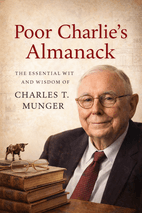
Poor Charlies Almanack by Charles T. Munger Book Cover

by Charles T. Munger

Charles T. Munger's Poor Charlies Almanack distills his multidisciplinary wisdom and mental models for clear thinking, drawn from speeches and essays. It serves investors, business leaders, and lifelong learners seeking to improve judgment and avoid common cognitive errors.

On Insta.page you also get an Apply This Book tool that lets you combine insights from up to 3 books to solve your specific situation.

Chapter mindmaps

Free preview: chapters 1–4 are fully interactive. Click any node to expand or collapse. Subscribe to unlock the rest.

Chapter 1: Foreword by John B. Collison

Key concepts: Foreword by John B. Collison

1. Foreword by John B. Collison

Personal Discovery and Impact of the Almanac

  • Initial discovery of the book in youth while seeking business knowledge
  • Appreciation for its candor, simplicity, and blend of humor with insight
  • Recognition of the book as more than an investing guide—a manual for wisdom and integrity

Meeting Charlie Munger: Character and Intellectual Stamina

  • Personal encounter confirmed admiration for Munger's character
  • Description as engaging, intellectually curious, and remarkably energetic
  • Lengthy dinner conversation spanning diverse topics showcased his depth

Core Philosophy: Multidisciplinary Thinking

  • Champions thinking across disciplines like mathematics, physics, history, and ethics
  • Delivers insights with irreverence and clarity
  • Advocates for free enterprise, integrity, and taking work seriously without self-importance

Consistency and Compounding in Life and Work

  • Highlights Munger's consistent traits despite world changes: insatiable learning appetite and simple business frameworks
  • Legendary partnership with Warren Buffett from humble beginnings to Berkshire Hathaway's success
  • Parallel between compounding growth in investments and compounding wisdom from the book

Enduring Value and Reader Guidance

  • Book serves as a lifelong guide for decision-making beyond investing
  • Encourages readers to approach with an open mind for lessons that compound over time
  • Munger's personal character mirrors the principles in his writings

Chapter 2: Foreword by Warren E. Buffett

Key concepts: Foreword by Warren E. Buffett

2. Foreword by Warren E. Buffett

Buffett's Parallel: Munger as Modern Franklin

  • Positions Munger as a more rigorous successor to Benjamin Franklin's virtues
  • Contrasts Franklin's suggestions with Munger's intense demands (e.g., saving vs. higher stakes, promptness vs. earliness)
  • Highlights Munger as a 'living lesson in compounding' through extreme personal frugality
  • Notes humorous exception where Munger had nothing to add to Franklin's advice on choosing a mistress

Buffett's Ideal Partner: The Portrait of Munger

  • Describes ideal partner as smarter/wiser, humble, loyal, generous, and fun
  • Reveals Munger was the only person who perfectly fit all criteria since 1959
  • Applies Franklin's concept of 'gratitude' to their 45-year partnership
  • Expresses profound personal and professional gratitude for Munger's role

Munger's Humble Rebuttal and Candor

  • Modestly downplays his role in Buffett's success, claiming Buffett needed little help
  • Acknowledges Buffett's early 'brain block' from Graham's methods but affirms his inherent talent
  • Marvels at Buffett's continuous improvement even into his 70s
  • Candidly assesses Berkshire's future: acquisitions may slow, but core businesses will remain strong

Enduring Partnership and Legacy

  • Exemplifies a complementary, trusting, and intellectually honest decades-long collaboration
  • Demonstrates how lived principles (thrift, compounding) create personal and business success
  • Shows mutual respect and humility as foundations of their relationship
  • Suggests Berkshire's culture and businesses provide stability beyond leadership transition

Chapter 3: Introduction by Peter D. Kaufman

Key concepts: Introduction by Peter D. Kaufman

3. Introduction by Peter D. Kaufman

Introduction to Charlie Munger

  • Positioned as a modern-day Benjamin Franklin
  • Promises improved investing, decision-making, and life understanding
  • Emphasizes Munger's unique multidisciplinary approach to clear thinking

The Munger Method: Wisdom from a Latticework of Models

  • Ideas are durable, rooted in core truths rather than fleeting trends
  • Blends encyclopedic knowledge, self-deprecating humor, and vivid storytelling
  • Uses anecdotes and parables instead of dry abstractions
  • Employs powerful devices like inversion and historical case studies
  • Prioritizes wise life decisions over mere investment decisions

Book Structure and Content

  • Begins with a biography tracing Munger's path from Omaha to success
  • Core consists of eleven transcribed talks over two decades
  • Includes special version of his famous lecture on human misjudgment
  • Editorial team added explanatory endnotes for clarity and context
  • Munger uses intentional redundancy to build deep fluency

Key Takeaways

  • Multidisciplinary approach is a timeless system for clear thinking
  • Teachings delivered with unique rhetorical flair and practical wisdom
  • Book provides full portrait culminating in Munger's own words
  • Emphasis on building a 'latticework' of knowledge through repetition

Chapter 4: Chapter 1: A Portrait of Charles T. Munger

Key concepts: Chapter 1: A Portrait of Charles T. Munger

4. Chapter 1: A Portrait of Charles T. Munger

Core Philosophy and Life Trajectory

  • Financial independence as a tool for societal stewardship, not an end goal
  • Life dedicated to wisdom, rational service, and multi-model thinking
  • Strategic philanthropy applied to systemic challenges like education and environment
  • Path shaped by relentless curiosity, real-world education, and formidable work ethic

Midwestern Roots and Formative Influences

  • Grueling grocery store job at Buffett & Son instilled strong work ethic and aversion to financial imprudence
  • Voracious reading and influence of Benjamin Franklin fostered intellectual curiosity
  • Observations during the Great Depression taught lasting lessons about family, risk, and capital preservation
  • Early exposure to scientific thinking through family doctor Ed Davis

Education and Early Career Development

  • Exceptional, degree-less leap into Harvard Law School via GI Bill, graduating magna cum laude
  • Military service in Army Air Corps with meteorology training at Caltech
  • Move to Southern California to build legal career, separate from father's Omaha practice
  • Enduring profound personal hardship including divorce and son's terminal illness

Entrepreneurial Transition and Capital Building

  • Shift from law due to limited earning potential, following grandfather's conservative principles
  • Successful real estate development partnerships, building $1.4 million nest egg by 1964
  • Co-founding Munger, Tolles & Olson law firm with enduring philosophical imprint
  • Applying business acumen to concentrate on immediate tasks and control spending

Partnership with Warren Buffett and Investment Evolution

  • Fateful 1959 dinner in Omaha sparked instant intellectual bond with Buffett
  • Transition from legal career to full-time investments based on deep trust and shared ideas
  • Running successful investment partnership before adopting permanent equity model
  • Legendary partnership that became synonymous with Berkshire Hathaway's approach

The Fateful Meeting with Warren Buffett

  • A 1959 dinner in Omaha introduced Munger to Warren Buffett, sparking an instant intellectual connection.
  • Buffett viewed Munger's legal career as inferior to investment work, encouraging a career shift.
  • The meeting initiated a deep partnership built on constant communication and mutual trust sealed by a handshake.

Transition from Law to Investment Management

  • Munger wound down his legal practice to focus on investments, forming Wheeler, Munger & Co.
  • His investment partnership generated strong returns (19.8% compounded annually) from 1962 to 1975.
  • Following severe setbacks in the 1973-74 bear market, Munger stopped managing outside money, mirroring Buffett's earlier decision.

Building Permanent Equity and Wealth

  • Munger shifted focus to building permanent equity through holding company structures like Blue Chip Stamps and Diversified Retailing.
  • Partners in Wheeler, Munger received shares that were later converted into Berkshire Hathaway stock.
  • This conversion formed the core foundation of Munger's immense personal wealth.

The Berkshire Hathaway Investment Ethos

  • Munger and Buffett built a spectacular track record identifying undervalued companies for long-term ownership.
  • Key acquisitions included See's Candies, The Buffalo Evening News, and GEICO, plus major stakes in Coca-Cola and American Express.
  • Their partnership exemplified a disciplined approach to value investing and permanent capital allocation.

Philosophical Influences and Worldview

  • Munger's worldview was heavily influenced by Benjamin Franklin as a model multidisciplinary thinker.
  • He admired Franklin's use of financial independence to serve society, which shaped his own philanthropic approach.
  • Despite being a conservative Republican, he maintained staunch support for Planned Parenthood based on rational population ethics.

Rational Philanthropy as Applied Wisdom

  • Munger approached philanthropy with the same rigorous, multi-model thinking he applied to investments.
  • He sought leverage points where capital and intellect could create disproportionate, lasting social good.
  • His support for causes like Planned Parenthood stemmed from fundamental beliefs in rational population ethics and children's rights to welcoming environments.

Strategic Focus on Systemic Challenges

  • Munger targeted three critical pillars for human flourishing: population ethics, environmental stewardship, and educational quality.
  • He viewed environmental deterioration and poor education as direct threats to economic prosperity and societal progress.
  • His contributions were strategic, supporting research and institutions that could drive systemic improvement in these areas.

Legacy as Intergenerational Stewardship

  • With eight children and sixteen grandchildren, Munger framed his work as stewardship for future generations.
  • His goal was to leave behind not just wealth, but a measurably better world with improved systems.
  • This familial perspective connected his philanthropic ambitions directly to the world his descendants would inherit.

Continue exploring Poor Charlies Almanack