Passive Income, Aggressive Retirement Quotes
by Rachel Richards
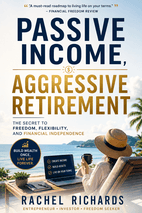
If you are tired of the usual retirement advice, this collection will hit different. These lines come from Passive Income, Aggressive Retirement, a book that tells it straight about trading time for money, building income streams, and designing freedom on your own terms. The quotes here are punchy, blunt, and full of reality checks.
Some will make you nod. Some might make you rethink what retirement actually means. You will find hard truths about spending, passionate rants about the value of time, and practical reminders that passive income still takes work. It is the kind of book people want to share, quote, and argue with, and that is exactly why these lines stand on their own.
Top Quotes from Passive Income, Aggressive Retirement
“Retirement = freedom. Retirement = choice. Retirement = financial independence. If you're financially independent, you can do whatever the hell you want!”
The author is redefining retirement at the start of the chapter.
It flips retirement from an age-based milestone to a state of personal freedom. Readers find it empowering because it centers choice rather than sacrifice.
“But ain't nobody ever gonna save $2,000,000 by cutting back on their daily Starbucks and investing their money in mutual funds.”
The author is dismissing the standard frugality-and-index-fund advice as insufficient.
It punctures a common financial platitude with blunt humor. The line resonates because it names the gap between everyday advice and the scale of the goal.
“Would you ever give someone $49 and accept $3 in return? No. So why are you treating your time that way? That's your life you are trading.”
The author challenges the reader's acceptance of a typical work-year vacation trade-off.
It makes the opportunity cost of a career visceral and personal. The simple math forces readers to question a trade they normally accept without thinking.
“You can always make more money, but you can’t make more time.”
The author is explaining why time is more valuable than money.
It states a universal truth in plain language, making readers feel the urgency of how they spend their hours.
“Passive income cuts the link between time and money. If your passive income exceeds your expenses, you are retired. #MicDrop.”
The author reaches the chapter's conclusion about why passive income matters.
This is a punchy, definitive definition of financial freedom that readers can easily remember and repeat.
“Passive income is maintained with little to no work; it's not built with little to no work.”
The author summarizes the two-stage nature of passive income.
This is a concise, memorable mantra that separates the upfront effort from the ongoing payoff. It corrects the biggest misconception about passive income in one sentence.
“What can I create once, and continue to sell over and over again, forever?”
From the chapter's introduction to royalties, where the author simplifies how to think about royalty-generating products.
It distills the entire promise of passive income into one memorable question that reframes creative work as an asset.
Themes Behind the Quotes
One major theme is the trade between time and money. Time is the limited resource, and no amount of wealth can create more of it. That idea pushes readers to question how they spend their hours and to find ways to separate income from a traditional job. Another thread is that financial independence is not about hoarding cash or extreme frugality. It is about building enough passive income to cover your life, which gives you the freedom to choose what to do with your time.
The quotes also stress that passive income is never effortless. There is upfront work, and often ongoing maintenance, before a stream can run on its own. That framing separates the book from get rich quick promises. It also celebrates creators who build something once, like a book, song, or photo, and keep earning from it. The overall message is practical: you do not need to be special, just willing to put in the effort.
Quotes by Chapter
Chapter 2 : Nest Egg Theory , Debunked
“No matter how healthy you are, you can’t always control your health. At this moment, you are the youngest (and therefore, likely the most physically fit) you will ever be.”
The author argues against waiting until sixty-five to enjoy life.
It reminds readers that health is uncertain and the present body is their best asset. The line turns the conventional retirement timeline into a risky gamble.
Chapter 3 : Your # 1 Most Valuable Resource
“Time is the great equalizer. Warren Buffett does not have more time than you or me. In terms of time—in terms of life—we are all equal.”
The author compares the time available to even the wealthiest person with everyone else's.
This reframes wealth and mortality with a striking example, making the message feel democratic and humbling.
“Every dollar you spend IS replaceable, and you can get that dollar back. If you have enough time, you can make more money. But no matter how much money you have, you can’t make more time.”
The author lays out the core asymmetry between money and time.
The capitalized IS and the contrast between replaceable dollars and non-renewable time make the concept unforgettable.
Chapter 4 : Passive Income : Such Beauty , Such Grace
“You would be correct, friend. All passive income streams require upfront time or capital to build in the first place, and saying that they'll magically generate cash with zero work after that would be disingenuous.”
The author responds to the reader objection that passive income isn't truly passive.
It validates the reader's skepticism while reframing passive income as maintenance rather than magic, which builds trust. It also sets a realistic tone for the rest of the book.
“Hate to break it to ya, but it doesn't matter what you're passionate about; if it's not marketable, it's not going to put food on the table.”
The author explains the Marketability factor in the Factors of SCRIMP.
It cuts through romanticism about passion and grounds passive income in real supply and demand. The blunt tone makes the lesson stick.
“But if it comes down to spending my time building passive income streams so that I can quickly achieve financial independence or spending my time working 40 hours per week for the rest of my life, I choose the former.”
The author explains why she pursues passive income even though there are no get-rich-quick shortcuts.
It frames the book's core trade-off in vivid either/or terms. This line motivates readers to invest upfront effort by showing what's at stake.
Chapter 5 : Royalties : The What , the Why , and the How
“As a creator, royalties are one of the most fulfilling passive income streams because you are creating something that fills a market need.”
From the opening section on what royalties are and why they matter.
It connects financial gain with creative purpose, making passive income feel meaningful rather than purely transactional.
“Royalty income requires an upfront time investment more than anything.”
From the 'Why' section, where the author breaks down royalties using the Factors of SCRIMP.
It sets honest expectations and reassures readers that lack of money doesn't have to block them from starting.
“If you want a truly passive stream, have a plan from the get-go to hire someone to do this ongoing work for you.”
From the 'Passivity' factor discussion about keeping royalty income flowing after launch.
It gives readers a concrete strategy for turning active work into genuinely passive income.
Chapter 6 : Introducing Books and eBooks
“My advice is, if you go this route, to have some sense of motivation other than just the money.”
The author reflects on writing her first book as a passion project rather than an income stream.
It reminds readers that meaningful purpose sustains creative work and can lead to unexpected rewards.
“If you don't feed the beast, the beast will die.”
Honorée Corder explains that a book requires ongoing marketing to keep selling.
It is a vivid warning that even passive income needs continuous attention to survive.
“I don't say that to be braggadocious or obnoxious, but if it’s possible for me, and if I can do it—see my previous comments about no education—then it is possible for anyone to do that as long as they are willing to do the work, and that's the asterisk.”
Honorée Corder describes how royalty income gave her financial freedom as a single mom.
It is a humble, empowering challenge to readers to believe success is attainable with hard work.
“There is no “one- and-done.” If you recognize that, then awesome, because the alternative is a 9-5, and guess what? That’s not passive at any stage of the game.”
Honorée Corder contrasts the ongoing work of book marketing with the reality of a traditional job.
It strips away the fantasy of effortless passive income and delivers a blunt, motivating reality check.
Chapter 7 : The Great Debate on Publishing
“Here’s the deal—the publisher doesn’t base your advance on how good your [book] idea is. They only base it on the size of your platform. That is it.”
Hal Elrod explaining why he recommends self-publishing for 99% of new authors.
It exposes the harsh reality that book advances are tied to audience size, not book quality, and makes building a platform feel urgent.
“[Traditional publishers] own you. They own the rights to everything that you could ever do with that book.”
Hal Elrod warning about the rights and creative control surrendered in traditional publishing.
This blunt statement turns an abstract contract concern into a visceral fear, and makes self-publishing’s appeal obvious.
“Most books don’t change behavior. If somebody reads a book and gets great ideas, they might talk about the book while they're reading it, but as soon as they're done reading it, they move onto the next book, and that’s the book they're talking about.”
Hal Elrod explaining why most books fail to create a lasting impact.
It redefines a book's success by whether it changes readers' behavior, challenging authors to write for transformation, not just inspiration.
“I gave zero podcast interviews. I ran zero episodes of my own podcast. I did give four speeches. I did zero television interviews. And I couldn't go to my event. And I sold 130,000 copies. I was a thousand copies short of the year before. I ran zero ads either year. It was all word of mouth.”
Hal Elrod describing how his book sold while he was fighting cancer in 2017.
It powerfully proves how passive royalty income can become, and how strong word-of-mouth can carry a book without active promotion.
Chapter 8 : Do - Re - Mi - Fa - So - La - Ti - Do
“Only make music if that's what you love.”
The author, summarizing the shared advice of Thom Shepherd and Landon Sears.
It captures the chapter's passion-first message in one short, memorable line.
“You definitely have to keep creating music to keep making money.”
Thom Shepherd, a veteran songwriter, on sustaining a music career.
It underscores that even royalty income requires ongoing creative work.
“People seem to be complaining about the streams and the money you make, but you make more than you think—those clicks add up.”
Landon Sears, a Nashville musician, comparing streaming platforms.
It offers a grounded counterpoint to complaints about streaming payouts, reminding readers that small earnings accumulate.
“It’s a lifetime kind of thing. It goes beyond your life actually—life plus 75 years—after you die, your family gets the royalties for another 75 years.”
Thom Shepherd, explaining how songwriting royalties can last for generations.
It makes the long-term upside of songwriting tangible and inspires readers to think beyond immediate income.
Chapter 9 : Photos , Downloads , and PODs
“One photograph can be licensed over and over again and potentially earn income forever. That’s what you're going for with this passive income stream.”
In the stock photography section, the author explains how a single photo can keep earning royalties.
It distills the promise of passive income into one concrete image, making the idea feel tangible.
“It sounds easy to throw a bunch of photos online and sit back and wait for money. If that’s how it really works, why isn't everyone doing it?”
The author warns that stock photography is harder than it looks.
The rhetorical question punctures the get-rich-quick fantasy and speaks to anyone who has found a supposedly easy income stream harder than expected.