Partita Quotes
by Barbara Kingsolver
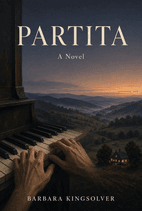
This page gathers lines from Partita that linger afterward. You will find dialogue between characters, reflective narration, and intimate inner monologue, often woven through music, memory, and family. Some lines are sharp and funny; others are quiet and aching. They show how a person can love a craft, a partner, a parent, and a version of herself all at once, and how those loves can pull in different directions.
What makes it quotable is its plainspoken intensity. Kingsolver can turn a small moment into a truth you want to underline, whether the subject is ambition, grief, desire, or the ordinary courage of getting through a day. The lines here are easy to carry with you because they sound like thoughts you have had but never found words for.
Top Quotes from Partita
“The waters parted for me. It could have gone differently. I still think about that.”
When Jon Link finishes handing out orange papers and the students disperse, the narrator approaches him.
It marks a hinge moment and admits how easily the relationship might never have begun, haunting the present with counterfactual possibility.
“A child can't hate her mother without putting the load-bearing walls of the known world at risk. I settled for hating her shoes.”
Thinking of her mother's worn shoes, she notes the danger of a child's hatred toward her mother.
The line turns a private resentment into a cosmic warning, then undercuts it with a wry, human compromise.
“Music is your labor, not your floor manager. You're the means of production. Without you, it doesn’t exist.”
— Sigurd
At lunch, after the narrator worries about her future in music, Sigurd offers a Marxist view of her art.
It reframes artistic worth as labor and affirms that music does not exist without the performer.
“Your mother is supposed to be the great love of your life.”
— Mickie
Mickie challenges Livia's claim to be over her mother's death during their phone call.
It names the impossible standard that makes Livia's grief and estrangement especially painful.
“All year, I’d been considering Ravel's Gaspard de la nuit for my May recital, not because I loved it—though I did, everybody does—but because I was afraid of it. Fear is a powerful engine.”
She considers taking on Ravel’s Gaspard de la nuit for her May recital.
It reframes fear as a motivating force, a clean and memorable aphorism about why artists tackle impossible work.
“I pounded out all the happiest pieces I knew, one after another, as loud as my hands could make them. Because happiness is there for the taking, and so is grief, tenderness, hope, the wonder of lakes and mountains. Reach into that bottomless music box and pull out whatever medicine your day is wanting.”
— Livia
After winning a guest solo with the Knoxville Symphony, Livia returns to an empty church and plays for herself.
It transforms music into a source of emotional medicine and self-reclamation.
“Life doesn’t give you more than one drink of that water. If it gives you one at all. We thought we were luckier than other people. We said that. Reaching across a table to touch fingers and feel the thunderclap, heaven reaching earth.”
— Livia
Livia remembers the rare, electric intimacy she once shared with Sigurd.
The metaphor of a single drink of water makes lost love feel both precious and irreversible. The final image turns a small gesture into a transcendent connection.
Themes Behind the Quotes
A central thread is music as both refuge and demanding vocation. It shapes identity, relationships, and the daily grind of discipline, while also exposing fear, ambition, and the cost of wanting a life that feels chosen. The quotes keep circling the tension between art as salvation and art as an unrelenting taskmaster.
Family and love run alongside that. There is the pull of a mother, the shadow of a lost brother, the ache of partnership, and the question of what loyalty can survive. Memory, grief, and desire mix with ordinary moments, and many lines weigh how much people can trust one another, or themselves. The mood is tender but unsentimental, aware that happiness, regret, and resolve often arrive together.
Quotes by Chapter
Note on the Music
“Music pulled the two of us together as passionate colleagues, then roommates, then lovers. It was my first partnership of any real kind since my brother died, and I wasn’t looking for anything better.”
The narrator reflects on how music gradually brought her and Jon Link from colleagues to roommates and lovers.
It captures how shared art can quietly become intimacy, and how a first real partnership can feel like enough.
“I should be able to remember, now, what kindnesses we showed each other in those last hours when I still thought our perfectly good life would go on being perfectly good. To my shame, I can't. It was snuffed out that quickly.”
The narrator mourns her inability to recall the final ordinary kindnesses before the relationship ended.
The regret is devastating: a good life can vanish before its ordinary kindnesses are even fully remembered.
“I’d loved music all my life, with that burning feeling I assumed other people must have when they wanted to get married. I was shocked to find out now I'd only been looking at my beloved through a keyhole. Now I was invited in, to caress and inhale and pledge an ecstatic devotion that stretched me near to breaking.”
The narrator describes how music theory class transformed her lifelong love of music into something far more consuming.
It renders musical awakening as a physical, almost romantic revelation—love once glimpsed through a keyhole becomes overwhelming devotion.
Prelude I
“The first night after Sigurd called, I put down the phone with my hands shaking and a sick feeling that I'd been waiting for something like this. Not a train, but a reckoning coming at me. This phone call, out of a blank silence of twenty-some years.”
The narrator recalls the night after Sigurd's unexpected phone call, feeling shaken and awaiting a reckoning.
It captures the dread and inevitability of a past intrusion, making the phone call feel like a physical blow.
“His mind could no more hold thoughts of betrayal than a good strong hand can hold water. Just not built for the task.”
She reflects on how fundamentally incapable her husband Charlie is of betrayal.
The simile makes Charlie's goodness feel both admirable and enviably simple, while hinting at the narrator's own capacity for betrayal.
“But an hour after midnight, I was still playing Chopin in the dark house, trying to stop time. If I didn’t ever go to bed and get up again, if six more days didn’t pass, we could go on here, unrattled by this earthquake I didn’t ask for.”
Unable to sleep, she plays Chopin in the dark and wishes she could halt the passage of time before Sigurd calls again.
The image of playing in the dark to stop time conveys grief, avoidance, and the wish to hold off an unwanted future.
Allemande
“But I've wondered. Did I recognize the instrument of my downfall? Should we know it when we see it?”
The narrator recalls first seeing Sigurd and wonders whether she should have recognized him as the instrument of her downfall.
It casts the first meeting as inevitable doom and asks a universal question about recognizing what will undo us.
“I would go home that evening to a sweet boy who'd recently spoken of marriage. To me specifically: Jon Link and myself being married. I was meant to be walking on the clouds now, not looking over the fence.”
After her first glimpse of Sigurd, the narrator thinks about going home to Jon Link and their expected marriage.
It captures the quiet conflict between a safe, planned domestic future and the disruptive pull of sudden attraction.
“He looked at my hands and then my mouth, the rest of me, the way I've watched so many artists study a borrowed instrument before they pick it up.”
While they stand talking on the quad, Sigurd studies the narrator as if she were a borrowed instrument.
It renders desire as appraisal, making the narrator feel both seen and like an object to be played.
Prelude II
“There were only two big things Mickie didn't know about me, and this was the other one: I'd carried a child.”
— Livia
While Mickie talks about motherhood during their phone call, Livia privately notes a secret she has never told her.
The withheld confession lands with sudden force and deepens the chapter's sense of hidden grief.
“Resolution was the word, I thought. The dissonant, unsettled chord that makes your teeth ache for how badly it wants to relax into sweetness. Here I sat, quaking under her dead gaze, still waiting.”
— Livia
After Mickie says there is no chance for resolution with Livia's mother, Livia reflects on the unfinished chord of grief.
The musical metaphor makes unresolved mourning feel physical and haunting.
“You could burn it down, you know. We'd all still love you.”
— Mickie
In their phone call, Mickie makes a dark joke about what Livia could do to her mother's hoarded house.
It captures Mickie's black humor and unconditional support, offering relief inside a grim situation.
Toccata
“I also put Sigurd behind me, or would have said so, but grieved for something I was ashamed to think about. The one thing I knew how to do was to double down, forever earning my place in the world I still wanted to think I'd chosen. I had a new word for it now: precarious.”
Reflecting on the distance between her and Jon Link after their attachment has died.
It captures the exhaustion of pretending a relationship is still alive and the grim vocabulary of survival.
“Now, from the bottom of my stupid gloom over Sigurd, Gaspard de la nuit woke me up with a different shine: Distraction could save me. This was a trial that I actually could fail. Gaspard de la nuit is a triathlon.”
After heartbreak over Sigurd, she finds renewed purpose in mastering Gaspard de la nuit.
It turns distraction into a strategy and names the piece as an almost impossible feat, making competitive ambition feel like salvation.
“The bird flock of voices rose and rose, fell and rose, bursting sometimes into cries and clicks and the high, vibrating wail only women can make, called ululation. It made me shiver. I didn’t want it ever to end.”
At the South Africa rally, she listens to four African women sing in the plaza.
The image makes the ensemble sound like a living, unpredictable organism and conveys music’s capacity to overwhelm analysis and thought.
Prelude III
“Or, I have been holding my breath for almost thirty years because you were all I ever wanted and then you did what you did.”
— Livia
When Sigurd calls after decades and asks to see her, Livia silently rehearses what she will not say.
It captures a lifetime of longing, betrayal, and withheld truth in a single withheld confession.
“Too late for that. Just by threatening to come look at me, he left me looking at myself, this life I chose to save. A house built on the sand of thwarted ambitions.”
— Livia
Thinking about Sigurd's threatened visit, Livia measures the safe but diminished life she has made for herself.
The sand-house metaphor makes her compromises feel both intimate and precarious.
“After that fight in the dress store, my mother never hit me again. It changed something in her, and changed me too. For as long as I could remember, I'd been carrying around a freight of anger and obligation, with no idea where to put it down.”
— Livia
Reflecting on the dress-store fight and her concerto triumph, Livia describes how the confrontation changed her and her mother.
It names the burden of guilt and anger she carried and the first moment she began to set it down.
Sarabande
“Oh, this, I thought, inhaling the scent of tobacco and moss and clean, damp granite, my body inhaling his body, believing whatever it wanted to tell me, taking in its nourishment. This is what it feels like to be happy.”
In the cemetery, after Sigurd whispers that he wants her, she recognizes a rare moment of happiness.
It captures the sensory immersion of new love and the fragile clarity of being happy.
“Discipline, we knew. For both of us, it was something like our religion.”
They stop making out in the cemetery so Sigurd can go to work.
It defines their shared devotion to self-control and the tension between desire and duty.
“I want you tonight. And tomorrow night. All the nights I can think about.”
— Sigurd
He whispers to her in the cemetery after she tells him she cannot see him until Saturday.
It is a direct, intimate declaration of desire that captures his longing and her conflict.
“One who trusted nothing as permanent, is all I can say. Not love or loyalty, not a mother's touch or a brother who makes a promise and then walks away to annihilate himself.”
She reflects on what kind of person could let go of Jon Link so easily.
It reveals the deep family wounds beneath her self-reliance and her fear of permanence.
Prelude IV
“Thursday. My mind is made up. When he calls on the weekend, I’ll say no. There's nothing left between us to talk about, and I'll tell him that, with the kindness he’s due in his difficult situation, and the politeness I can’t seem to help anyway.”
— Livia
Livia resolves to refuse Sigurd's weekend call while he is in a difficult situation.
It captures the tension between firm resolve and the ingrained politeness she cannot suppress. The line sets the chapter's central conflict in a single breath.