Partita Themes
by Barbara Kingsolver
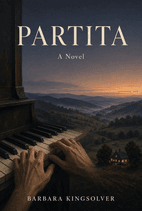
Underneath its plot, the novel wrestles with how identity gets built from music, grief, class, secrecy, and family inheritance. Music becomes a refuge and a measure of self, while the past returns through phone calls, letters, the mother's hoard, and reckonings with Cy's suicide, the father's death, and Sigurd. Desire, labor, and withheld truth keep colliding with safety.
On this page, you'll find theme breakdowns with concrete moments from the book: Jon Link and college, the hoard and mother-daughter abuse, class tensions in music and education, hidden pregnancies and injuries, and passion versus domestic comfort. Recurring symbols include hands and the injured right hand, the piano and practice room, boxes, letters, envelopes, and the mother's shoes and empty flats.
Major Themes in Partita
Music as identity, refuge, and connection
Music is the narrator's core language and vocation: it draws her to Jon Link, opens a new world in college, and remains a refuge and measure of self even after injury. It is also a site of fear and mastery, as when she chooses Ravel's Gaspard de la nuit because she is afraid of it. The notes repeatedly frame music as collective faith, intimate touch, and the thing she cannot give up.
- Ch1: Music pulled the narrator and Jon Link together as passionate colleagues, then roommates, then lovers; it was her first real partnership since her brother died.
- Ch3: After leaving the student alliance meeting, Livia goes to the practice building and plays Chopin's 'Raindrop' Prelude, feeling the composer's loss through her hands.
- Ch5: The narrator chooses Ravel's Gaspard de la nuit for her May recital because she fears it, saying 'Fear is a powerful engine.'
- Ch13: Livia says some music is just your way of being you and that she can turn into a liquid being of notes and rests.
- Ch15: Livia says music is not really here until you make it yours; Deronne transforms Bach and plays Ravel for her dog, Gaspard.
Grief, memory, and the unescapable past
The past returns through phone calls, letters, music, and the mother's hoard, forcing reckonings with Cy's suicide, the father's death, and Sigurd. Grief is both private and familial; the notes tie it to social isolation, withheld notes, and the body's lingering ache. Memory is often a haunting rather than a comfort.
- Ch1: The narrator says she cannot remember the kindnesses in their last hours: 'It was snuffed out that quickly.'
- Ch5: Cy stepped in front of a train at seventeen; the narrator says his suicide made them a 'poisoned family' and church friends kept them at arm's length.
- Ch10: Cyrus's letter to Livia confesses his love for Marshall Stilwell, says Marshall was sent away in the Marines because of them, and that he cannot face the days without him.
- Ch12: Livia says, 'You don't stop talking to people just because they're dead,' and describes feeling shut up inside a jar of time.
- Ch13: At her father's funeral she grieves that no one can play live music for him, then plays a one-finger 'Give Me My Flowers' in the empty chapel.
Maternal inheritance, family secrets, and the hoard
The mother-daughter relationship is marked by abuse, misrecognition, hidden dreams, and objects that cannot be discarded. The farmhouse hoard becomes the narrator's inheritance, containing letters, recital programs, dresses, and notes that expose family secrets. Livia both fears becoming her mother and recognizes a shared pattern of secrecy.
- Ch2: The shoes under the piano make her say 'Oh, Mom is here'; they are her own empty flats, reminding her of her mother's worn shoes, and Mickie says every woman turns into her mother.
- Ch4: Her mother's three-bedroom farmhouse is stuffed with newspapers, broken appliances, and shoeboxes; Livia says the trove is now hers to excavate.
- Ch6: Her mother refuses to buy the required black concert dress, calls it a pipe dream, and raises a hand to slap Livia; Livia stares her down, and her mother never hits her again.
- Ch10: Livia finds her mother's Nashville letters and recital programs and reflects that her mother kept secrets 'like her daughter.'
- Ch14: Livia says 'This sickness gets handed down' while burning the hoard; she keeps two of her mother's dresses rather than burning them.
Class, labor, and cultural dislocation
The book contrasts rural poverty and academic privilege, with music, education, and labor as sites of class tension. Sigurd analyzes music as labor and calls farmers petty bourgeoisie; Livia feels the gulf between her family and classmates. Characters argue over who deserves art, college, and ownership.
- Ch1: The narrator from a rural Tennessee county is gobsmacked by well-heeled students' intentionally ragged clothes, while Jon Link's satchel and Red Wing boots resemble those of men she knew back home.
- Ch3: Sigurd tells Mercy that music is her labor and she is the means of production; Jon Link calls her home a 'white-bread place,' and Livia cannot imagine bringing her family across the gulf.
- Ch7: The narrator perceives in Jon Link and his family the belief that wealth and education prove deservingness and give the right to be in charge; Sigurd says class is not a prison and calls farmers petty bourgeoisie.
- Ch8: Mickie and Livia discuss how 'anything called advanced is toxic in high school,' Ethan refuses college, and Livia says there is no reason great art should not belong to her students.
- Ch9: Livia and Sigurd argue on a street corner about class advantage, labor, and music students' ignorance of workers.
Concealment, withheld truth, and masking
Characters repeatedly hide pregnancies, injuries, relationships, and feelings, sometimes because withholding is the only power they know. Secrecy protects but also isolates, and the narrative links it to family patterns of evasion. The truth emerges through letters, phone calls, and confessions.
- Ch2: At supper she hides her shock from Charlie, invents 'a student rescheduling a lesson,' and knows Charlie would believe her and go on eating.
- Ch4: Livia says not one person in her life knew about her disaster with Sigurd, and she had carried a child that Mickie does not know about.
- Ch8: Livia calls the withholding a thick coil of evasion she has wound around herself and is scared to read the letters in the envelopes.
- Ch12: Livia says, 'Withholding was the only power I knew,' explaining why she did not tell Sigurd about her pregnancy and hand injury.
- Ch14: She tells Charlie the visitor is 'just somebody I knew a long time ago' and feels her coil of evasion must open to keep what they have.
Desire, the body, and safe comfort versus passion
Desire is portrayed as bodily and treacherous, often intertwined with music and performance, and it conflicts with domestic safety. Sigurd represents a ruinous craving, while Charlie represents solid comfort; the narrator cannot fully escape the pull of the past. The notes describe the body as a wild, hungry animal and sex as musical tension and release.
- Ch3: Mercy shivers as if Sigurd's hands had already touched her, even though she is meant to be walking on clouds with Jon Link, who has spoken of marriage.
- Ch5: The title word 'toccata' is said to mean 'touched'; her first touch with Sigurd feels electric, and under the diner table she rests her calf against his and he clasps her leg.
- Ch6: The narrator ends by saying, 'The treachery is the body,' describing it as 'a wild, hungry animal hiding under the skin' in connection with her ruinous craving for Sigurd.
- Ch7: While she keeps playing 'Ondine,' Sigurd touches her; she climaxes during the piece, and she later says making love with Sigurd was like music.
- Ch13: During sex with Charlie it is Sigurd who pulls her over the edge every time, though she values Charlie as solid and safe.
Symbols and Motifs
Hands and the injured right hand
Hands symbolize artistic identity, intimacy, labor, and vulnerability; their injury threatens the narrator's music and becomes a measure of survival and adaptation.
- Ch1: Lying with Jon Link on a sofa, her hands unconsciously press Bach into his skin.
- Ch2: Her right hand cramps and she quits in the middle of a cadenza; Sigurd's earlier actions left her right hand injured, though he does not know it.
- Ch5: Amadeo inspects her hands, calls her 'the next Maria Tipo,' and literally puts her hands into Sigurd's, telling him to take care of them.
- Ch9: After the dough roller accident, the thumb and index finger are spared but the pinkie likely cannot be saved; later the fingers of her right hand move inside their bandages, pressing notes into no one's skin.
- Ch13: She compares 'My fingers and Charlie's feet' as they adapt, and she plays a one-finger 'Give Me My Flowers' and later manages Chopin's B Minor Prelude.
The piano, practice room, and performance
The piano is a sanctuary, a site of identity and transformation, and sometimes a place where desire and performance merge.
- Ch2: After midnight she plays Chopin preludes, mazurkas, and nocturnes in the dark house, trying to stop time.
- Ch3: Livia goes to the practice building and plays Chopin's 'Raindrop' Prelude after the student alliance meeting.
- Ch7: She calls the small practice room her ideal habitat; near midnight Sigurd finds her practice room and she keeps playing 'Ondine.'
- Ch13: She secretly practices at Cross Creek Methodist, is given a Steinway Model M, and says some music is just your way of being you.
- Ch15: The free-for-all recital at Cross Creek Methodist includes Deronne playing Ravel for her dog, Gaspard.
The mother's hoard, boxes, letters, and envelopes
The hoard symbolizes inherited burden, family secrets, maternal absence, and the inability to let go; it must be excavated and burned.
- Ch4: Her mother's farmhouse is stuffed with saved objects—newspapers, broken appliances, shoeboxes—and Livia calls the trove hers to excavate.
- Ch6: Her mother bought two of every gift and kept one because she could not part with anything; Charlie notices duplicate appliances and gifts.
- Ch8: Livia finds a manila envelope labeled 'Cyrus' and an envelope marked 'Mom' in her brother's handwriting hidden in the wedding dress box.
- Ch10: She uncovers her mother's hidden Nashville letters, recital programs, dresses, and patterns, and reads Cyrus's suicide note and letter.
- Ch14: She burns boxes, furniture, clothing, and her mother's bedroom keepsakes, calling it 'a cremation' and saying 'This sickness gets handed down.'
Mother's shoes and empty flats
The shoes symbolize the haunting presence of the dead mother and the fear of maternal inheritance; they make the mother seem present under the piano.
- Ch2: She sees shoes under the piano and says, 'Oh, Mom is here'; they are her own empty flats, which remind her of her mother's worn shoes.
- Ch2: Her mother used to park worn flats beside her recliner when she gave up on another day.
- Ch2: Mickie's saying that every woman turns into her mother is recalled as Livia carries the shoes outside.