Open Quotes
by Andre Agassi
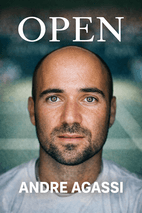
Looking for the best quotes from Open by Andre Agassi? Below are the lines that stand out most across the book.
The quotes are organized by chapter, each with a short note on where it appears and why it stands out.
Top Quotes from Open
“No matter how much I want to stop, I don’t. I keep begging myself to stop, and I keep playing, and this gap, this contradiction between what I want to do and what I actually do, feels like the core of my life.”
Young Andre, age seven, speaks to himself during a tennis practice.
It captures the central conflict of his life—the painful gap between desire and action, and the sense of being trapped.
“I hate tennis, hate it with all my heart, and still I keep playing, keep hitting all morning, and all afternoon, because I have no choice.”
Andre begins his memoir by revealing his hatred for tennis.
This line is stark and honest, immediately establishing the memoir's theme of compulsion versus passion.
“But when the dragon takes dead aim at me and fires a ball 110 miles an hour, the sound it makes is a bloodcurdling roar. I flinch every time.”
Andre describes the modified ball machine his father built, called the dragon.
The vivid, terrifying imagery conveys the intense pressure and fear of his childhood training.
“Thinking, my father believes, is the source of all bad things, because thinking is the opposite of doing.”
Andre's father yells at him for daydreaming on the court.
It reveals the father's anti-intellectual philosophy and the suppression of thought that defined Andre's upbringing.
“Home is where the dragon lives. Home is the place where, when you go there, you have to play tennis.”
The narrator, eight-year-old Andre Agassi, describes his perception of home, referring to his father as "the dragon".
This line powerfully captures the oppressive and inescapable nature of his father's tennis regimen, turning the concept of home into a place of fear and obligation.
“When you know that you just took the other guy's best punch, and you're still standing, and the other guy knows it, you will rip the heart right out of him.”
Andre's father, Mike Agassi, a former boxer, explains his philosophy of psychological warfare in tennis.
It's a raw, memorable metaphor for resilience and mental toughness, reflecting the father's brutal approach to competition that shapes Andre's life.
Quotes by Chapter
Chapter 2
“My father disturbs the peace, my mother keeps it.”
The narrator reflects on his parents' contrasting roles in the household.
This succinct line encapsulates the family dynamic—the father's volatile aggression and the mother's passive, calming presence—and highlights the tension Andre lives with.
“He calls it putting a blister on the other guy's brain.”
Andre's father describes his contrarian strategy of attacking an opponent's strength.
The vivid, almost violent imagery makes this phrase unforgettable, perfectly encapsulating Mike Agassi's aggressive, psychological approach to tennis.
Chapter 3
“How can losing hurt so much? How can anything hurt so much?”
Andre asks himself this after losing badly at age 10 in the nationals.
It captures the raw, overwhelming pain of childhood disappointment and the universal struggle to make sense of intense emotion.
“But then tell yourself, that’s it, time to get back to work.”
Rudy, the man who scouts for Pancho Segura, tells this to young Andre after his loss.
This simple line distills resilience—acknowledging pain but choosing action—and becomes a mantra for turning setbacks into motivation.
“He lifts it over his head and throws it on the cement. The trophy shatters.”
Andre's father destroys the sportsmanship trophy Andre just received.
The shocking violence of the act reveals the crushing pressure Andre faces—only winning matters, and anything less is discarded.
“Tennis is lonely, I tell him. There's nowhere to hide when things go wrong. No dugout, no sideline, no neutral corner. It's just you out there, naked.”
Andre pleads with his father to let him play soccer instead of tennis.
This metaphor vividly conveys the isolation of individual sport, making the emotional vulnerability of an athlete palpable and universal.
Chapter 4
“I wish I were the frozen ant in Mr. Parks's ring.”
Andre after losing a match, feeling self-loathing and anger.
It vividly captures the depth of his despair and dark humor, making the reader feel his pain and the absurdity of wishing to escape into a frozen ant.
“Isn't life just like that? Perry says. Full of Winchell’s locks and other stuff you can’t explain?”
Perry asks why a 24-hour donut shop has locks on the door, prompting a philosophical reflection.
This line encapsulates the wonder of childhood curiosity and the shared realization that life is full of inexplicable contradictions.
“Narcissist means he thinks only about himself. It also means his son is his personal property.”
Perry explains his father’s narcissism to Andre.
It delivers a stark, memorable definition of narcissism, highlighting the possessive and damaging parent-child relationship that resonates with many.
“We make a pact that we'll never do drugs or drink alcohol. And when we're rich, we vow, we'll do what we can to help the world.”
Perry and Andre make promises to each other about their future selves.
This pact shows their idealistic bond and shared desire to reject their fathers' flaws, embodying the hope of youth and the power of friendship.
Chapter 5
“The constant pressure, the cutthroat competition, the total lack of adult supervision—it slowly turns us into animals. A kind of jungle law prevails. It's Karate Kid with rackets, Lord of the Flies with forehands.”
André describes the brutal, unsupervised environment at the Bollettieri Tennis Academy.
This line vividly captures the dehumanizing, anarchic atmosphere with memorable pop-culture analogies, making the reader feel the intensity and danger of the setting.
“Your boy has more talent than anybody I've ever seen come through this academy. That's right. Ever. And I'm going to take him to the top.”
Nick Bollettieri says this to André's father on the phone, deciding André's fate.
This moment seals André's imprisonment at the academy; Nick's hyperbolic claim contrasts with André's inner despair, highlighting the lack of agency and the weight of external expectations.
“Rebellion is the one thing I get to choose every day, and this rebellion comes with the added bonus that it represents a neat little fuck-you to my father, who's always hated earrings on men.”
André explains why he pierces his ears while living at the academy.
It reveals his need for autonomy in a controlled world and his complicated relationship with his father, making rebellion both a coping mechanism and a personal statement.
“To the casual observer I've done something that seems like a desperate effort to stand out. But in fact I've rendered myself, my inner self, my true self, invisible. At least, that was the idea.”
After getting a pink mohawk, André reflects on his motive.
This paradox—standing out to become invisible—speaks to the struggle of identity under pressure, resonating with anyone who has felt the need to hide behind a bold exterior.
Chapter 6
“I vow that, as long as I live, I'll never speak to Nick. This is my code, my religion, my new identity. This is who I am, the boy who won't speak.”
Andre decides to stop speaking to his coach after being humiliated.
This line captures his fierce determination and the formation of a defiant personal identity, resonating with anyone who has ever felt powerless and sought control through silent rebellion.
“You are my fucking problem. You. And if you haven't figured that out, then you're stupider than you look.”
Andre breaks his vow of silence to yell at Nick during a confrontation.
The raw, unfiltered anger here marks a turning point, showing that speaking truth to power—even crudely—can be cathartic and powerful.
“This place is hell, and I want to burn it down!”
Andre continues his outburst, describing his despair at the Bollettieri Academy.
This visceral declaration of misery and rebellion encapsulates the intensity of teenage frustration and the desire to escape an oppressive environment.
“You're fourteen years old, and you never have to go to school again. From now on, every morning will feel like Christmas and the first day of summer vacation, combined.”
Andre reflects on his newfound freedom after Nick grants his wish to quit school.
The bittersweet triumph resonates because it captures the illusion of freedom—a moment of pure joy that readers know may come with hidden costs.
Chapter 7
“I'm fifteen years old, beating grown men, beating them senseless, churning my way through the ranks.”
Andre reflects on his string of victories at the La Quinta tournament.
This line captures the raw, reckless confidence of youth and the thrill of a prodigy surpassing expectations, making it unforgettable.
“We subsist on baked potatoes and lentil soup. Three times a day we bake two potatoes and heat a can of generic lentil soup.”
Describing the extreme poverty Andre and his brother Philly endure while living in a tiny guest cottage.
The stark, repetitive detail of their diet vividly illustrates their sacrifice and makes their later triumph feel earned.
“I think: I hate Philly. I love Philly. I hate potatoes.”
Andre's internal reaction after his brother refuses to buy Oreo ice cream sandwiches at the grocery store.
This simple, visceral line perfectly captures the sibling love-hate dynamic and the humor born of hardship.
“I run outside and dive into Philly's car. He peels out as if we've just held up the First Bank of La Quinta.”
After Andre successfully gets $2,000 from tournament director Charlie Pasarell for their fake expenses.
The youthful excitement and shared rebellion against authority make this moment both hilarious and poignant, showing their bond.
Chapter 9
“As the words leave my mouth I feel a shelf of possibilities fall away.”
Andre decides to cash his first prize check, turning professional at age 16.
This line vividly captures the finality of a pivotal life choice, the loss of unknown futures—a sentiment that resonates with anyone facing a point of no return.
“I've played Becker, Connors, and Lendl, and no one ever hit a return that hard at me. I never even saw the ball.”
John McEnroe says this at a press conference after beating Andre in his first tournament as a pro.
An endorsement from a legend like McEnroe validates Andre's talent and propels him into the national spotlight; it's a moment of triumph amid loss.