Open Key Takeaways

by Andre Agassi
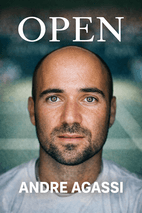
Open by Andre Agassi Book Cover

5 Main Takeaways from Open

Internalized pressure from childhood can become your own worst enemy.

Agassi's father's abusive perfectionism led him to fear failure more than anger, causing self-torture that plagued his career, as seen in his early traumatic loss to Jeff Tarango. This internalized pressure became a constant mental battle, where his own psyche was the primary source of suffering, overshadowing external challenges.

True success requires a trusted support system, not just individual talent.

Agassi's turnaround came from building a team including Gil Reyes for physical training and Brad Gilbert for mental strategy, who provided emotional anchor and practical guidance. His relationships with Perry, J.P., and later Stefanie Graf were crucial for stability, showing that victory is sweeter and more sustainable when shared with loyal confidants.

Authenticity and self-acceptance are more liberating than any public image.

Shedding his hairpiece symbolized Agassi's rejection of the 'Image Is Everything' facade, leading to personal freedom and genuine confidence. His honest vulnerabilities with Brooke and Stefanie deepened connections, proving that revealing insecurities forges stronger bonds than maintaining a perfect facade.

Redemption comes from transforming personal pain into a greater purpose.

Agassi channeled his hatred for tennis into a historic comeback, winning the French Open to complete his career Grand Slam. He later founded a school, turning his negative educational experience into a positive legacy, demonstrating how past struggles can be repurposed for meaningful impact.

Lasting fulfillment is found in personal connections, not professional achievements alone.

Despite reaching world number one and winning majors, Agassi found true happiness in his marriage to Stefanie Graf and his role as a father. His retirement focused on family, highlighting that off-court relationships and simple moments provide deeper meaning than trophies or rankings.

Executive Analysis

The five takeaways form a cohesive narrative of Andre Agassi's journey from a pressured childhood to self-actualization. They illustrate how external expectations internalize into self-criticism, but through authentic relationships and strategic support, one can redefine success, embrace authenticity, and channel past pain into purposeful legacy. This progression underscores the book's central thesis: true openness involves confronting internal contradictions to find peace and meaning beyond external validation.

This memoir transcends sports literature by offering raw insights on resilience, identity, and the human cost of excellence. Readers gain practical lessons on building support systems, balancing personal and professional life, and transforming adversity into purpose, making it a vital read for anyone navigating pressure, career transitions, or seeking deeper fulfillment.

Chapter-by-Chapter Key Takeaways

Chapter 1 (Chapter 1)

  • The narrator’s childhood is a pressured journey between two prisons: the tennis court and the family car, with his father’s volatile temper a constant threat.

  • A controversial, cheating loss to Jeff Tarango becomes a critical trauma, shifting the narrator’s primary fear from his father’s anger to the stain of personal failure.

  • This pivotal moment completes the internalization of his father’s abusive perfectionism. The narrator’s own psyche becomes the primary source of pressure and self-torture, a mechanism he will carry forward.

Try this: Recognize how early traumatic failures can internalize pressure, and consciously separate your self-worth from external outcomes.

Chapter 2 (Chapter 2)

  • High-pressure situations can be paradoxically resolved by a shift in stakes; the narrator’s game soared when the financial pressure was removed.

  • Respect and pride can be more powerful motivators than money, as the match against Jim Brown was fundamentally about defending family honor.

  • The most significant victories are often personal and unspoken. The father’s unwillingness to be defeated by his son marks a pivotal, bittersweet end to their competitive relationship and represents a complex, emotional triumph for the narrator.

Try this: Use respect and personal pride as motivators in high-stakes situations, and find closure in complex relationships by acknowledging unspoken victories.

Chapter 3 (Chapter 3)

  • External pressure can eclipse internal motivation, as seen when Andre’s father destroys the sportsmanship trophy, invalidating any value besides victory.

  • Siblings can form crucial alliances in dysfunctional families; Philly’s protection and advice provide Andre with his first lessons in covert resistance.

  • The line between necessary competitiveness and destructive cruelty is constantly blurred, leaving Andre to question his own instincts and emotions.

  • Small acts of kindness from outsiders, like Rudy’s, offer temporary relief but ultimately highlight the absence of consistent, nurturing support in Andre’s life.

Try this: Build alliances with siblings or close friends in challenging families, and seek small acts of kindness to counterbalance external cruelty.

Chapter 4 (Chapter 4)

  • Andre and Perry’s friendship is founded on a deep understanding of each other’s familial pain and a shared, thoughtful perspective on the world. Perry becomes Andre’s first true confidant and strategic thinker.

  • The relationship highlights class disparity, with Perry’s oblivious wealth contrasting sharply with Andre’s hustled income, yet it never becomes a point of contention between them.

  • Andre’s trip to Australia represents his first significant experience of independence and conscious choice, even when it means breaking a solemn vow.

  • His father’s decision to send him to Bollettieri’s is framed as an act of love and sacrifice, but it feels to Andre like a rejection, complicating his feelings about his father’s control and presence.

  • The chapter ends on a note of profound loss and anxiety, as Andre is sent away from his newfound emotional support system into an unknown, regimented future.

Try this: Cultivate deep friendships based on shared understanding, and embrace independence even when it means breaking from past vows for growth.

Chapter 5 (Chapter 5)

  • The road trip solidifies the brothers’ bond through shared freedom, but also highlights their divergent paths: Andre’s ascending career and Philly’s fading dream.

  • Philly’s emotional breakdown shows the damaging internalization of their father’s “killer” ethos, while his rapid shift to caretaker reveals the enduring influence of their mother’s temperament.

  • Andre’s first ATP ranking is a bittersweet milestone marred by guilt; his instinct to downplay his achievement to protect Philly signifies a growing emotional awareness and the complex weight of family sacrifice.

Try this: Acknowledge the bittersweet nature of success when it highlights divergent paths with loved ones, and protect relationships by downplaying achievements when necessary.

Chapter 6 (Chapter 6)

  • Andre's rebellion was a cry for help and an attempt to assert control in a stifling environment he despised.

  • His value as a tennis prospect gave him hidden leverage, which was only revealed when the academy actively worked to retrieve him after he tried to leave.

  • The confrontation with Nick demonstrated that Nick respected force and directness, the "only language he understands."

  • The negotiation, engineered by Perry, traded a symbol of rebellion (the panda) for concrete changes, setting Andre on the path to turning pro but also permanently ending his formal education.

  • The "victory" was deeply ambivalent; he won his freedom from school and gained professional opportunities, but at the cost of cementing his life in a sport he hated.

Try this: Assert control in stifling environments by leveraging your unique value, but be aware that victories may come at the cost of cementing yourself in unwanted paths.

Chapter 7 (Chapter 7)

  • Poverty as a motivator: Hunger and financial desperation are channeled directly into competitive fury on the court and cunning hustles off it.

  • The strength of partnership: The narrator’s success is inextricably linked to Philly’s support; their shared struggle and unwavering loyalty are their true capital.

  • The birth of an identity: The tournament run transforms him from a struggling kid into a recognized "prodigy," marking a crucial step in his professional emergence.

  • Naïve audacity pays off: Their Vegas-bred instinct to bluff, to act like high rollers even when destitute, opens a door that strict adherence to rules might not have.

  • Joy in simple victories: Their ecstatic celebration over a Sizzler meal and ironed dollar bills underscores the profound value of hard-won, shared triumphs.

Try this: Channel financial desperation into focused determination, and celebrate shared small victories to strengthen partnerships and build identity.

Chapter 9 (Chapter 8)

  • Andre finds a critical friend and mentor in J.P., whose greatest gift is reframing Andre’s inner critic as his father’s voice, not God’s.

  • The “Image Is Everything” commercial slogan backfires spectacularly, becoming a cultural weapon used to define him as hollow and fuel widespread criticism.

  • Professional life is a mix of equipment strife, emotional collapses under pressure, and glimpses of his potential, all while he battles a crippling fear of his own limitations.

  • His core support system—Perry and J.P.—provides essential refuge through honest conversation and humor, shielding him from his public persona.

  • The moment escalates into uncontrollable laughter shared among the three, a physical release so intense it leaves them breathless and crawling on the floor. For the narrator, this eruption of joy is profound—he hasn't laughed this deeply since boyhood. While the laughter borders on hysterical, it serves as a potent emotional balm, washing over him with healing clarity. In that fleeting, late-night interval, the weight lifts, and he reconnects with a forgotten version of himself, "the old Andre," however vaguely remembered.

  • Shared, hysterical laughter can act as a powerful therapeutic release, offering temporary respite from emotional burdens.

  • Moments of pure joy have the capacity to reconnect us with lost or forgotten aspects of our identity, even if only briefly.

  • The chapter closes on a note of poignant self-discovery, highlighting how simple human connections can foster healing and self-recognition.

Try this: Reframe your inner critic as external voices, and use shared laughter as therapeutic release to reconnect with lost aspects of yourself.

Chapter 10 (Chapter 9)

  • The Start of a Lifelong Partnership: The meeting with Gil Reyes marks the beginning of the most important non-familial relationship in Andre's life, one that would redefine his career and personal stability.

  • Training for the Sport, Not Just Training: Gil revolutionizes Andre’s approach to fitness by designing it specifically for tennis’s unique demands—explosive bursts, deceleration, and recovery—rather than generic athleticism.

  • Finding a Family: Beyond physical strength, Gil provides Andre with an emotional anchor and a sense of home, filling a void left by his fraught relationship with his own father and his lonely career.

  • Ownership and Trust: For the first time, Andre feels he is gaining control over his own body and, by extension, his life, placing his complete trust in Gil’s expertise and care.

Try this: Invest in relationships that provide both professional expertise and emotional family-like support, tailored to your specific needs.

Chapter 11 (Chapter 10)

  • Team as Family: Andre consciously curates a team to compensate for his isolated upbringing, seeking not just services but mentorship and human connection.

  • The Birth of a Transformative Bond: Hiring Gil is presented as one of the most surefooted decisions of Andre’s life, initiating a relationship that is part coaching, part friendship, and part father-son dynamic.

  • Actions Over Words: Their partnership is cemented through acts of service—Gil building his gym, Andre getting him an umbrella—and tested through shared adversity like the chaotic road trip.

  • Unconditional Support: Gil’s parking lot speech transcends a job description; it is a vow of lifelong, selfless partnership and belief in Andre’s potential, offering a stability Andre has rarely known.

  • Seeing the Real Person: Gil’s value lies in his ability to see past “Image Is Everything,” to understand Andre’s self-loathing and pressure, and to reframe his narrative from one of fault to one of victimhood and potential.

Try this: Curate a team based on trust and unconditional support, and recognize those who see beyond your public image to your true self.

Chapter 12 (Chapter 11)

  • Agassi's relationship with his public image is a source of immense anxiety, epitomized by the hairpiece crisis that directly contributes to his French Open loss.

  • Passive, defensive strategies are fatal in high-stakes matches; both finals highlight the necessity of aggressive, belief-driven play to win majors.

  • Gil Reyes becomes more than a trainer; he is a philosophical guide who links physical endurance to mental fortitude, teaching Agassi to "dream while awake."

  • The chapter marks a painful transition where Agassi must confront the gap between his talent and the champion's mindset, a lesson delivered brutally by both Gómez and Sampras.

  • These losses, and the physical pain that follows, are framed as necessary, if cruel, steps in his journey toward self-knowledge.

Try this: Confront the gap between talent and mindset by embracing aggressive strategies and learning from brutal losses as steps to self-knowledge.

Chapter 13 (Chapter 12)

  • The Nature of Support: True support is portrayed through Wendi’s compassionate defense and Gil’s unwavering, multi-faceted guardianship, contrasting with the transactional or critical relationships in Andre’s life.

  • Psychological Battles: Andre’s biggest opponent is often his own mind. The chapter graphically illustrates how self-doubt can manifest as a physical craving for defeat, a hurdle more formidable than any rival.

  • The Cost of Victory: Winning a maiden Grand Slam is depicted not as pure joy, but as a cathartic release from immense pain, criticism, and personal history. The triumph is deeply entangled with relief.

  • Unresolved Dynamics: The complex relationship with his father remains unchanged by the victory; praise is still communicated through criticism and silent tears, highlighting the enduring family “curse.”

  • Life Beyond the Court: The Wimbledon Ball sequence underscores how professional success does not automatically translate to personal fulfillment, ending the chapter on a note of relatable human longing.

Try this: Understand that true support involves compassionate defense and unwavering belief, and accept that professional success doesn't automatically resolve personal dynamics.

Chapter 14 (Chapter 13)

  • A slow, long-distance correspondence via fax allowed Andre and Brooke to build a foundation of unusual intimacy and candor before ever meeting.

  • Their first date revealed a profound personal connection beneath their public personas, bonding over shared parental dynamics, career pressures, and philosophical themes from art like Shadowlands.

  • Brooke’s combination of worldly sophistication, candid vulnerability, and playful humor brought out a protective, more confident side of Andre.

  • The encounter ended with a strong mutual attraction and a promise of future contact, leaving Andre thoughtfully unsettled.

Try this: Build intimacy through slow, candid communication before meeting, and bond over shared vulnerabilities and philosophical connections.

Chapter 15 (Chapter 14)

  • Vulnerability as Strength: Andre’s honest confession to Brooke deepens their relationship, proving that revealing insecurities can forge stronger bonds than maintaining a facade of perfection.

  • The Perfectionism Trap: Brad Gilbert diagnoses Andre’s core issue not as a lack of skill, but as a self-destructive pursuit of perfection that destroys confidence and consistency.

  • The “Winning Ugly” Philosophy: Success is redefined as playing the percentages, applying constant pressure (“being like gravity”), and strategically attacking an opponent’s weaknesses rather than solely relying on one’s own brilliant shots.

  • Building a Trusted Team: Andre actively curates a support system of loyal friends like Perry and unconventional experts like Brad, prioritizing trust and specific needs over prestige.

  • The Process of Change: Adopting a completely new mental framework is portrayed as a painful, loss-strewn process that requires faith before the tangible results and breakthroughs finally arrive.

  • Facing Chang's Challenge

  • The match against Michael Chang becomes an instant classic, a brutal back-and-forth battle where both players exhibit an identical, ferocious will to win. From the first serve, Agassi senses it will be decided by the narrowest of margins. However, in the fifth set, he unexpectedly finds a rhythm, breaks Chang early, and closes out the match with a series of dazzling shots that leave Chang struggling. The relative ease of the finish feels almost unjust after such a fight. Afterward, Chang tells a different story to the press, claiming he could have played longer, that Agassi got lucky, and that he has exposed vulnerabilities other players will exploit. This public dismissal adds a layer of external doubt to Agassi’s run.

  • Avenging Past Losses

  • Next, Agassi faces Thomas Muster, a player he has vowed never to lose to again. He makes good on that promise, securing a win fueled by personal history. The victory is so satisfying that he must consciously restrain himself from a taunting gesture at the net. With this win, he advances to the semifinals, setting up a match against Todd Martin.

  • The Weight of Expectations

  • During lunch at P.J. Clarke's with his coach Gil Reyes, Agassi encounters a column by sportswriter Mike Lupica. Lupica declares that the U.S. Open is Agassi's to lose and confidently predicts that Agassi will find a way to lose it, stating he "simply isn't a champion." The words hit with physical force, making Agassi feel the walls closing in. He spirals into doubt about his career, his choices in hiring Brad Gilbert, his relationship with Brooke, and his entire support team. Gil’s steady response—"Control what you can control"—offers a lifeline, pulling Agassi back to the present moment and the meal in front of them.

  • Decoding Martin in the Semis

  • Facing Todd Martin, a towering opponent with a precise serve and a recent win over him at Wimbledon, Agassi initially fears the matchup. Martin’s tendency to hit the extreme outer half of the line and his lack of serving patterns make him a tough puzzle. Yet, Agassi identifies key advantages: the hard court surface favors him, and he recognizes Martin as a fellow "slave to nerves." Most crucially, he detects a tell in Martin’s service routine—the duration of his stare at a spot in the service box reveals the serve’s direction. However, the match proves easier than expected; Martin appears overwhelmed by the occasion, and Agassi wins in four sets, moving decisively to the final.

  • The Championship Clash with Stich

  • In the final, Agassi meets the experienced German, Michael Stich, a versatile athlete with a devastating serve and unpredictable tactics. Agassi starts strong, taking the first set 6-1, but Stich regroups to push the second set to a tiebreak, which Agassi narrowly wins. The third set is a tense battle of wills, with both players elevating their games. Agassi senses Stich’s full commitment this time, forcing him to dig deep. After holding serve throughout the set, Agassi finally breaks Stich at 5-all. Serving for the championship, he hears Brad Gilbert’s voice in his head, instructing him to attack Stich’s forehand. He follows the advice relentlessly, and Stich’s errors seal the victory.

  • Triumph and Team Solidarity

  • Falling to his knees, Agassi is overcome with emotion, tears filling his eyes as he looks to his support box. Seeing the genuine, unrestrained joy on the faces of his coach Brad, his friends, and his girlfriend Brooke validates every difficult choice. He learns that he is the first unseeded man since 1966 to win the U.S. Open—a fact made more poignant by the connection to Brooke’s grandfather, the first to achieve the feat. In this moment, his team—Brooke, Brad, Gil, and his inner circle—feels permanently and irrevocably cemented, a foundation built for future battles.

  • Mental fortitude often defines pivotal matches: External criticism, like Lupica’s column, can trigger profound self-doubt, but anchoring oneself in controllable actions is a critical skill for high-stakes performance.

  • Understanding an opponent extends beyond physical game: Recognizing shared psychological struggles, like Martin’s nerves, or identifying behavioral tells, can provide a decisive strategic edge.

  • Trust in a cohesive team is a powerful asset: Victory is sweeter and more meaningful when shared with a support system whose belief is visibly, authentically reflected in moments of triumph.

  • Persistence through doubt can rewrite narratives: Overcoming a series of mentally and physically taxing matches, including avenging past losses and silencing critics, can transform personal and public perception from "underachiever" to champion.

Try this: Adopt a strategic, percentage-based approach to success rather than pursuing perfection, and anchor yourself in controllable actions during doubt.

Chapter 16 (Chapter 15)

  • Liberation Through Authenticity: Shedding his hair, a long-standing symbol of his crafted public image, is portrayed not as a loss but as a critical step toward personal freedom and genuine self-acceptance.

  • Success as an Emotional Paradox: Professional peaks—winning a major over a rival and achieving the number one ranking—are undercut by complex, often muted emotions, highlighting the difference between external validation and internal fulfillment.

  • The Unchanged Nature of Core Relationships: Mike Agassi’s behavior from a hospital bed confirms that his essence and driving nature are immutable, leading Andre to a moment of poignant forgiveness and understanding.

  • The Personalized Path to Excellence: Gil Reyes’s methods emphasize that supreme conditioning must be tailored to the individual’s physical and psychological needs, blending extreme discipline with compassionate understanding.

Try this: Shed symbolic burdens of image for personal freedom, and recognize that external validation often contrasts with internal emotional complexity.

Chapter 17 (Chapter 16)

  • Achieving a long-held, externally-defined goal (world #1) can lead to emptiness if it doesn't align with a personal, deeper purpose.

  • Andre's true ambition is revealed as completing the career Grand Slam, a quest for versatile, historic greatness over mere numerical supremacy.

  • A devastating loss and public disrespect can forge a powerful, focused motivation, transforming personal animosity into competitive fuel.

  • The chapter highlights a growing disconnect in Andre's marriage, as Brooke's world of "pretending" clashes with his all-consuming, often dark, professional reality.

  • Elite athletic rivalry is portrayed as a deeply personal, almost violent psychological conflict, where grudge matches are settled within the confines of the sport's rules.

  • The victory over Boris Becker is depicted as a physically destructive and emotionally cathartic act of vengeance, won through intense focus and a perfect, career-defining shot.

  • This triumph comes at a catastrophic cost: a debilitating injury that leaves Agassi severely compromised for the U.S. Open final just hours later.

  • His loss to Pete Sampras feels inevitable and hollow, framing Sampras as an insurmountable barrier that renders an entire season's worth of wins meaningless.

  • The chapter highlights a profound isolation in Agassi's life, as even his closest personal relationship cannot bridge the gap in understanding the depth of his professional despair.

Try this: Align your goals with personal purpose over external definitions, and beware how personal animosity can fuel performance but also lead to catastrophic costs.

Chapter 18 (Chapter 17)

  • Andre's loss to Pete Sampras triggers a deep, identity-shaking depression that overshadows all his previous setbacks.

  • The growing rift in his relationship with Brooke is symbolized by the disastrous Friends taping, where their two professional worlds—and their mutual insecurities—clash violently.

  • Andre engages in extreme acts of self-sabotage, from destroying his trophies to shaving his head and subconsciously throwing matches, illustrating a profound desire to punish himself and escape the life he has built.

  • His tenure as world number one feels meaningless and unearned to him, a constant reminder that he cannot defeat his ultimate rival where it matters most.

  • The chapter depicts an athlete at a breaking point, going through the motions of his career while being emotionally and psychologically absent.

Try this: Identify when depression triggers self-sabotage, and recognize that achieving external milestones without internal fulfillment feels meaningless.

Chapter 19 (Chapter 18)

  • The Highs and Lows of Victory: Olympic gold brings profound emotional fulfillment, but it's fleeting, quickly replaced by inner turmoil and professional setbacks.

  • Self-Sabotage and Public Scrutiny: Andre's actions in Indianapolis reveal a pattern of self-destructive behavior, amplified by media criticism and fan reactions, highlighting the pressure of public perception.

  • The Cycle of Decline: Despite moments of triumph, his losses to Chang and Woodforde signal a deepening slump, compounded by mental exhaustion and a loss of purpose.

  • The Need for Reset: The decision to rest and step away from competition underscores that even elite athletes must confront burnout, seeking solace in personal relationships and downtime to heal.

Try this: Acknowledge that even peak achievements are fleeting, and proactively step away to reset when facing burnout and loss of purpose.

Chapter 20 (Chapter 19)

  • A moment of painful clarity reveals that a balanced life philosophy can sometimes be a disguise for a lack of dedication.

  • True change sometimes requires hitting absolute bottom and being presented with a binary, no-middle-ground choice by someone who believes in you.

  • Professional respect for your craft can, and perhaps must, exist independently of whether you love it; the commitment is to the work and to self-respect.

  • A comeback can mean willingly destroying a faded version of yourself to rebuild from the foundation up.

Try this: Embrace binary choices for change after hitting bottom, and commit to work and self-respect independently of love for the craft.

Chapter 21 (Chapter 20)

  • Authenticity crumbles when relationships are sustained by performance, as seen in Andre and Brooke's carefully acted happiness.

  • Personal and professional pressures, like Andre's tennis career and identity struggles, can exacerbate marital distance beyond repair.

  • Losses in love and sport often mirror each other, requiring introspection and self-acceptance to move forward.

  • Symbolic actions, such as donating in an ex-partner's name, can provide meaningful closure and preserve legacy amidst pain.

Try this: End relationships sustained by performance, and seek symbolic actions for closure while accepting that losses in love and sport require introspection.

Chapter 22 (Chapter 21)

  • Agassi’s victory is a triumph of relentless physical pressure and strategic endurance, turning opponents’ strengths into weaknesses through sheer will.

  • The pivotal role of Brad’s coaching is highlighted not in technical advice but in psychological warfare—both in precise goal-setting (the 28-minute sprint) and in a blistering, inspirational locker-room tirade that shocks Agassi out of his panic.

  • Agassi confronts a literal embodiment of his own past advice in Andrei Medvedev, making the final a battle against his own mirrored potential for redemption and failure.

  • The win represents the culmination of a grueling personal and professional comeback, allowing him to complete the career Grand Slam and achieve a long-sought redemption at Roland Garros.

  • The victory provides an overwhelming, almost frightening catharsis, reframing Agassi's entire tumultuous past as a necessary path to this moment.

  • Gratitude emerges as the dominant, transformative emotion, leading to a new personal ritual (blowing kisses) that signifies a shift in his relationship with the game and its spectators.

  • A conversation with Brad Gilbert highlights a crucial thematic shift: the French Open win is not the end of a struggle, but a new beginning, offering closure on the past while opening a door to an uncharted future.

Try this: Use relentless pressure and strategic endurance to turn opponents' strengths into weaknesses, and view monumental wins as new beginnings rather than endpoints.

Chapter 23 (Chapter 22)

  • Brad Gilbert’s "destiny" prophecy acts as a catalyst, allowing Andre to envision a future with Steffi Graf and fueling his determined pursuit.

  • Andre’s focus becomes divided between his tennis career and his personal life, with his obsession over Steffi impacting his performance at Wimbledon.

  • The chapter contrasts Andre’s past (the complicated, lingering presence of Brooke) with his potential future (the challenging but promising pursuit of Steffi).

  • Authenticity breaks the ice. Their guarded, formal date is less successful than the raw, playful moment on the beach where Andre admits hating tennis and they engage in a pure, athletic competition.

  • A recurring theme is the effort required to connect. From crafting the card to salvaging her phone number, Andre must work persistently to bridge the gap between them.

Try this: Let authentic, playful moments break the ice in relationships, and persistently work to connect beyond formal interactions.

Chapter 24 (Chapter 23)

  • Andre and Stefanie's relationship is built on a profound, immediate understanding that transcends tennis, symbolized by their shared love for the film Shadowlands.

  • Andre's victory at the 1999 U.S. Open, particularly his comeback against Todd Martin, represents the complete integration of his mental and physical game, marking him as a truly mature and resilient champion.

  • Achieving the year-end No. 1 ranking and winning multiple majors solidifies his historic comeback, a journey he now undertakes for himself and for the new life he is building with Stefanie.

  • The chapter illustrates a seamless merging of personal fulfillment and professional excellence, where love and support become new sources of strength and motivation.

Try this: Integrate personal fulfillment with professional excellence, allowing love and support to become new sources of motivation.

Chapter 25 (Chapter 24)

  • Redemption Through Education: Andre's school project represents a full-circle moment, transforming his personal history with education into a force for positive change, underscored by tangible commitments to funding, time, and community involvement.

  • The Evolution of Rivalry: The loss to Sampras, while decisive, is met with a sense of peace, signaling Andre's maturation beyond the tennis court and his shifting priorities toward family and legacy.

  • Personal Fulfillment in Simplicity: His wedding to Stefanie Graf, characterized by its modesty and personal touches, highlights the profound joy he finds in private, grounded moments, contrasting with the public intensity of his career.

  • Interconnected Passions: Andre's drive on the tennis court is directly fueled by his off-court projects and relationships, showing how his personal and professional lives are deeply intertwined in this chapter of his life.

Try this: Transform personal history into positive change through redemption projects, and find joy in simple, private moments over public intensity.

Chapter 26 (Chapter 25)

  • Personal life can redefine professional purpose: The birth of his son provided Agassi with a deeper, more meaningful identity that liberated him from the crushing weight of his tennis results.

  • Even successful partnerships have a lifespan: The respectful, forward-looking end of his collaboration with Brad Gilbert was a mature acknowledgment that evolution is necessary for growth.

  • Innovation requires adaptation: A technical change (the new strings) brought immediate success but also unforeseen consequences, demonstrating that progress is an iterative process of problem-solving.

  • Legacy is forged in enduring rivalries: The final against Sampras served as a capstone to a career-long duel, highlighting how their contrasting personas pushed each other to historic heights. The loss, while painful, carried the dignity of a full effort against a defining opponent.

Try this: Let personal milestones like parenthood redefine professional purpose, and gracefully end partnerships when evolution requires growth.

Chapter 27 (Chapter 26)

  • Andre’s motivation in his later career evolves from a personal quest for validation to a desire to build a legacy and set an example for his children.

  • Achieving the historic feat of becoming the oldest year-end world number one is a testament to relentless reinvention and physical dedication, yet is immediately followed by the undeniable onset of athletic decline.

  • The retirement of peers like Sampras forces a confrontation with his own mortality in the sport, intensifying his focus on family as his central foundation.

  • A shocking early loss at the French Open and his trainer’s candid advice mark a clear turning point, openly initiating the conversation about retirement.

  • The chapter’s powerful endpoint at Stefanie’s Hall of Fame ceremony symbolizes a transfer of focus—from his own trophies to the celebration of his family’s enduring achievements and relationships.

Try this: Shift motivation from personal validation to legacy-building for future generations, and acknowledge decline openly to plan for retirement.

Chapter 28 (Chapter 27)

  • The Price of Victory: Even monumental wins can leave an athlete physically shattered, turning celebration into immediate medical and logistical triage.

  • The Psychology of Aging: An athlete’s self-perception evolves; Andre battles not just his opponent but his own acknowledged physical limitations and revised priorities as a father.

  • The Thin Margins of Sport: A single freak shot can irrevocably change the momentum and outcome of a high-stakes contest, highlighting the fragile line between triumph and defeat.

  • Acknowledging a New Era: True greatness involves recognizing and respecting a superior talent, even in the moment of one’s own defeat. Federer is presented not just as a winner, but as a complete, weakness-free force that redefines the game.

Try this: Accept that aging involves battling revised priorities and physical limits, and respect superior talents as they redefine the sport.

Chapter 29 (Chapter 28)

  • True self-acceptance involves acknowledging and making peace with the internal polar opposites that define the human experience, rather than ignoring them.

  • Profound joy and meaning can be found in simple, everyday moments shared with loved ones, where past passions are transformed into present play.

  • A life’s work, like a memoir, is rarely a solo achievement; it is built on collaboration, the generosity of others, and the steadfast support of family.

  • Legacy is ultimately for the next generation, offered with the hope of providing guidance, comfort, and a deeper connection.

Try this: Make peace with internal contradictions for self-acceptance, and find meaning in everyday moments with loved ones while collaborating on legacy.

Continue Exploring