One Helluva Ride Quotes
by Michael Douglas
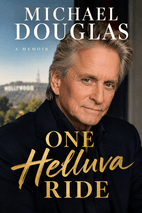
This page gathers lines from Michael Douglas's memoir that stick with you after you close the book. You will find thoughts on family, fame, ambition, friendship, filmmaking, and the strange pressure of growing up in a famous household. Some are funny, some are blunt, and some land like a quiet confession.
What makes the book quotable is Douglas's mix of honesty and hard earned perspective. He writes about his father with love and frustration, about Hollywood with clear eyes, and about his own choices without polishing every rough edge. The result is direct, human, and easy to remember.
Top Quotes from One Helluva Ride
“I should have been born Mikhail Danielovitch, grandson of a ragman. Instead, I was born Michael Kirk Douglas, son of Spartacus.”
The narrator contrasts the name and legacy he might have inherited with the Hollywood identity he was given.
It condenses immigrant history, poverty, and movie mythology into one unforgettable line.
“Anne described being married to Kirk Douglas as sitting in a beautiful garden, right next to a volcano.”
Michael recounts how Anne Buydens described her marriage to Kirk Douglas.
It captures the strange mixture of beauty and danger in Kirk’s personality. The metaphor is vivid and instantly memorable.
“It was as if I'd been holding my breath for most of my life, and I finally exhaled.”
Michael describes the emotional release he felt when his parents finally divorced.
It makes the relief of the divorce almost physical. The held-breath image conveys a lifetime of tension finally ending.
“If you can count your friends on one hand, you're a lucky guy.”
His stepfather Bill offers him a lesson about friendship.
It distills the value of a few genuine friends over wide but shallow approval.
“For one moment in time, my father wasn't Spartacus. He was Michael Douglas's dad.”
After a fan asks Kirk Douglas for an autograph on behalf of a daughter who is a fan of Michael's.
It captures the rare, poignant moment when the son steps out of his famous father's shadow.
“One of the hardest moments of my life was firing my own dad from his dream role.”
Michael Douglas describes having to tell his father, Kirk Douglas, that he could not play McMurphy.
It distills the painful personal cost hidden inside a professional triumph. The line is brutally direct and unforgettable.
“People don’t want to spend their Friday night going to see a message. If we wanted to get our point across, we first had to entertain.”
Douglas explains his philosophy of making issue-driven films while developing The China Syndrome.
It is a blunt, quotable rule about storytelling and audience attention. It argues that entertainment must come before persuasion.
Themes Behind the Quotes
These pages keep returning to family and inheritance. Douglas looks at a famous, difficult father with affection and anger, then traces how that legacy shaped his own hunger, insecurities, and need to prove himself. Mentors and friendships offer another kind of family, especially when biological ties are messy.
Work is the other big current. Acting and producing demand luck, nerve, and compromise, while success never guarantees peace. The quotes also touch on rebellion, self-expression, reinvention, and the tension between making art and making a living. Running underneath is a simple question: how do you become your own person when the shadow you grew up in is so large?
Quotes by Chapter
1 CHILDHOOD
“Kirk Douglas was my father, a flawed man with a ferocious temper and a burning ambition.”
The narrator lists Kirk Douglas's heroic film roles before revealing the man behind them.
It captures the paradox of a Hollywood icon who was both larger than life and painfully human.
“The secret to his survival was to never let anyone see those scars, but they forever pushed at the surface, the poverty infusing him with a relentless hunger for success, and the domestic violence he suffered metastasizing into a force that would always be inside him, sometimes leading to ugly scenes in our house.”
The narrator reflects on how Kirk's poverty and abusive father shaped his drive and his family life.
It shows how hidden trauma can fuel success while also causing lasting family pain.
“It should have been one of the first clues that my father's work- life balance was out of whack. The jobs would always take precedence over family life.”
The narrator recalls the moment his father visited the hospital after his birth.
It reveals how casually work could overshadow family, even at the moment of a birth.
PROLOGUE
“That was the trade I made—sacrificing my self-expression to keep the peace.”
Michael explains the strategy he adopted to avoid provoking his father’s temper.
It names the cost of living with volatility: self-suppression in exchange for safety. The line is painfully honest and resonant.
“Every kid wants to survive their childhood, but not every kid is wired the same.”
Michael reflects on why he and his brother Joel responded differently to their father’s abuse.
It offers a universal truth about survival and trauma. It refuses to blame children for coping differently.
2 COLLEGE
“All I knew for sure was that I wanted to break out of being the son of a movie star, sheltered and entitled. I wanted adventure, and I doubted I could find it in these pages.”
A teenage Michael sits in Choate’s college adviser office, unsure of his future.
It captures the central search for identity and adventure beneath the privileges of celebrity.
“It was the dawn of the free love era of the sixties, and I was becoming a full-on hippie. I grew my hair out, started wearing tie-dye shirts, embraced the free speech movement, and smoked dope. I spent most of my time studying Indian art, making pottery, and meditating. I forgot about school entirely. I flunked out after one year.”
Michael describes his transformation during his first year at UC Santa Barbara.
It condenses the seismic cultural shift of the 1960s into one personal, self-deprecating memory.
“I could feel guilty about my part in distributing drugs, but it was the late sixties to early seventies. No one needed my help finding their way to drugs. And that was how I paid for my last two years of college and graduated with no student loans and no debt.”
He confesses to his father how he paid for his last two years of college by smuggling marijuana.
It is a wildly candid, transgressive admission that complicates his college memoir with moral ambiguity and humor.
“Coming from divorced parents and still not quite knowing who I was, the commune was a place where I found familial warmth and a sense of comfort and contentment. We were trying to straighten out the world’s problems while high on dope.”
He reflects on living at Mountain Drive, a bohemian commune above Santa Barbara.
It shows how he found belonging after his parents’ divorce, while also gently mocking the commune’s idealism.
3 MY PLACE IN THE WORLD
“Acting is a tough profession. For every Kirk Douglas, there are ten thousand people who never make it.”
He reflects on his family's apprehension about his acting ambitions.
It captures the brutal odds of the profession and the chasm between stardom and obscurity.
“We had no idea how it would pan out for us, but we didn’t need to know just yet. Just trying was the fun of it.”
He describes his early New York days sharing an apartment with Danny DeVito.
It celebrates the freedom of pursuing a dream before you know the outcome, when the attempt itself is enough.
“This taught me a valuable lesson: The film is the real star. You can deliver the performance of a lifetime, but it will be lost if the movie itself doesn’t deliver.”
After his film debut Hail, Hero! flopped, he draws a lesson about choosing projects.
It reminds readers that even a great performance cannot rescue a weak whole, in film or any collaborative work.
4 THE STREETS OF SAN FRANCISCO
“Karl and I were hurt by the negative commentary and did interviews with Army Archerd at Variety and other journalists, explaining that the city itself was the third star of the show.”
Douglas recalls how he and Karl Malden defended The Streets of San Francisco against local criticism.
It crystallizes how the show treated San Francisco as an essential character, not just a backdrop.
“But by far the most rewarding part of The Streets of San Francisco was the relationship I built with Karl Malden. We loved each other.”
Douglas reflects on the lasting personal value of the series.
It distills a professional partnership into genuine love, making the chapter's mentor theme personal.
“My real father—that was complicated. In Karl, I had a true parental mentor offering me guidance and encouragement.”
Douglas contrasts his relationship with Kirk Douglas with the mentorship he found in Karl Malden.
It is a frank, moving admission about fatherhood and chosen family.
5 ONE FLEW OVER THE CUCKOO’S NEST
“I knew that a movie should pierce the viewer's heart like an arrow, and I was confident that One Flew Over the Cuckoo's Nest would touch audiences around the world.”
Michael Douglas reflects on the instinct that guided his leap from acting to producing.
It captures the emotional conviction behind good filmmaking and the belief that a story can connect globally. It also explains why he took such a huge career risk.
“I had embarked on this project for two reasons: because it was a great book and because I wanted my father to have his dream. Now I had the movie, but I had broken my father's heart.”
Michael Douglas explains the guilt he felt after securing the film but losing his father's dream role.
It captures the bittersweet tradeoff between artistic achievement and family loyalty. Readers feel the weight of getting what he wanted at someone else's expense.
“For you, this is a book. This is literature. Me? I lived it. The Communist party was my Nurse Ratched, telling me what to do, what to say, what not to say, what to think, what not to think, when to go to bed, when to get up. I know what this is about much better than you do.”
Milos Forman responds to friends who doubted that a Czechoslovakian immigrant could direct an American film.
It turns a literary story into personal testimony about oppression and authority. The speech gives the film's central conflict a lived, moral authority.
6 THE CHINA SYNDROME
“N the spring of 1976, I was thirty-one, an Oscar winner, a multimillionaire, and unemployed.”
Michael Douglas opens the chapter by describing his career status after winning an Oscar for producing One Flew Over the Cuckoo's Nest.
The line captures the paradoxical insecurity of Hollywood success. It is a memorable hook about being celebrated and still unwanted.
“No one thought the story was commercial. It was “too talky and too technical.” Ironically, The China Syndrome was radioactive.”
After twelve financiers rejected his package for The China Syndrome, Douglas reflects on the industry response.
It neatly captures Hollywood's ironic rejection of a film that later became prophetic. The wordplay on "radioactive" is memorable.
“It read like a great monster story, except the monster was a nuclear reactor.”
Douglas describes his first reaction to Mike Gray's screenplay for The China Syndrome.
It distills the film's appeal into a single vivid image. It is both a thriller pitch and a warning.
7 ROMANCING THE STONE
“Stars are made from successful movies, but I had never been in one as a leading man.”
Douglas reflects on his stalled acting career despite producing back-to-back hits.
It captures the gap between professional success and personal validation, a struggle many readers recognize.
“During the days of Indiana Jones and Rambo, Diane had dared to turn the adventure genre on its head by writing a female hero in a film category dominated by male leads in an industry dominated by male screenwriters.”
Douglas praises Diane Thomas’s script for centering a female action hero in a male-dominated genre.
It honors a script that broke gender conventions and helped redefine what an adventure movie could be.