On Fire Quotes
by John O'Leary
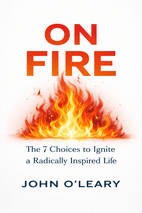
On Fire is a memoir of survival and transformation, filled with raw honesty and hard won wisdom. John O'Leary shares the moments that shaped him, from a childhood tragedy to a life of purpose. The quotes you will find here are not polished sayings but truths forged in fire.
What makes this book so quotable is its willingness to confront the hardest questions. O'Leary doesn't offer easy answers; instead he invites you to examine your own life through his lens. The lines are sharp, direct, and often surprising. They stick with you because they come from real struggle and real hope.
Top Quotes from On Fire
“John, do you want to die? It’s your choice, not mine.”
The author's mother asks him this question in the emergency room after his severe burns.
This question forces the author to confront his own agency and responsibility for his survival, shifting from passive hope to active ownership.
“Stop making excuses. This is your life. Do you want to die? No? Good. Then act like it.”
The author challenges the reader after emphasizing personal responsibility.
It is a blunt, rallying call that cuts through passivity and demands immediate, decisive action to truly live.
“When you know your why, you can endure any how.”
Author reflects on Viktor Frankl's philosophy of purpose.
This concise phrase encapsulates the central theme of perseverance through understanding one's purpose.
“Gratitude unlocks the fullness of life. It turns what we have into enough, and more. It turns denial into acceptance, chaos to order, confusion to clarity. It can turn a meal into a feast, a house into a home, a stranger into a friend. Gratitude makes sense of our past, brings peace for today, and creates a vision for tomorrow.”
A quote by Melody Beattie that the author kept taped above his visor in his truck.
This poetic and complete definition of gratitude's transformative power serves as a memorable mantra. It encapsulates the chapter's lesson in a beautiful, quotable form.
“Comfort is popular, but courage changes lives.”
Opening line of the chapter.
This succinctly captures the central theme of choosing courage over comfort, resonating with anyone facing a difficult decision.
“Fear and love are the two great motivators. While fear suffocates, love liberates.”
Opening line of the chapter, setting up the central theme.
It succinctly contrasts two primal forces, immediately capturing the reader's attention and framing the chapter's exploration of fear versus love.
“Don’t confuse being out of bed with being fully awake.”
The author opens the conclusion chapter with this statement.
It serves as the central metaphor for the entire chapter—challenging readers to move beyond mere physical presence to genuine awareness and engagement with life.
Themes Behind the Quotes
A central theme is the idea of personal accountability and the power of choice. Many of these quotes challenge the reader to stop making excuses and take ownership of their life. They emphasize that while we cannot control what happens to us, we can control our response and our attitude.
Another strong theme is the transformative power of gratitude and love. The book contrasts fear, which paralyzes, with love and courage that liberate. It also highlights the importance of having a clear purpose or why, and the need to stay fully awake and engaged in life rather than sleepwalking. Ultimately, these quotes remind us that ordinary people can create extraordinary change through simple, consistent action.
Quotes by Chapter
1: Do You Want to Die?
“O believe that prayer is not so much intended to change God, but to inform and inspire the next steps of the individuals offering the prayer.”
The author reflects on the role of prayer during his recovery.
It redefines prayer as a catalyst for personal action rather than a plea for divine intervention, empowering the believer to take ownership.
“Accountability not only keeps you from accidentally slipping backwards in life, it frees you to intentionally navigate the path forward.”
The author explains the value of accountability after sharing the Staubach story.
This line transforms accountability from a burden into a liberating force that enables deliberate progress and self-determination.
2: What Are You Hiding?
“But all too often we aren't trying to enhance what we see in the reflection; we are carefully constructing a mask to cover up what we don’t think will be embraced by the world at large.”
The author reflects on the daily ritual of applying makeup and grooming, distinguishing between enhancement and masking.
This line captures the universal human tendency to hide our true selves out of fear of rejection, making it a powerful indictment of inauthenticity.
“The only comparison that matters is the comparison with who you are, who you were, and who you could become.”
The author concludes a discussion about peer pressure and the futility of comparing oneself to others.
It offers a transformative reframing of self-worth, shifting focus from external validation to personal growth and potential.
“But by denying what happened to me, I denied the world the chance to hear about the miracle of my survival, the wonder of my life, and the magnificent potential of theirs.”
The author reflects on decades of hiding his burn scars and pretending the fire never happened.
This reveals the profound cost of hiding one's story—not just personal isolation, but the missed opportunity to inspire and connect with others.
“Frequently our apparent mistakes give birth to our biggest blessings.”
The author describes how his accidental enrollment in a hospital chaplaincy program led to unexpected growth and discovery.
It is a concise, hopeful insight that resonates with anyone who has experienced unexpected positive outcomes from perceived failures or wrong turns.
3: Are You All In?
“It's going to be okay, John. It's going to be okay. Have faith and fight.”
Amy, the author's eleven-year-old sister, says this while holding him after he was severely burned.
Her words of comfort and encouragement in a moment of utter despair demonstrate the power of steadfast love and faith.
“But, Daddy, I never let go. I never let him go.”
Amy recounts to her father how she held onto John despite the pain.
This line highlights the selfless determination to hold on to someone in their darkest moment.
“When you are inspired by some great purpose, some extraordinary project, all your thoughts break their bonds. Your mind transcends limitations, your consciousness expands in every direction, and you find yourself in a new, great, and wonderful world.”
Author quotes the ancient philosopher Patanjali to illustrate the transformative power of a great purpose.
This poetic passage inspires readers to seek a purpose that unleashes their full potential.
4: Why Are You in Jail?
“Changing the way you ask this one simple question transforms the answers you get, what you do with them, and ultimately how you live.”
The author explains the difference between victims and victors in how they ask 'Why me?'
This line distills the core message of the chapter: perspective shapes our entire experience. It's a memorable call to consciously reframe challenges.
“Well, John, I don’t know how I could be negative when I've got so much to be grateful for.”
The author's father, who has Parkinson's disease, says this while sitting in a wheelchair struggling to speak.
This simple, sincere statement from a man in severe difficulty powerfully illustrates gratitude as a choice. It challenges readers to find thankfulness even in suffering.
“I’m grateful for being healed, even if not cured. Parkinson's disease may end up killing me, but I get to wake up each day knowing that God has already healed me of it.”
The author's father continues listing things he is grateful for because of Parkinson's.
This line redefines healing as spiritual and emotional wholeness, separate from physical cure. It offers a profound and counterintuitive perspective on chronic illness.
5: Can You Say Yes?
“Boy, you are going to walk again. You might as well get used to it. Come on, I'll walk with you.”
Nurse Roy repeatedly tells this to the author while forcing him to try walking despite his resistance.
It demonstrates the power of tough love and someone believing in you before you believe in yourself.
“Yet the pain of today unveils the possibility of tomorrow.”
The author reflects on his painful physical therapy sessions in the broom closet.
This line offers a profound perspective that current hardship is necessary for future growth and hope.
“It's time to dare again. It might be painful. But it will totally be worth it.”
The author urges readers to reclaim a childlike sense of possibility and take risks.
It inspires bold action by acknowledging the cost while promising a rewarding outcome.
6: What More Can You Do?
“One life can, and always does, change the world.”
Opening line of the chapter.
This succinct statement captures the chapter's central theme that individual actions have profound ripple effects, inspiring readers to recognize their own potential impact.
“Jack Buck changed my life. He entered into it just a few days after I was burned.”
The author reflects on Jack Buck's visit after his injury.
It highlights how a single person's intervention can alter the course of someone's life, emphasizing the power of showing up for others.
“Simple action and ordinary people change the world. It starts with one. It starts with you.”
After tracing the chain of people that led to Jack Buck's visit.
This direct call to action empowers readers to believe that even small, everyday deeds can create large-scale change.
“You don’t need to be an Olympian to start. You just need to serve where you're able. You just need to live a yes life.”
End of the section about Glenn Cunningham's legacy of fostering children.
It democratizes impact, showing that significance is available to anyone willing to serve, and encourages a mindset of openness and generosity.
7: Are You Ready?
“Those words brought me from a place with no chance to one where I could take the next breath and fight forward.”
John reflects on the impact of his father's loving words in the emergency room.
This line powerfully illustrates how love can transform despair into hope and action, making it deeply resonant for anyone who has felt hopeless.
“Three simple words that changed my world. And they can change yours.”
John reflects on his father saying 'I love you' in the hospital.
It emphasizes the profound yet simple power of affirming love, encouraging readers to recognize the impact their own words can have.
“Fall in love, stay in love, and it will decide everything. Fall into fear, stay in fear, and it will decide everything.”
After adapting Pedro Arrupe's quote by substituting 'love' with 'fear'.
The parallel structure forces readers to confront the decisive role their dominant emotion plays in shaping their entire life.
Conclusion: Awakening
“You need to wake up. Your family needs you to lead them. It’s time to wake up now. No more living idly. No more excuses. No more sleepwalking. It’s time to wake up!”
Sister Gertrude, a 105-year-old nun, speaks these words to the author during a hospital visit.
This direct, urgent call to action crystallizes the book's core message and resonates deeply because it comes from someone who embodies vitality despite physical limitations.