Of Karma and Corridors Themes
by Sloane St. James
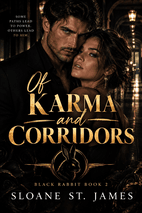
Underneath the plot, the novel is really wrestling with how watching and control get mistaken for care, how trauma changes the body, and how secrecy, shame, and vigilante ideas of karma complicate healing. It also asks whether routine keeps Anna safe or keeps her from living, and what home and chosen family can mean after instability.
Here you'll find each major theme tied to concrete moments: surveillance and hidden access, Anna's scar and therapy, routines versus risk, withheld truths and Starlight, the karma vigilante thread, and chosen family. The symbols section covers the moth tattoo, the MINE scar, hidden corridors and mirrors, and KARMA as a carved mark.
Major Themes in Of Karma and Corridors
Watching, Control, and Consent
The book repeatedly links hidden access and surveillance to control, even when characters rationalize it as protection. It also contrasts this with consensual watching and performance, where safewords and check-ins matter. The tension between being watched without consent and choosing to be seen drives much of Anna and Casper's relationship.
- Casper secretly places an AirTag in Anna's car and later reveals he has been monitoring her car and camera feeds.
- The narrator finds a hidden corridor behind her mirror and a fresh pie receipt matching her rooftop date with Casper.
- At the club, Casper reminds Anna she can change her mind and that the safeword is stop before their public scene.
Trauma, Healing, and Reclaiming the Body
Anna's recovery is shown through her scar, therapy, sobriety, and slow return to trust and desire. The tattoo cover-up and intimate scenes emphasize consent, safety, and being accepted in imperfect form. Healing is not treated as erasing the past but as making room for something beautiful alongside it.
- Casper designs a moth cover-up over the MINE scar; Anna calls it perfect and cries as memories and grief surface during the tattoo.
- Anna tells Joan that Casper listened, held her, and said he loved that version of her after she told him about her scars.
- After the club scene, Anna says the experience was cathartic and made her feel more fully in her own life.
Routine as Safety versus Risk and Courage
Anna's routines are a survival strategy after chaos nearly destroyed her, while Casper pushes her toward risk and new experiences. The story tracks her movement from rigid predictability toward chosen chances, without dismissing why the routines existed. Courage is framed as feeling fear and acting anyway.
- Anna declines Rhys's game because routines feel like a security blanket after a life where chaos nearly destroyed her.
- Casper challenges Anna to move her Monday meal-prep to Sunday, and she agrees.
- At the airfield Anna panics and refuses to skydive, then chooses to jump and feels euphoric, resolving to take more chances.
Secrecy, Shame, and Confession
Both Anna and Casper withhold truths that shape their relationship: Anna hides her work at Starlight and Steve's blackmail, while Casper hides surveillance and vigilante violence. The notes show secrecy creating distance, anxiety, and betrayal, but confession and radical honesty eventually make reconciliation possible.
- Anna texts Casper that she is working late while she is dancing at Starlight, thinking she cannot let him discover how low she once sank.
- Casper texts Anna that he is doing laundry while standing over Robert's burned body.
- Casper confesses that he read Anna's texts, watched Steve's video, tracked her car, broke into her apartment, hid under her bed, and watched her.
Karma, Retribution, and Moral Ambiguity
The novel develops a vigilante-justice thread in which abusers are tracked, interrogated, and punished under the sign of karma. The violence is brutal, but characters often frame it as protection or deserved consequence for what was done to Anna. The notes keep the morality unsettled by showing both the horror of the torture and the relief or approval it produces.
- Ek carves 'KARMA' into Steve's chest and shins and says, 'I'm Karma.'
- Casper tells Rhys that Steve, Robert, and Peter are dead, and Rhys agrees to give him an alibi.
- Casper says pedophiles do not get redemption arcs and tortures Robert because of Anna's abuse.
Home, Belonging, and Chosen Family
Home is treated as both physical shelter and emotional safety, especially for characters with histories of foster care, hiding, or instability. Anna and Casper build belonging through small objects, shared meals, family introductions, and friends who help renovate a house. The story ties love to making a place where someone can finally stay.
- Casper tells Anna about hiding in closets as a child and living in his car; Anna realizes the blanket fort is his safe space.
- Anna gives Casper a doormat that says 'Home,' and friends help renovate his house before a housewarming dinner.
- At Thanksgiving, Casper feels he has a place at the table, and later Anna asks him to move in together.
Symbols and Motifs
The moth tattoo
Metamorphosis, healing, and surviving darkness while moving toward light; it covers Anna's scar with something she can see as beautiful.
- Casper sketches a large moth design for the cover-up and explains that moths are creatures of metamorphosis that know darkness but fly toward the light.
- Anna describes seeing the moth tattoo before her scars and later thinks, 'Like a caterpillar into a moth.'
- The moth covers the MINE scar on Anna's back.
The MINE scar
A mark of abuse, possession, and hidden trauma that Anna conceals and later reclaims through the cover-up.
- Anna reveals the word MINE carved into her back and asks Casper to design a cover-up.
- Anna asks Casper not to tell Logan about her back, and Casper agrees.
- Ek accuses Steve of carving 'MINE' into Anna's back.
Hidden corridors, panels, and mirrors
Secret access and violated privacy, but also the hidden double lives characters lead; the hidden spaces make watching and concealment physically possible.
- GA finds a hidden wall panel and installs a hinged secret entrance and two-way mirror to spy on Anna.
- Casper watches Anna through a hidden panel and accidentally drops his phone; Anna jokes that her 'ghost' is a Victorian pervert.
- The narrator pries open a loose panel behind her mirror and discovers a hidden corridor with an empty chair and a pie receipt.
KARMA
Retributive justice and vigilante punishment; the word turns abstract consequence into a physical mark carved into an abuser.
- Ek carves 'KARMA' into Steve's chest and shins and says, 'I'm Karma.'
- The narrator carves KARMA into Steve's forehead and tells him it is his turn to lie there after what he did to Anna.