No One Planned This Quotes
by Darren Cross
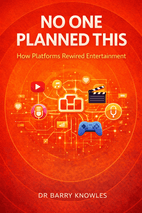
The lines collected here are sharp and direct. They capture the real mechanics behind the creator economy. Darren Cross has a way of naming things we feel but cannot put into words. That is what makes the book so quotable. Each observation lands like a truth you already knew but never said aloud. These are not just insights. They are warnings, reflections, and sometimes bitter wisdom.
Readers will find quotes about attention, algorithms, and the cost of chasing growth. Others take aim at the promises of independence and the reality of dependence. The book's power lies in its clarity. It cuts through the marketing and shows how systems shape creators, audiences, and culture. These lines are memorable because they are honest. They deserve to be shared.
Top Quotes from No One Planned This
“Behavior moves first, quietly, and everything else scrambles to catch up.”
Opening of the chapter describing the initial stage of media shifts.
It captures the invisible, gradual nature of change that precedes major disruptions, resonating with anyone who has observed slow cultural or technological shifts.
“Attention became the currency of the media economy. Everyone learned to chase it. Few stopped to ask what it cost.”
Reflecting on the transformation of attention into a commodity.
These three sentences concisely diagnose the core problem of the modern media landscape — relentless pursuit with little reflection on the personal and societal toll.
“When authenticity becomes strategy, it stops being authentic.”
The author reflects on how audiences can detect manufactured attempts to appear genuine.
This paradox is a timeless warning for anyone trying to engineer connection, and it resonates beyond social media into all forms of communication.
“You no longer needed permission to publish. But you still needed permission to be seen.”
The author reflects on the paradox of platform dependence in the creator economy.
It succinctly articulates the new form of gatekeeping that replaced old media: algorithmic visibility.
“TikTok didn't need to make creators sustainable. It just needed them to believe sustainability was possible.”
The author critiques the TikTok Creator Fund as a hollow promise.
It captures the manipulative dynamic where platforms dangle hope to keep creators producing, while the actual economics remain unsustainable.
“You didn’t own your channel. You leased it. And the lease could be revoked without explanation.”
Discussing the clickwrap contracts and terms of service that give platforms total control over creators' work.
This quote starkly exposes the precarious legal reality behind the myth of creator ownership, making clear the power imbalance.
“The creator economy was sold as independence. The reality is dependence—and it's more fragile than anyone wanted to admit.”
The author summarizing the gap between the promise and the actual state of the creator economy.
It starkly contrasts the original selling point with the harsh truth, making readers confront the systemic fragility that creators face.
Themes Behind the Quotes
A central theme is the gap between the promise of creative freedom and the reality of platform dependence. Many quotes highlight how creators trade ownership for reach. They become tenants on platforms that control their visibility and income. This dependence is fragile and can be broken by an algorithm change. Another theme is the nature of attention as a scarce currency that everyone chases. The cost of that chase is often authenticity and wellbeing.
The book also explores how systems reward specific behaviors, not brilliance or originality. This leads to pressure to optimize for algorithms. Authenticity becomes a performance. Finally, there is a theme of inevitability. The transformation of media was not centrally planned but followed predictable patterns. Creators adapt to survive, but the system is designed for platforms, not people. These themes together paint a stark picture of an economy that serves power and attention above all.
Quotes by Chapter
Prologue: Signal Over Noise
“The value was never in possession; it was in the experience.”
The author reflects on how people's desire to own DVDs was actually about the experience, not the physical object.
This line crystallizes a fundamental shift in consumer behavior from ownership to access, a theme that resonates across the entire creator economy and streaming revolution.
“When you remove distribution constraints and make discovery effortless, micro- audiences become economically viable.”
The author explains how Netflix's model proves that niche tastes can be profitable when technology removes friction.
It succinctly captures the economic and cultural promise of the creator economy, validating that serving small, passionate communities is not only possible but sustainable.
“Infrastructure wasn't about pipes or bandwidth. It was about removing friction between people and what they wanted.”
The author redefines infrastructure after observing the behavioral shifts that reshaped music and video distribution.
This reframing shifts the reader's perspective from hardware to human behavior, making the concept of infrastructure deeply relatable and forward-looking.
“Getting big organizations to embrace that transformation before it’s obviously necessary? That's the hard part.”
The author reflects on the resistance faced when pushing for mobile-first strategy at Fandango despite the iPhone's rise.
It highlights the timeless tension between innovation and organizational inertia, a struggle familiar to anyone who has tried to drive change from within.
I. Attention
“Pressure turned creators into machines, optimizing for algorithms over expression.”
Discussing the effect of platform maturation on creators.
It starkly summarizes the dehumanizing trade-off creators face under algorithmic systems, a central tension in the attention economy.
“The transformation wasn’t planned; the patterns were predictable. They're still playing out.”
Final lines of the chapter introduction.
The contrast between 'not planned' and 'predictable' creates a haunting sense of inevitability, inviting readers to see ongoing platform shifts as part of a larger, unexamined cycle.
1 Beatles? Or Monkees?
“The entertainment industry's early attempts to channel and monetize the chaotic energy of social media were a classic case of aiming for The Monkees when what the digital landscape needed was The Beatles.”
The author describes the fundamental misreading of digital native behavior by legacy media.
This line perfectly encapsulates the book's central metaphor and the recurring tension between manufactured and authentic stardom.
“They didn’t reward polish or pedigree; they rewarded behavior.”
The author explains how social media platforms operate differently from traditional entertainment.
It distills the core difference between production logic and platform logic into a single, memorable sentence.
“It looked like chaos. It looked like a teenager posting from their bedroom with no script and no filter.”
The author contrasts traditional media rollouts with the raw, unscripted content that resonated on new platforms.
The vivid, concrete image of a teenager in their bedroom makes an abstract concept feel immediate and relatable.
2 Building Without Permission
“Creators who couldn't get past network gatekeepers, who watched their YouTube revenue vanish overnight when algorithms shifted, who saw brand deals evaporate without explanation—they stopped waiting for permission.”
The author describes the frustrations that pushed creators to build their own economic infrastructure.
This line powerfully captures the tipping point where creators abandoned traditional gatekeepers and began forging their own paths.
“The real terms of service weren't in the fine print. They were baked into the infrastructure.”
The author explains how platform rules are enforced through code rather than legal documents.
This metaphor reveals the invisible control platforms exert over creators, making the systemic nature of power clear.
“You cannot manufacture organic growth. You can accelerate it. You can amplify it. You can even guide it, through smart marketing and operational excellence. But you cannot fabricate it from the top down—not sustainably, not authentically.”
The author draws the core lesson from the early 2010s creator economy failures.
It encapsulates the enduring truth that authentic creator-community relationships cannot be forced by external systems.
3 The Myth of the Creator Middle Class
“The creator economy is a power law, not a middle-class economy.”
The author states this early in the chapter to challenge the prevailing narrative.
It crisply distills the chapter's central thesis, rejecting the myth of a broad middle class in favor of an unequal, winner-take-all structure.
“It wasn’t built with the intention of creating a sustainable middle class, but rather as an efficient mechanism for aggregating and monetizing attention on a massive scale.”
The author explains the true design of the creator economy.
This line cuts through the romanticized view of platforms, exposing them as attention‑extracting machines rather than enablers of creative livelihoods.
“The creators who last, the ones who build actual careers, don’t do it because the platforms supported them. They do it in spite of the platforms.”
The author describes how successful creators build independent systems.
This reframes agency and resilience, offering an empowering counterpoint: longevity comes from circumventing platform dependence, not from playing by their rules.
4 Creators as Machines
“They didn't realize they were trading ownership for reach, becoming the first unwitting employees of systems that would soon treat them as interchangeable machinery.”
Describing the early creators' false sense of independence when platforms first emerged.
This line captures the core betrayal of the creator economy: the illusion of freedom masking a new form of labor exploitation.
“The algorithm doesn't reward brilliance—it rewards behavior.”
Explaining how platform incentives prioritize engagement over quality.
A devastatingly concise indictment of algorithmic logic, showing that creativity is secondary to what can be measured and repeated.
“We were three people. I played it in my sleep. It broke us.”
Marcus Bromander, one-third of Among Us' development team, describing the relentless streaming grind after the game went viral on TikTok.
This raw, human statement reveals the brutal personal cost of algorithmic velocity, where rest becomes impossible.
II. Power
“Ownership was an illusion—severed in an instant by a tweak to the feed.”
The author describing how platforms can arbitrarily strip creators of their perceived control.
This line captures the precariousness of creator livelihoods in a single vivid image, making the lack of true ownership visceral.
“Al doesn't displace creators first. It displaces the paid work around them.”
The author explaining the more subtle way automation threatens creative careers.
It reframes the AI disruption narrative, highlighting the hidden erosion of support roles that creators rely on.
“Power follows attention, and when platforms hold both, creators are left holding the bag.”
The author concluding the chapter's argument about the imbalance of power in the creator economy.
This punchy metaphor encapsulates the entire power dynamic, making the unfairness instantly memorable and quotable.
5 When YouTube Becomes TV
“YouTube, in its relentless pursuit of attention, has morphed into something eerily familiar: it has become the new television.”
The author describes how YouTube's algorithmic drive for engagement has pushed it to resemble traditional TV.
This line captures the chapter's central thesis in a single, haunting sentence, making readers reflect on the platform's loss of uniqueness.
“Singh didn’t fail to become a television star—television failed to become her.”
The author analyzes Lilly Singh's failed leap from YouTube to a network late-night show.
This reversal reframes a perceived failure as a mismatch between mediums, highlighting the unique strengths of native digital talent.