No One Planned This Key Takeaways
by Darren Cross
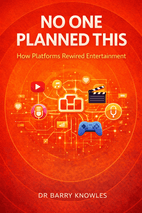
5 Main Takeaways from No One Planned This
Human Behavior Signals Change Before Infrastructure Catches Up
Technological revolutions like streaming and social feeds succeed by aligning with deep-seated human desires for instant access and connection, as seen with Netflix and TikTok. Businesses that recognize these silent shifts in attention, where behavior precedes infrastructure, can build ahead of the curve and capture emerging markets.
Remove Friction to Unlock Disruption and Serve Niche Audiences
The core of digital disruption is eliminating barriers between people and what they want, whether through seamless access or serving micro-audiences at scale. Platforms like Spotify and YouTube thrive by reducing friction, validating cultures and creators previously ignored by mainstream gatekeepers, and turning niche interests into sustainable economies.
On Platforms, You Rent Your Audience; True Ownership Requires Independent Infrastructure
Creators depend on platforms that control algorithms, data, and Terms of Service, making their businesses fragile—exemplified by YouTube's demonetization or TikTok's algorithmic shifts. To build sustainable power, follow top creators who use email lists, paid communities, and owned apps to establish direct customer relationships beyond platform whims.
Scale Sustainably by Building Systems, Not Just Creating Content
Viral success is fleeting without operational infrastructure like content pipelines, teams, and processes, as shown by MrBeast's media company or Hank Green's disciplined models. Long-term viability comes from transitioning from solo creator to founder of a business with repeatable systems, leveraging fractional talent and tools to professionalize return.
Design for Habitual Return and Affiliation, Not Just Attention
Infinite feeds cause fatigue; sustainable value lies in creating rituals, curated channels, and dedicated spaces that foster belonging, as seen with Twitch streams or podcast communities. By prioritizing audience affiliation over one-time reach, creators and platforms can convert passive viewers into loyal members who return predictably.
Executive Analysis
These takeaways form a cohesive argument that the digital media landscape, particularly the creator economy, has evolved from a promise of democratization to a system of platform dependence. By tracing how behavior precedes infrastructure, the book shows that while technology enables new forms of expression, it also introduces friction through algorithmic control and audience rental. The path to true empowerment requires creators to build owned infrastructure, professionalize their operations, and focus on audience affiliation over viral reach, aligning with human desires for trust and belonging.
This book matters because it provides a critical roadmap for creators, entrepreneurs, and media professionals navigating the precarious platform economy. It shifts the conversation from chasing algorithms to building sustainable businesses, offering practical strategies for audience ownership and systemic growth. In the genre of media and business strategy, it stands out by blending historical analysis with forward-looking insights, emphasizing that the next wave of innovation will prioritize human connection over platform extraction.
Chapter-by-Chapter Key Takeaways
Signal Over Noise (Prologue)
Behavior Precedes Infrastructure: Major shifts happen when technology finally aligns with deep-seated human desires, like instant access. The infrastructure to support it often lags, but the behavioral change is the true signal.
The Outsider's Advantage: A background across disparate fields—music, law, software—can foster a connective perspective that specialists might miss, allowing for pattern recognition across industries.
Friction is the Enemy: The core of disruption lies in removing barriers between people and what they want, whether it's a movie, a song, or a service. The businesses that thrive are those that make access seamless.
Micro-Audiences Matter: Digital platforms unlock economic value by serving niche interests at scale, validating cultures and creators previously ignored by mainstream gatekeepers.
Organizational Inertia is a Powerful Force: Even with a clear vision of the future, convincing established companies to abandon working models for emerging ones remains one of the toughest challenges in innovation.
Try this: Identify emerging human behaviors that technology hasn't yet fully served to spot disruptive opportunities before infrastructure develops.
I. Attention (Chapter 1)
Behavior Precedes Infrastructure: Technological and business revolutions are preceded by silent, collective shifts in where people place their attention.
Feeds Changed Everything: The move from linear schedules to algorithmic feeds fundamentally altered our experience of time, choice, and agency.
Users Are Trained, Not Just Served: Platforms actively shape user behavior through invisible systems of reward and distribution, creating a new "active" audience.
Attention Consolidates: Digital platforms tend to funnel attention and money toward a tiny elite, despite rhetoric about democratization, creating stark power imbalances.
The Currency Has a Cost: When attention becomes the primary economic currency, it pressures creators into systemic optimization, often at the expense of authentic expression and well-being.
Try this: Map where your target audience's attention is shifting unconsciously, as these silent changes precede market disruptions and platform evolution.
1 Beatles? Or Monkees? (Chapter 2)
Digital platforms are generative systems that reward specific behaviors (frequency, authenticity, direct engagement), not just new distribution pipes for old content.
The core conflict is between pipeline logic (perfect then release) and platform logic (release then perfect in public). Algorithms enforce this by optimizing for engagement signals, not pedigree.
Authentic connection cannot be manufactured from the top down; audiences can sense when authenticity becomes a mere strategy.
Lasting success on platforms is built on developing a repeatable system—a sustainable cadence, recognizable format rules, and audience rituals—not on scripting a single hit.
The most powerful creative breakthroughs in the digital era, like The Beatles in theirs, emerge organically from genuine, platform-native behavior that traditional institutions cannot reliably engineer or predict.
Try this: Develop a repeatable system for content creation that emphasizes authentic engagement and platform-native behavior over polished perfection.
2 Building Without Permission (Chapter 3)
The creator economy is in another period of disruptive transition, where platform changes and AI commoditization threaten creator sustainability even as tools improve.
New opportunities for autonomy are found in decentralized platforms, cross-platform syndication, and the strategic pursuit of depth-over-scale in niche communities.
This cycle of bottom-up creator innovation outpacing top-down platform control is a historical pattern, suggesting the next media paradigm will be built by creators themselves.
Try this: Diversify your presence across decentralized platforms and niche communities to hedge against platform dependency and AI commoditization.
3 The Myth of the Creator Middle Class (Chapter 4)
The myth of the creator middle class persists because it promotes a comforting narrative of democratized success, but this obscures deeper issues of inequity and instability within the ecosystem.
Current platform architectures often prioritize content churn and viral spikes, undermining the potential for sustainable, long-term creator careers.
True progress requires a mindset shift: viewing creators as small businesses in need of structure, rather than as content mills driven solely by audience metrics.
The next era of support will focus on infrastructure—like teams, tools, and systems—that helps creators scale professionally without losing their unique appeal.
Examples like Hank Green and Rhett & Link demonstrate that enduring success stems from combining authentic personality with disciplined, process-driven business models.
Try this: Treat your creative work as a small business, focusing on building structural support like teams and tools rather than chasing viral metrics.
4 Creators as Machines (Chapter 5)
True creative independence on the internet existed before social platforms, rooted in direct ownership of domains and content.
The Platform Factory Model systematically optimizes creators for maximum user attention, incentivizing uniformity, repeatability, and safety over originality.
Different platforms apply distinct pressures: YouTube professionalized creation through data dashboards; TikTok industrialized feedback through relentless velocity; Instagram enforced aesthetic conformity through templated formats.
Ultimate control resides in the clickwrap contract (Terms of Service), which lets platforms unilaterally demonetize or delete creators' work, rendering their "business" a leased presence.
The psychological cost is systemic burnout and self-commodification, where a creator's identity merges with their algorithmic performance.
This model amplifies traditional media's commercial pressures with unprecedented speed, real-time feedback, and individual risk, creating a cycle where creators burn out, audiences tune out, and the system increasingly resembles the centralized, homogenized media it once promised to disrupt.
Try this: Audit your dependence on platform terms and algorithms, and start building owned assets like a website or direct newsletter to reduce vulnerability.
II. Power (Chapter 6)
The creator economy promised empowerment but delivered a new, fragile dependence on platforms that control attention and value distribution.
Ownership of an audience on a major platform is largely an illusion, easily disrupted by algorithmic changes.
AI and automation first eliminate the paid support roles around creators, increasing pressure on them while allowing platforms to capture more value.
True creator power and sustainability now come from building parallel, owned infrastructure—like direct communication channels and independent revenue streams—that exists beyond any single platform's control.
The fundamental struggle is for agency and viability in a system where visibility does not guarantee stability.
Try this: Prioritize building parallel, off-platform revenue streams and communication channels to achieve true independence from algorithmic control.
5 When YouTube Becomes TV (Chapter 7)
YouTube's evolution from chaotic creativity to TV-like spectacle is driven by algorithms that reward mass retention and high-production values.
Creators like MrBeast operate as media companies, using scale and capital to engineer content that dominates the platform, redefining authenticity in the process.
The pattern of toolchain compression shows how democratizing tools eventually lead to new barriers, with top creators rebuilding studio-like operations.
Platform-native formats like Hot Ones can achieve cultural legitimacy without legacy media, becoming the new television on their own terms.
Scaling content flattens diversity, pushing out niche, intimate videos in favor of broad, universal spectacles.
Aspiring creators face heightened barriers due to capital-intensive competition, squeezing the middle class and altering the creative landscape.
Crossover attempts, like Lilly Singh's, often fail due to format mismatches, highlighting that platform-native success doesn't guarantee translation to traditional media.
Try this: Analyze whether scaling your content requires TV-like production values, and if so, invest in operational infrastructure to compete sustainably.
6 Who Really Owns the Audience? (Chapter 8)
Creators rent, not own, their audience. The platform controls the infrastructure, data, and direct relationships, making the creator’s business inherently fragile.
Control is codified in Terms of Service, which grant platforms sweeping licenses to creator content while locking away invaluable audience data.
Algorithms are the ultimate gatekeepers, arbitrarily controlling reach and ensuring creator dependency on platform whims.
AI intensifies platform control by flooding the market with cheap, fungible content and using top creators’ success as training data to cap their leverage and cost.
True audience ownership is possible by building direct, off-platform infrastructure (e.g., email lists, owned apps, paid communities), treating platforms as discovery channels rather than home base.
The battle for the direct customer relationship is timeless, but today’s scale and algorithmic opacity create unprecedented asymmetry between individual creators and monolithic platforms.
Try this: Shift your strategy from platform-dependent audience growth to funneling followers into direct, owned relationships through email lists or apps.
7 Infrastructure Is the New Star System (Chapter 9)
Power Has Migrated: The real power in media has shifted from the charismatic star to the operational infrastructure that supports them.
Scale Requires Structure: Viral success is unsustainable without systems. Long-term viability depends on transitioning from a solo creator to the founder of a business with processes and teams.
Operational Fluency is Key: The ability to build and manage systems—for content pipelines, finance, legal, and commerce—is now a core competitive advantage, often more valuable than a single viral hit.
A New Ecosystem Exists: A flexible, specialized support economy of fractional talent and sophisticated tools allows creators to build custom infrastructure without the overhead of a traditional studio.
The Barriers Are Rising: The field is tiering by access to infrastructure and business skills, not just talent. The future belongs to creator-entrepreneurs who master the machinery behind the magic.
Try this: Invest in building business systems and fractional talent support to transition from a solo creator to a scalable media operation.
8 One Is the Loneliest Number (Chapter 10)
The Core Mismatch: The fundamental break in modern TV isn't about content quality, but a structural misalignment: our primary shared-screen device is powered by systems built for solitary, individual consumption.
Discovery is Contextual: Effective discovery depends on understanding who is in the room and why they are watching—context that current algorithms deliberately ignore in favor of simplistic engagement metrics.
Current "Solutions" Are Inadequate: Features like user profiles are mere patches on a flawed foundation. They don't address the core need for dynamic, multi-user context awareness, leaving the most important viewing environment—the communal living room—poorly served.
Try this: Design content experiences with communal viewing in mind, considering the dynamic context of who is watching and why.
III. Affiliation (Chapter 11)
The professionalized, platform-driven creator economy has become rigid, creating opportunities for new models at its edges.
The convergence of streaming and social media into a continuous attention flow means supreme value will lie in organizing relevance, not just distributing content.
Future design must prioritize the live context and identity state of the audience over a static content catalog.
Sustainable value is moving from individual hits to curated channels built for long-term audience return.
Incorporating fluid, multi-faceted identity into discovery systems is a critical next step.
Ritual, cadence, and dedicated digital "rooms" are essential for converting passive attention into active, affiliated membership.
The central design choice ahead is between systems built for data extraction and those engineered for genuine human affiliation.
Try this: Focus on creating curated channels or destinations that foster long-term audience return rather than isolated pieces of content.
9 What If We Put the Audience First? (Chapter 12)
The fundamental flaw in modern media is designing for a solitary "user" on a platform, rather than for the shared, dynamic audience in a room.
An audience-first system must be built on four pillars:
Agency: Giving users visible, effective control over recommendations, with transparent cause-and-effect.
Identity: Moving from static user profiles to dynamic "modes" that reflect who is in the room and their situational context.
Trust: Replacing opaque, manipulative feeds with honestly labeled curation from clear sources (human or algorithmic).
Intent: Prioritizing the viewer's immediate goal ("why are you here?") over generic engagement tactics ("what will you click?").
Current failures aren't just inconvenient; they actively drive paying customers toward piracy, which often provides a better, more audience-centered experience by default.
Early models for this future exist in products like Spotify, Letterboxd, and Twitch, which prioritize rhythmic trust, taste transparency, and accountable human curation.
The ultimate metric for success shifts from "time on platform" to "minimal friction" in getting from the desire to watch something to a choice that fits the room.
Try this: Implement audience-first principles by giving users control over recommendations and designing for their immediate intent and context.
10 Channels, Not Shows (Chapter 13)
The infinite feed model causes discovery paralysis and exhaustion by prioritizing engagement over meaningful connection.
The traditional "show" is an outdated unit for an age of abundance, failing to build lasting viewer relationships.
The future lies in "channels": curated, thematic destinations built around specific passions and identities, offering a reliable, lean-back experience.
Trust, built through consistent human curation, becomes the most valuable commodity, replacing the opaque algorithmic logic of the feed.
For creators, this is a shift from being a content producer to a media architect—building sustainable ecosystems around a niche rather than chasing viral hits.
This model is already emerging successfully in various formats, from YouTube ecosystems to podcasts and newsletters, signaling a broader evolution in how we organize and consume media.
Try this: Move from producing standalone shows to architecting thematic channels that build trust and habitual viewing through consistent curation.
11 Identity Over Interface (Chapter 14)
Algorithms are context-blind. They match content to behavior but cannot discern the "who" behind the watch—the identity state, mood, or social setting of the viewer.
We are multitudes. A single user profile is a fiction; people inhabit different identities (Parent, Professional, Unwinder) throughout the day, each with distinct content needs.
Platform incentives are misaligned. Building identity-aware systems is costly and may not boost key metrics like total engagement, leading platforms to prioritize simpler, surface-level content matching.
Discovery is becoming an identity signal. Users, especially younger ones, are less passive browsers and more active curators, using content to express or explore aspects of their identity.
The solution lies in implicit signals. Better personalization will come from algorithms that infer context from patterns in time, device usage, co-viewing data, and depth of engagement, not from asking more questions.
The living room is a design frontier. Algorithms must evolve to handle communal viewing and shared screens, designing for collective intent and group identities.
The future is organized around identity, not genre. Success will belong to creators and platforms that build communities and channels serving specific identity states, fostering affiliation and belonging over mere attention.
Try this: Develop content that serves specific identity states or moods, using implicit signals like time of day to enhance personalization.
12 Ritual & Return (Chapter 15)
Ritual Beats Algorithmic Feed for Loyalty: Infinite choice creates fatigue; predictable, scheduled return creates belonging and affiliation.
Platforms Are Structurally Anti-Ritual: Their business models optimize for novel starts and interruptive engagement, not for consistent returns or continuous experience.
The Cold Start Problem is King: Solving a real user need is not enough without a viable path to distribution, which often requires capital or platform partnerships.
Affiliation is Durable, Attention is Rented: Building a space where an audience can act and be recognized by name creates loyalty that survives platform shifts.
Own Your Clock, Room, and Language: The most powerful elements of community are simple, repetitive, and must be held independently of rented platforms.
Try this: Establish simple, repetitive rituals and owned digital spaces to cultivate audience loyalty and affiliation independent of platforms.
The Next Signal (Epilogue)
Return Over Reach: Sustainable success comes from designing for habitual return, not just one-time viral discovery.
You Are the Product: Both audiences and creators provide unpaid inputs (attention, content, data) that platforms monetize, often in ways divorced from improving the core experience.
Own the Relationship, Not the Discovery: Accept that platforms control discovery. Use them as a utility to funnel audiences into spaces you truly control (e.g., email lists, owned channels).
Ritual + Architecture: Combine consistent cadence and tone (ritual) with reliable, owned destinations (architecture) to build belonging.
Professionalize Return: Build systems and processes that make your creative output consistent and recognizable, transforming personality into a sustainable operation.
The Next Signal is Alignment: The future belongs to infrastructure that reduces friction and cognitive load, aligning with the audience’s desire for trusted routes, not infinite, exhausting choice.
Try this: Systematize your creative output to ensure consistent return for your audience, aligning your operations with their desire for trusted routes.
Continue Exploring
- Read the full chapter-by-chapter summary →
- Best quotes from No One Planned This → (coming soon)
- Explore more book summaries →