Night Calls Themes
by Joe Hart
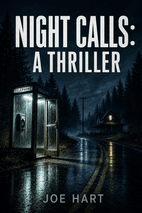
Underneath its plot, Night Calls is really about how fragile a life built on secrecy can be. Hattie's life as Mary Whittaker hides that Julian is her grandson and Tommy his father, and the book keeps testing whether love, guilt, and fear can hold that story together without it collapsing.
On this page you'll find theme analysis with concrete moments: Hattie's protective lies and guilt, her fear that Tommy's violence repeats in Julian's anger, self-harm, and stabbing of Bastion, her intrusive daymares, her doubt when Eeling claims Tommy was framed, and her grief rituals like speaking to Ed's empty side of the bed. It also tracks recurring symbols: the accusing owl, storms and cold fronts, the hidden phone, and swapped clotted cream bottles.
Major Themes in Night Calls
Secrecy, hidden identity, and the fragility of a constructed life
Hattie lives as Mary Whittaker to conceal that Julian is her grandson and that Tommy is his biological father. The novel repeatedly shows how thin this invented life is, as outsiders, neighbors, and investigators come close to seeing through it.
- Hattie privately reveals that Julian is her grandson and that none of them can ever know.
- Ross Eeling reveals he knows Hattie’s real identity and Tommy, and threatens to give an envelope marked 'Crawford' to the Crawfords unless she talks.
- Wendy enters the cottage and sees Hattie’s laptop open to Paige McMahon’s face and Hattie’s notes about the victims, then tells Hattie, 'We trusted you. Trusted you with him. With our son.'
- Sheriff Altringer questions Mary Whittaker about which town in California she is from and says he could not find her among the Mary Whittakers there.
Maternal love, family protection, and guilt
Hattie’s actions are driven by love for Tommy and Julian, but that love is tangled with guilt, fear, and uncertainty about whether she is protecting others or herself. The novel returns repeatedly to what a mother owes her child and what she should have seen.
- Hattie goes to Wendy intending to confess but stops, unsure 'if she’s holding back for their sake or her own.'
- Ed says Julian would never have a normal life with them and tells Hattie she has to let him go.
- Hattie admits to Wendy that her son Tommy showed warning signs she ignored and says it killed him.
- Hattie hugs Tommy and whispers 'I’m sorry,' and he hugs her back.
- Hattie asks 'What kind of person did she raise?' and thinks she has 'crucified herself' over failings passed on to Tommy.
Inherited violence and fear of repetition
Hattie fears that Tommy’s violence may be passed down to Julian, and she reads Julian’s anger, self-harm, and stabbing of Bastion through the memory of Tommy’s ignored warning signs. The novel keeps asking whether Julian is defending himself or becoming his father’s son.
- Hattie thinks 'He’s not Tommy. He’s Tommy’s son,' while Wendy wonders whether mental or emotional problems run in Julian’s family.
- Julian admits he is angry and mimes hitting himself in the thigh and face; Hattie reflects that no one spoke up about Tommy.
- Hattie burns Tommy’s disturbing poem and tells herself 'A poem was just a poem. It couldn’t hurt anyone,' then later thinks that if she had spoken to Tommy about it, lives might have been saved.
- After Julian says 'I’m not sorry,' Hattie recalls reading about serial killers’ childhoods and fears Tommy’s traits may have passed down the genetic line.
Trauma, memory, and intrusive daymares
Hattie’s past intrudes through memory, nightmares, hallucinations, and violent daymares that blur her present reality. The novel shows her trying to ground herself while old trauma keeps reshaping what she sees.
- Hattie imagines attacking Eeling with a rock as he dances, then snaps back to reality in her car, realizing the visions are returning.
- Hattie sees Julian impaling a living gull, but the gull is already dead and she realizes she hallucinated him impaling it.
- Searching for risperidone triggers Hattie’s memory of planning suicide after Ed’s funeral and the daymare of killing Tommy in the bathtub.
- During Altringer’s questioning, Hattie has a violent daymare of throwing coffee in his face, taking his pistol, and shooting him; she snaps back to the real conversation.
- Hattie grounds herself by feeling her dry coat and pants after imagining killing Eeling.
Denial, doubt, and the madness of hope
Hattie’s certainty about Tommy’s guilt is repeatedly undermined by doubt, withheld evidence, and Eeling’s claim that Tommy was framed. Hope in the novel is both necessary and dangerous, something that keeps Hattie moving even when the evidence is thin.
- Hattie says she was heartsick with denial and made every excuse not to accept what Tommy had done, while Ed faced reality first and she resented him for it.
- Ramsby admits that a hair found on Whitney Moorhead’s bed was withheld and did not match anyone on record, leaving doubt about Tommy Conlee.
- Hattie has committed to Tommy’s guilt, yet she admits the nagging thought 'What if I’m wrong?' and listens to Eeling’s claim that Tommy is innocent.
- Tommy invokes 'the madness of hope,' and Hattie answers, 'It’s not hopeless.'
- Hattie calls her certainty 'as thin and weak as wet cardboard,' and the narration repeats 'She hopes. Hopes. The madness of...'
Grief, loss, and coping through ritual
Grief shapes Hattie’s daily life, from speaking to Ed’s empty side of the bed to maintaining routines with Sloan and Julian. The novel shows loss as something endured through small rituals, ordinary care, and the slow work of healing.
- Hattie whispers 'Good morning' to the empty side of the bed and repeats her protective mantra.
- Hattie remembers Ed as the husband who taught her that the best French toast comes from actual French bread, even if stale, and whose shop and sawdust still make her cry.
- Sloan recounts Nicky’s drowning and Hattie thinks of Tommy; she calls their friendship an awfully exclusive club of outliving their children.
- After December, Hattie relives the previous December but finds the pain a little less sharp than the day before, and Wendy and Hattie rebuild trust.
Symbols and Motifs
The owl
The owl represents guilt, accusing memory, and the return of what Hattie cannot bear to face.
- Hattie and Julian work on a puzzle of barred owls and talk about the owls.
- In Hattie’s dream, Tommy is perched on the owl’s branch and says, 'I’m sorry, Mommaaaaaaaa.'
- After Ed’s death, an owl watches Hattie with an almost accusing glare; at the cottage she avoids looking out the window because of the owl.
Storms and cold fronts
Storms signal dread, inevitability, and the intrusion of the past into the present.
- Sloan falls asleep and mutters 'Storm coming,' chilling Hattie.
- Billy Wescot arrives during a storm and tells Hattie and Ed that Cheryl Barton was stabbed to death.
- During two tense days and then a snowstorm, Colm returns and Hattie lays out Ed’s revolver as they wait for Dustin.
The hidden or old phone
The phone represents Hattie’s secret connection to Tommy and the past, carrying both fear and false hope.
- Hattie checks the hidden lockbox and untraceable iPhone, finding no missed calls.
- Hattie dozes in the den, dreams of Ed saying 'Don’t trust him,' then wakes at 2 a.m. to a silent phone call and says 'Hello, Tommy.'
- Hattie’s old phone rings; she answers, says 'Who is this?', hears a quiet inhale, and the line goes dead.
- In a nightmare, an impossible old phone rings and Tommy begs her to help him stop.
Clotted cream bottles
The swapped cream bottles symbolize Hattie’s constructed identity and the small deceptions that sustain her hidden life.
- Hattie transfers Mottles clotted cream into Worthington’s Best bottles while hiding her identity as Mary Whittaker.
- Sloan praises Worthington’s cream, not knowing Hattie has been refilling the old bottles with Mottles cream.
- Sloan later reveals he knew she was passing off Mottles clotted cream as Worthington’s Best and tells her she can tell him anything.