Losing My Virginity Quotes
by Richard Branson
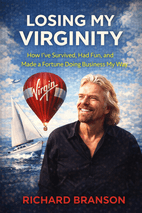
These quotes come straight from the man himself, unpolished and full of life. You'll find everything from raw moments of loss and laughter to hard-won business lessons and adrenaline-fueled adventures.
What makes this book so quotable is Branson's refusal to play it safe. He writes with the same energy he brings to his ventures, mixing vulnerability with swagger, humor with hard truths. Every line feels like a glimpse into a life lived on his own terms.
Top Quotes from Losing My Virginity
“Life can seem rather unreal at times. Alive and well and loving one day. No longer there the next.”
Branson writes in a farewell letter to his children Holly and Sam before the dangerous balloon flight.
These lines poignantly capture life's fragility and the suddenness of loss. They remind readers to cherish every moment, making them deeply moving and universally relatable.
“As for me, I just pick up the phone and get on with it.”
Branson contrasts his hands-on, action-oriented style with academic analyses of the Virgin Group.
This simple, direct statement embodies Branson's pragmatic, no-nonsense approach to business and life. It inspires readers to act decisively rather than overthink, reinforcing the book's core message.
“I can honestly say that I have never gone into any business purely to make money. If that is the sole motive then I believe you are better off not doing it. A business has to be involving; it has to be fun, and it has to exercise your creative instincts.”
Richard Branson reflects on his philosophy of business while running Student magazine.
This quote distills Branson's lifelong entrepreneurial ethos into a clear, inspiring principle — that business should be a creative, joyful pursuit rather than a mere money grab.
“My parents had always drummed into me that all you have in life is your reputation: you may be very rich, but if you lose your good name you'll never be happy.”
Branson reflects on his parents' advice while in prison.
It encapsulates the core lesson that integrity and trust outweigh wealth, a principle he carries forward.
“I have always believed that the only way to cope with a cash crisis is not to contract but to try to expand out of it.”
Richard Branson's philosophy during Virgin's cash crisis in 1976.
It encapsulates Branson's risk-taking, growth-oriented mindset that defined his entrepreneurial approach.
“F you offer £180,000 it’s yours." There was never a hint that £180,000 was only a fraction of the £3 million asking price. So I agreed on the spot, and Necker Island was ours."”
Branson recalls negotiating the purchase of Necker Island after the owner's urgent need for cash.
This line encapsulates Branson's audacious, bargain-hunting spirit and the thrill of turning a fantasy into reality against all odds.
“If you're not completely nuts and scared to death, then you shouldn't be on board in the first place.”
Tom Barrow, the engineering team head, joked during the final safety briefing before the balloon flight.
It perfectly sums up the audacity, self-awareness and dark humour required for such a perilous adventure.
Themes Behind the Quotes
A major theme is the constant dance between risk and reward. Branson doesn't just tolerate uncertainty, he seems to chase it, whether in business or in a balloon. Another thread is the importance of reputation and integrity, treated not as abstract ideals but as the bedrock of every deal and relationship.
Underneath it all runs a stubborn optimism and a refusal to be paralyzed by fear. Even in the face of crashes, cash crises, and failed plans, the instinct is to move forward, expand, and find a way. The quotes also reveal a deeply human side, with moments of grief, humor, and genuine connection that keep the stories from ever feeling like a corporate memoir.
Quotes by Chapter
Prologue: ‘Screw it. Let’s do it.’
“I will never forget the anguished strength of his hug.”
Branson describes his young son Sam's tearful goodbye before the balloon flight.
This raw, emotional moment humanizes Branson, showing the personal cost of his adventures. It resonates with anyone who has faced a painful parting, highlighting the depth of familial love.
“The two questions I am most often asked are, Why do you risk your neck ballooning? and, Where is the Virgin Group going?”
Branson reflects on the dual challenges of his ballooning ventures and his business empire.
This line neatly ties together Branson's public persona as both an adventurer and an entrepreneur. It invites readers to consider the connection between personal risk and professional vision.
3: Virgins at business: 1967–1970
“A very pretty girl with no clothes on is a marvellous subject, and one I'm particularly interested in. It is one of those things, along with perspective and anatomy, which teaches you how to draw.”
Peter Blake, the artist who designed The Beatles' Sergeant Pepper album cover, is being interviewed for Student magazine.
The quote is arrestingly candid and playfully subversive, revealing how an artist can blend beauty with technical discipline, and it captures the rebellious, free-spirited tone of the era.
“I'll always draw - it's a matter of energy. I could never stop. It's as much a part of me as eating. When I get an idea it has to come out — it is like being sick, a bodily function.”
Gerald Scarfe describes his artistic drive to the young interviewers.
The visceral, bodily metaphor makes the creative impulse feel primal and irresistible, leaving a lasting, gritty impression on anyone who has felt the urge to create.
“I'd much rather roll about in the mud with six women all day than sit down at the piano.”
Dudley Moore responds to a question about classical music during his interview with Student.
This line is wonderfully irreverent and humorous, perfectly encapsulating the hedonistic, anti-establishment spirit of the late 1960s.
5: Learning a lesson: 1971
“I vowed to myself that I would never again do anything that would cause me to be imprisoned, or indeed do any kind of business deal by which I would ever have cause to be embarrassed.”
Richard Branson lies in a prison cell after being arrested for tax evasion.
This marks a pivotal turning point where he commits to ethical business practices, a vow that shapes his future decisions.
“It is impossible to know whether we really would have stopped since making such easy money is addictive, but that was our intention.”
After three successful smuggling trips, Branson plans one final run to pay off debts.
This honest admission reveals the seductive nature of quick profit and the self-deception that often accompanies risky behavior.
“A body fell out of the sky and hit the railings beside us.”
Branson and his new girlfriend Kristen witness a suicide while walking to work.
The stark, surreal image underscores the chaotic and life-altering events of that period, jarring the reader.
9: Never mind the bollocks: 1976–1977
“It's clear to me,’ Ken Berry said, adding up a column of figures. ‘We have to seriously consider scrapping all our bands apart from Mike Oldfield.”
Ken Berry's stark assessment during a crisis meeting at Virgin.
Highlights the critical moment when Virgin's survival depended on a single artist, showing the high stakes.
“If you can cope with them,’ he said. ‘We certainly can't.”
Derek Green of A&M records telling Branson that The Sex Pistols are too much trouble.
A succinct, ironic admission of the band's notorious behavior, leading to Virgin's chance to sign them.
“I watched and waited, knowing that Malcolm McLaren didn't like me. He sneered at me as a hippie who had become a businessman.”
Branson reflecting on his relationship with Sex Pistols manager Malcolm McLaren.
Reveals the personal tension and Branson's self-awareness about his image shift from hippie to businessman.
11: Living on the edge: 1978–1980
“Never, ever, wag that fucking finger in my face again. And The Human League are staying.”
Simon Draper angrily defends his decision to keep an unproven band during a heated argument with Nik Powell.
It marks a pivotal moment where musical instinct wins over financial caution, shaping Virgin's future direction and the breaking of a longtime partnership.
“The circle of ripples where the vibrator had sunk seemed a fitting end to the 1970s.”
Branson describes an embarrassing moment when a vibrator falls from a box and sinks into the canal.
The absurd, self-deprecating image perfectly captures the chaotic, unpredictable spirit of the era and Branson's knack for turning mishaps into memorable anecdotes.
“There's no such thing as a free lunch and there's no such thing as free money,’ Nik told me.”
Nik Powell argues with Richard Branson about the risk of taking on debt to buy nightclubs.
This line perfectly encapsulates the classic tension between entrepreneurial risk-taking and financial caution, making it a timeless business aphorism.
14: Laker’s children: 1984
“Don't worry, Richard,' he said. ‘These things happen.”
The CAA official consoles Richard Branson immediately after a bird strike explodes an engine during the test flight.
This calm, understated reassurance in the face of a near-disaster captures the resilience and matter-of-fact attitude that defined the early days of Virgin Atlantic.
“Don’t worry though. I'm from the Financial Times; we're not that kind of paper.”
A press photographer tells Branson after capturing a photo of the engine explosion, then hands over the film.
This act of journalistic integrity saved the fledgling airline from ruin and illustrates the unexpected kindness that can change the course of a venture.
“You are not welcome in my house. Please get out.”
Richard Branson says this to his bank manager, Christopher Rashbrook, after being told Coutts would bounce cheques exceeding the overdraft limit.
This raw, emotional outburst marks a turning point where Branson refuses to be crushed by a bank's rigidity, showing his fierce determination to protect his company.
“It was like being strapped to the blade of a vast pneumatic drill.”
Branson describes the brutal experience of crossing the Atlantic in the high-speed powerboat Virgin Atlantic Challenger.
This vivid, visceral metaphor perfectly conveys the physical ordeal of record-breaking challenges and the extreme discomfort endured for the sake of adventure and publicity.
16: The world’s biggest balloon: 1986–1987
“We're not going on holiday this year; we're putting our savings into Virgin.”
A person in the queue to buy Virgin shares told Richard Branson this as he thanked them.
It captures the extraordinary faith and sacrifice ordinary people placed in Branson and his company.
“Must admit,’ she said, as we accelerated up the river, ‘I do enjoy going fast. I love powerful boats.”
Margaret Thatcher, standing with Branson on the boat Atlantic Challenger after a ride up the Thames.
This reveals an unexpected, adventurous side of the 'Iron Lady' and humanises her public persona.
“Faster, Richard, faster! We'll race you.”
Richard's mother's voice crackled over the radio as the Virgin 747 flew alongside their balloon.
This playful, encouraging line from a mother adds a touching, human moment to the high-stakes crossing.
19: Preparing to jump: 1989–1990
“So you'll either ditch in the sea and die, or you'll hit land in the dark and that'll be a close call.”
Tom Barrow, the previous balloon pilot, gives Branson his final warning before the Pacific flight.
This stark choice encapsulates the extreme danger of the Pacific crossing and the high stakes of Branson's adventure, highlighting the thin line between survival and death.
“If the capsule decompresses, you'll notice that it suddenly becomes misty. The capsule will appear to fill with fog. You will hear a screaming in your ears and you will experience the sensation of your lungs being sucked out of your chest and through your mouth.”
Per Lindstrand describes the effects of decompression to Branson during their flight planning.
The visceral, horrifying imagery makes the reader feel the peril, and the clinical detail underscores the irrationality of their bravery.