Losing My Virginity Key Takeaways

by Richard Branson
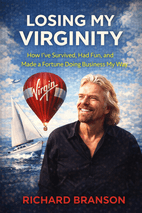
Losing My Virginity by Richard Branson Book Cover

5 Main Takeaways from Losing My Virginity

Embrace audacious risks with a calculated escape plan.

Branson repeatedly took huge leaps, like launching an airline or signing Janet Jackson, but always structured deals to limit downside—such as negotiating one-year plane leases or ensuring copyright ownership—proving that bold moves require smart safeguards.

Build a resilient brand by prioritizing employee and customer experience.

Virgin's cross-industry success stems from putting employees first to drive customer satisfaction, as seen in the Virgin shop's community atmosphere and the employee-centric culture that fuels loyalty and innovation.

Leverage personal networks and mentorship for critical support.

Early growth was funded by family trust, and advice from mentors like Freddie Laker was invaluable, highlighting that faith from close circles often outweighs traditional financing in entrepreneurial leaps.

Turn crises into opportunities for innovation and growth.

The postal strike led to Virgin's first shop, the Gulf War downturn prompted strategic route expansion, and industry failures allowed Virgin Blue to thrive, showing how adversity can be a catalyst for transformation.

Balance entrepreneurial vision with hands-on execution and adaptability.

From selling magazine ads from a phone box to personally managing balloon expeditions, Branson's hands-on approach and ability to pivot—like shifting from music to airlines—demonstrate the need for both grand vision and operational flexibility.

Executive Analysis

These takeaways form the book's central argument that Branson's success is rooted in a consistent philosophy: entrepreneurial ventures thrive not from luck alone, but from a deliberate blend of risk-taking, brand culture, and resilience. By weaving together stories of personal grit, strategic innovation, and team-centric leadership, the book illustrates how turning obstacles into advantages builds a lasting empire.

This memoir matters for its practical impact, offering real-world lessons in risk management, brand building, and leadership that transcend industries. It stands out in the entrepreneurial genre by providing actionable insights from decades of hands-on experience, rather than abstract theory, making it a guide for turning audacious ideas into reality.

Chapter-by-Chapter Key Takeaways

‘Screw it. Let’s do it.’ (Prologue)

  • Core resilience and a willingness to take on challenges were forged in childhood, exemplified by the raw determination of his first swim.

  • An unconventional, supportive, and entrepreneurial family background—filled with strong personalities, mavericks, and a deep sense of teamwork—provided a foundational worldview that celebrated initiative and questioned authority.

  • Early experiences of hardship, competition, and perceived unfairness, particularly the struggles with dyslexia and the harsh boarding school environment, built a fierce independence and a lifelong aversion to traditional, punitive structures.

  • The serious knee injury he suffered during a football match became a pivotal moment, stripping away his primary source of confidence and social standing. Confined to bed, he was confronted by the silver cups on his mantelpiece—symbols of a past life—and a doctor’s prognosis that he would not play sports for a very long time. His mother, ever pragmatic, briskly advised him to think of the legless war hero Douglas Bader as an example of overcoming adversity.

  • Without sports as a shield, his academic difficulties were thrown into stark relief. He was sent to Cliff View House, a harsh coastal crammer school where discipline was enforced through frequent beatings. It was a brutal, joyless environment with no sports to provide an outlet. His only consolation was a clandestine romantic liaison with the headmaster’s eighteen-year-old daughter, Charlotte, which led to his expulsion after he was caught. In a desperate, theatrical bid to avoid his parents’ wrath, he faked a suicide attempt, walking slowly toward the cliffs until staff caught him, a stunt that ultimately led to the expulsion being overturned.

  • A New School and New Struggles

  • Moving to the large public school Stowe, he found himself in a daunting position. Still unable to play sports due to his knee and struggling academically, he was socially sidelined. He found refuge in the school library, where he began writing—first indulging in erotic fiction, and later, more seriously, entering and winning a school essay prize judged by author Gavin Maxwell. This small victory improved his standing in English class, though he remained at the bottom in most other subjects.

  • His entrepreneurial spirit, undeterred by academic reports, began to manifest in practical ventures. With his friend Nik, he attempted to grow Christmas trees, only for the seedlings to be devoured by rabbits. Undaunted, he then launched a budgerigar breeding business, convincing his father to build a large aviary. While the venture taught him about real-world numbers and business plans, it ultimately failed due to a lack of local demand and, as he later learned, his mother deliberately setting the birds free.

  • The Birth of Student Magazine

  • Frustrated by what he and his friend Jonathan Holland-Gems saw as archaic and pointless school rules—compulsory games attendance, fagging, and the Cadet Force—they sought to create change. This evolved from writing reform-minded letters to the headmaster into a far more ambitious project: creating a national magazine for youth. They settled on the name Student and began crafting a detailed business plan, identifying contributors, advertisers, and distributors.

  • Working from a telephone box at school, he honed a persuasive, fast-talking sales technique, bluffing major companies like Coca-Cola and banks by claiming their rivals had already booked space. He operated with a brazen confidence that only youthful ignorance of failure could provide. For over a year, he and Jonny worked tirelessly, sending out hundreds of letters and making calls, sustained by little more than promises and their own conviction. Even as his formal education faltered, with his A-levels approaching, he prioritized the magazine, seeing it as his true calling and a practical education in itself.

  • A severe knee injury ended his athletic prowess, forcing him to confront his academic weaknesses and seek new avenues for achievement and identity.

  • Early, failed business ventures with Christmas trees and budgies provided practical lessons in numeracy and planning, proving he could engage with numbers when they served a real-world purpose.

  • Frustration with the rigid traditions of his school ignited a desire for reform, which crystallized into the ambitious, hands-on project of launching Student magazine.

  • The development of the magazine taught him relentless salesmanship, creative problem-solving, and the power of youthful audacity, as he learned to operate with confidence far beyond his years.

  • Unconditional support is invaluable: Branson’s early success was heavily enabled by his parents’ willingness to treat his unconventional ambition seriously and offer practical, emotional, and financial backing.

  • Resilience is forged in humor and humility: The ability to laugh at personal misadventures, like the asthma incident, and to learn from them is part of a resilient entrepreneurial spirit.

  • Focus can justify unconventional means: Branson’s blatant exam cheating illustrates his prioritization of his real-world project over institutional requirements, a risky trait that defines his maverick approach.

  • The launch is just the beginning: The headmaster’s ironic dual prediction and subsequent congratulatory note highlight how Branson’s journey was always poised between failure and spectacular success from its very first step.

Try this: Cultivate resilience from early failures and use unconventional thinking to challenge established systems, as Branson did with Student magazine.

Virgins at business: 1967–1970 (Chapter 1)

  • Necessity Drives Innovation: An existential threat (the postal strike) directly led to Virgin's successful foray into physical retail, demonstrating how crisis can force transformative action.

  • Customer Experience as a Differentiator: The first Virgin shop succeeded by rejecting industry norms, prioritizing atmosphere, community, and value, which built fierce customer loyalty and brand identity.

  • Vision Fuels Vertical Expansion: Observing the industry from the retail front line allowed Branson to identify strategic weaknesses (impersonal studios) and opportunities (record labels), setting the course for Virgin's future.

  • Faith is a Currency: Major growth was funded not just by banks, but by the profound trust and financial sacrifice of family, highlighting the personal network behind early entrepreneurial leaps.

  • Personal and Business Lives Intertwine: The founding team's personal relationships, living situations, and even drug experiences directly impacted the business's dynamics and evolution during this formative period.

Try this: Use crises to innovate and create unique customer experiences that build loyalty, like Virgin's first shop during a postal strike.

Learning a lesson: 1971 (Chapter 2)

  • The power of authentic endorsement: John Peel’s genuine, influential support was a priceless catalyst that no amount of paid advertising could buy.

  • Pragmatic psychology over brute force: Branson solved Mike Oldfield’s stage fright not with pressure, but by understanding his desire and offering the Bentley—a calculated sacrifice for a greater goal.

  • Embrace calculated, big risks: The decision to forgo a safe licensing deal for a high-risk, high-reward distribution model was the pivotal business choice that allowed Virgin to capture the enormous profits from Tubular Bells and build lasting wealth.

  • Protect the creative asset: Branson viewed the intellectual copyright of Tubular Bells as Virgin’s “birthright,” a core asset to be owned and leveraged, not merely licensed away.

Try this: Secure control over key assets and leverage authentic endorsements, as with Tubular Bells, to amplify success.

Never mind the bollocks: 1976–1977 (Chapter 3)

  • Virgin successfully fought back against censorship in the "Bollocks" trial, using expert testimony to turn a legal threat into a comedic victory that reinforced their rebellious image.

  • Branson's relationship with Joan Templeman began as a complex and secret affair, marked by patience and persistence, ultimately leading to a decisive commitment that would become a lifelong partnership.

  • A business trip to Jamaica highlighted Virgin's diversification into reggae and, more importantly, confirmed the end of The Sex Pistols as a functional band.

  • Despite the Sex Pistols' implosion, their notoriety had cemented Virgin's reputation, enabling the label to attract and build a successful roster of new wave and post-punk acts, ensuring the company's future beyond punk rock.

Try this: Use controversial moments to strengthen brand identity and balance personal commitments with business growth, as seen with the Sex Pistols.

Living on the edge: 1978–1980 (Chapter 4)

  • Gut Instinct Over Data: Branson’s decision to launch an airline was driven more by a tangible signal (the engaged phone lines of a competitor) and a negotiable safety net (the one-year plane lease) than by extensive market research.

  • The Cost of Vision: Major strategic leaps can fracture even the strongest partnerships, as evidenced by the lasting rift created between Branson and Simon Draper over the perceived risk to the Virgin empire.

  • The Importance of Control: The venture nearly failed at the start due to a flawed partnership structure. Securing operational and financial control was non-negotiable for both bank support and internal cohesion.

  • Mentorship is Invaluable: Seeking and heeding advice from those with direct experience, like Sir Freddie Laker, provided crucial strategic and practical warnings that helped shape the airline’s model and mindset.

  • Build in an Escape Route: From the very beginning, Branson’s primary focus was on structuring the deal (with Boeing) to allow for a graceful, financially limited retreat if the gamble failed.

Try this: Trust gut instincts but seek expert advice and structure deals for flexibility, exemplified by the airline launch.

Laker’s children: 1984 (Chapter 5)

  • Resilience is forged in failure: The catastrophic sinking of the first boat didn't end the dream; it hardened the team's resolve and led to a better-designed vessel.

  • Leadership means persuading, not just ordering: At the lowest point, with mutiny in the air, Branson had to persuade his broken team to continue through sheer stubborn will and shared purpose, not command.

  • Triumph is a team effort: Success relied on every member, from the engineers ankle-deep in oil to the operations manager who got Number 10 on the phone, and even the courage of a volunteer from a refueling ship.

  • Margins of victory can be razor-thin: After over 3,000 miles of brutal Atlantic punishment, the historic record was broken by a margin of just over two hours.

Try this: Lead through persuasion and teamwork, as success often depends on collective effort in the face of failure, like the Atlantic crossing.

The world’s biggest balloon: 1986–1987 (Chapter 6)

  • Richard Branson and Per Lindstrand survive a catastrophic balloon landing in the Irish Sea through a combination of split-second decisions, sheer luck, and extraordinary rescue efforts.

  • The 1987 stock market crash destroys Virgin’s attempt to takeover Thorn EMI and devalues its public shares, leading directly to the decision to take the company private again under a mountain of debt.

  • British Airways' takeover of British Caledonian presents Virgin Atlantic with a strategic opportunity to claim valuable new long-haul routes as the designated second UK carrier.

  • Burdened with over £300 million in debt, the Virgin Group adopts a desperate survival strategy, putting every asset up for sale and seeking joint-venture partners to raise cash quickly.

  • Leadership and Reinvention: Success can come from empowering unconventional candidates, as demonstrated by Simon Burke’s successful retail turnaround despite lacking prior experience.

  • Strategic Resource Allocation: Business decisions are often swayed by proven success over potential, leading to funding being directed toward thriving international ventures (France) over struggling domestic ones.

  • Financial Juggling: Selling equity stakes and forming joint ventures (e.g., with WH Smith) were essential tactics for generating cash to pay down debt and keep other ventures, like the airline, afloat.

  • Cultural Alignment in Partnerships: Virgin’s shift toward Japanese investors was driven by a shared long-term vision and a preference for capital growth over short-term dividends, a stark contrast to the pressure of British public markets.

  • Brand Globalisation: The Virgin Megastore became more than a shop; it evolved into a global cultural landmark and tourist destination, most notably in Paris.

Try this: Maintain operational control during crises and use strategic partnerships to stabilize finances, as during the balloon crash and debt crisis.

Preparing to jump: 1989–1990 (Chapter 7)

  • Survival in extreme adventure depends on relentless focus, adaptability, and sometimes miraculous luck, as seen in the jet stream's speed and timely radio reconnection.

  • Crisis management under pressure—like Per's decision to ascend to extinguish the fire—highlights the importance of quick thinking and technical expertise.

  • The human element shines through in Richard's reflections on family, partnership, and the balance between risk and reward, even when relationships are complex.

  • The narrative bridges personal triumph with global events, underscoring how individual endeavors intersect with larger historical moments like the Gulf War.

  • Ultimate success often comes with unforeseen costs, such as frostbite and remote landing, reminding us that adventure is as much about endurance as achievement.

Try this: Focus on adaptability and risk management in high-stakes situations, while keeping personal priorities in mind, as in ballooning.

Flying into turbulence: January–February 1991 (Chapter 8)

  • Virgin Atlantic’s survival is threatened not just by the industry-wide downturn of the Gulf War, but by a two-pronged attack: nervous bankers and a predatory competitor.

  • British Airways, led by Lord King, initiates a covert “dirty tricks” campaign, spreading financial rumors to damage Virgin’s reputation with the City, regulators, and the press.

  • The battle is both commercial (over lucrative Tokyo flight slots and access to Heathrow) and deeply personal, with Lord King employing personal disdain as a tactic.

  • Branson’s attempt at a diplomatic resolution fails, and the discovery of a private investigation signals that the conflict is moving into a new, shadowy phase.

Try this: Anticipate competitive threats and be prepared to defend your reputation aggressively, as Virgin did against BA.

Dirty tricks: February–April 1991 (Chapter 9)

  • Gaining access to Heathrow was a transformative strategic victory for Virgin Atlantic, moving it from a peripheral competitor to a direct threat to BA's core business.

  • The letter from Peter Fleming provided documented, firsthand evidence that BA had initiated a formal, internal campaign to discredit Branson and Virgin, escalating the conflict beyond commercial rivalry.

  • Significant business breakthroughs often require fighting on multiple fronts simultaneously, as demonstrated by the parallel battles for airline slots and a landmark music contract.

  • Branson's decision to sign Janet Jackson at a record-breaking cost, despite financial strain, highlights a strategic philosophy: calculated, bold investments in premium assets are sometimes necessary to solidify market position and public perception.

Try this: Fight on multiple fronts simultaneously, leveraging legal and public relations strategies to protect your business.

The kick boxer in the first room: April–July 1991 (Chapter 10)

  • The covert campaign moves from suspected surveillance to confirmed, personal intrusion, forcing Branson into a conscious choice between paranoia and defiant normality.

  • The smear campaign is explicitly linked to BA’s leadership through PR chief Brian Basham, who is actively planting damaging stories with journalists.

  • The tactics are revealed to be multi-pronged, targeting both Branson’s personal reputation (with drug rumors) and his company’s financial credibility.

  • The involvement of a PR heavyweight like Basham signals a major escalation, prompting alarm within Virgin’s inner circle about the sheer media firepower now arrayed against them.

Try this: Stay defiant in the face of personal attacks and document evidence to counter smear campaigns.

Barbarians at the departure gate: October–November 1991 (Chapter 11)

  • The "Violating Virgin?" television documentary provided massive public exposure for the allegations, generating public sympathy for Virgin and prompting new witnesses to come forward.

  • The testimony of Yvonne Parsons provided a concrete, victim-centered account of the dirty-tricks campaign, significantly strengthening Virgin's legal position.

  • British Airways' aggressive, dismissive response—including a libelous article in its staff newspaper—directly led to Branson's decision to initiate a libel lawsuit against the corporation and Lord King personally, escalating the conflict to a new, legal level.

Try this: Use media to turn public sympathy into support and gather witness testimony to strengthen your position.

Victory: March 1992–January 1993 (Chapter 12)

  • British Airways capitulated completely before trial, making a record libel payment and issuing a full public apology, vindicating Branson and Virgin.

  • Strategic legal counsel from George Carman was crucial, balancing the desire for a public trial with the practical risks and ensuring a maximum financial settlement.

  • The court victory was both a personal and corporate triumph, but Branson shared the spoils with his employees, reinforcing a key Virgin ethos.

  • The settlement allowed Virgin Atlantic to move forward, freeing the company from the prolonged conflict and its associated burdens.

Try this: Pursue legal vindication decisively but share the rewards with your team to reinforce company culture.

Virgin territory: 1993–1998 (Chapter 13)

  • Brand as the Core Asset: The Virgin name is the central organizing principle, enabling cross-promotion and consumer trust across wildly different industries.

  • Inverted Stakeholder Hierarchy: Virgin prioritizes employee satisfaction first, believing it directly drives customer happiness and, ultimately, shareholder value.

  • The Entrepreneurial Engine: The group actively maintains a structure of many small, nimble companies to foster innovation, accountability, and motivation, deliberately splitting ventures that grow too large.

  • Organic Growth Preferred: While acquisitions happen, the classic "Virgin way" is to build companies from scratch, applying a simple, customer-centric lens to service design.

  • Long-Term Brand Plays: Some ventures, like the railways, are acknowledged as massive, long-term undertakings where brand reputation is built through persistent improvement, not instant transformation.

Try this: Use your brand as a flexible asset to enter new industries, but keep units small and entrepreneurial.

Diversity and adversity: 1998–2005 (Chapter 14)

  • Virgin's decentralized, venture-capital-inspired structure proved its resilience, allowing parts of the business to thrive while others navigated severe industry-wide adversity.

  • Strategic patience and a commitment to long-term promises, as seen with Virgin Rail, can triumph over public skepticism and systemic failure elsewhere.

  • Catastrophic industry events can create immense opportunities for prepared, agile competitors, as demonstrated by Virgin Blue's explosive growth.

  • Protecting personal and corporate reputation is non-negotiable, sometimes requiring one to walk away from lucrative deals or engage in protracted, principled fights.

  • Technological audacity pays off: Breakthroughs in composite materials enable both a visionary commercial spaceship and record-setting, fuel-efficient aviation, pointing toward a greener future for air travel.

  • Family is the essential foundation: Branson credits his family's stability and humor as the critical ballast that allowed him to navigate business turbulence without losing perspective.

  • Direct exposure drives action: Witnessing frontline suffering, from AIDS clinics to fistula wards, transforms Branson’s philanthropic approach from awareness to dedicated, hands-on intervention.

  • Social change requires unconventional partnerships: Effective initiatives combine Branson's resources with the grassroots work of local heroes (like Taddy Bletcher), the star power of celebrities (like Brad Pitt and Natalie Imbruglia), and the expertise of global agencies.

  • Authenticity over diplomacy: In advocacy, Branson values speaking plain, necessary truths (e.g., "no glove, no love") over political tact, believing it is more effective for driving change.

  • Social entrepreneurship can be a powerful force for change when modeled on proven systems like micro-credit, emphasizing sustainability and community reinvestment.

  • Symbolic gestures, such as the footprint ceremony, can inspire and connect personal ambitions to broader historical narratives, like Nelson Mandela’s legacy.

  • Family time and personal adventures are essential for well-being, offering lessons in humility, joy, and the importance of stepping away from professional demands.

  • Ego and external pressures can sometimes catalyze personal breakthroughs, as seen in Branson’s surfing success, but the deeper reward lies in authentic shared experiences.

Try this: Diversify your ventures to absorb shocks and commit to long-term projects that align with your brand values.

Changes: 2006 (Chapter 15)

  • Stephen Hawking provided a powerful, existential rationale for commercial spaceflight, seeing it as a critical step for human survival and the democratization of space.

  • Long-term space ambitions extend beyond tourism to include potential climate solutions (solar umbrellas) and a revolutionary energy source (Helium-3 mined from the moon).

  • The Global Elders were conceived as an independent council of respected leaders using pure moral authority to address global issues—like conflict and human rights—where political bodies like the UN are hindered.

  • The 2006 Necker Island gathering defined the Elders' purpose: to be the world's conscience, operating without political constraint to promote peace, justice, and compassion.

  • Both initiatives—Virgin Galactic and the Elders—represent Branson's dual focus on leveraging technology for humanity's future and applying collective wisdom to its present challenges.

Try this: Align technological innovation with humanitarian goals to create lasting impact beyond profit, like Virgin Galactic and the Elders.

Flying High: 2007 (Chapter 16)

  • Virgin’s human-centric, transparent crisis response after the Cumbria crash set a new industry standard and was validated by the robust performance of its “overspecified” Pendolino trains.

  • The company’s long-term investment in safety features and innovative maintenance contracts directly contributed to minimizing tragedy, vindicating their philosophy against government criticism.

  • The accident confirmed Virgin’s commitment to the rail industry, coinciding with strategic moves to expand its franchises and advocate for rail as an environmental future.

  • Parallel ventures included applying sustainable business models to philanthropy in Africa and progressing toward commercial spaceflight with milestones like Stephen Hawking’s zero-gravity flight.

  • A landmark business deal was the creation of Virgin Media through a complex merger, positioning Virgin as a major competitor in the UK media and telecommunications market.

  • Branson’s priorities are visibly shifting from personal, physical risk-taking towards family, legacy, and leveraging his platform for global humanitarian efforts.

  • Necker Island is portrayed as the emotional and familial heart of Branson’s world, essential for grounding and reconnection.

  • The operational Virgin empire is a constant, humming presence in his mind, symbolizing both past achievements and future frontiers like space travel.

  • The launch of The Elders represents a pivotal moment, aligning Branson’s entrepreneurial spirit with a profound moral mission, championed by Nelson Mandela.

  • Mandela’s speech articulates a visionary blueprint for the group: leveraging wisdom, independence, and the principle of Ubuntu to address the world’s most severe challenges from a position of moral authority rather than political power.

Try this: Integrate safety and transparency into crisis response, and shift focus towards legacy and social impact.

Continue Exploring